
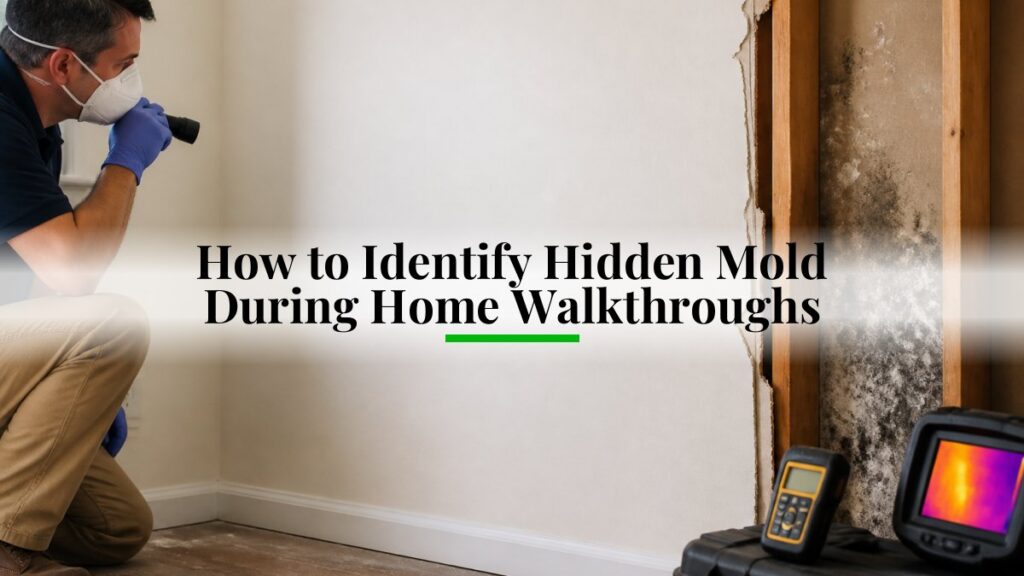
Last Updated: October 23, 2026
Quick Summary
To identify hidden mold during home walkthroughs, look for musty or earthy odors, water stains, and visible discoloration on surfaces, and check moisture-prone areas like bathrooms, basements, crawl spaces, and HVAC systems where mold commonly hides.
- A musty or earthy smell is often the earliest warning sign of mold growth, even before visible spots appear.
- Water stains in yellowish, brownish, or rust colors indicate past or present moisture problems where mold may be growing nearby.
- Bathrooms, kitchens, basements, crawl spaces, and areas behind wallpaper or under carpet are common hiding spots for mold.
- A moisture meter reading above 16% in drywall or wood suggests conditions favorable for mold growth.
- The bleach test helps distinguish mold from lookalikes: spray diluted bleach on a suspect spot and mold will fade or disappear within 10 minutes.
Table of Contents
- Why Hidden Mold Matters During Home Walkthroughs
- Signs of Hidden Mold in a House: What to Look For
- Common Locations Where Mold Hides During Inspections
- Home Mold Inspection Checklist: Room-by-Room Walkthrough
- How to Test for Mold in a House: Non-Invasive Techniques
- Distinguishing Mold From Lookalikes and False Alarms
- Pre-Purchase Mold Inspection: Questions to Ask and Documentation to Gather
- What to Do When You Suspect Mold: Next Steps and Professional Support
- Frequently Asked Questions
Why Hidden Mold Matters During Home Walkthroughs
When you’re evaluating a property, what you see isn’t always what you get. Hidden mold can lurk behind walls, under flooring, and inside HVAC systems for months or years before becoming visible.
Water damage from leaks, condensation, or flooding creates conditions where mold spores thrive in dark, damp spaces. By the time you notice a musty odor or visible discoloration, the problem may have already spread to areas you can’t see.
Signs of Hidden Mold in a House: What to Look For
Mold doesn’t always announce itself with black spots on drywall. Often, the clues are subtle, a smell, a stain, a feeling of dampness. Recognizing these signals during a walkthrough is the first step to catching hidden mold before it becomes a major problem.
Musty Odors and Earthy Smells
A musty or earthy smell is often the earliest warning sign of mold growth, caused by mold spores and volatile organic compounds released as mold breaks down organic materials.
Don’t dismiss the smell as “just old house smell.” Open closets, check under sinks, and sniff near baseboards and corners, especially in basements and crawl spaces where moisture collects.
Visible Discoloration and Spotting
Mold appears in many colors: black, green, white, or orange. Look for spots or patches on surfaces, especially in bathrooms, kitchens, and areas near windows or doors.
Common places to spot visible mold:
- Bathroom grout and tile grout lines
- Shower walls and ceiling corners
- Window sills and frames
Not all discoloration is mold; dust, dirt, or mineral deposits can look similar. Spray the spot with diluted bleach (1 part bleach to 10 parts water).
Water Damage, Stains, and Moisture Clues
Water stains indicate past or present moisture problems. Look for yellowish, brownish, or rust-colored marks on ceilings, walls, or floors, often in rings or patterns that signal where water has pooled or dripped.
Check for these moisture indicators:
- Soft or spongy drywall or wood
- Peeling paint or wallpaper
- Warped or buckled flooring
Moisture and mold go hand in hand. If you see water damage, assume mold may be growing nearby, even if you can’t see it yet.
Common Locations Where Mold Hides During Inspections
Mold thrives in damp, dark spaces. During a walkthrough, focus on areas where moisture accumulates and airflow is limited, where hidden mold most often takes hold.
Bathrooms and Kitchens
Bathrooms and kitchens generate moisture constantly through showers, sinks, and appliances. Poor ventilation traps that moisture indoors, creating ideal conditions for mold growth.
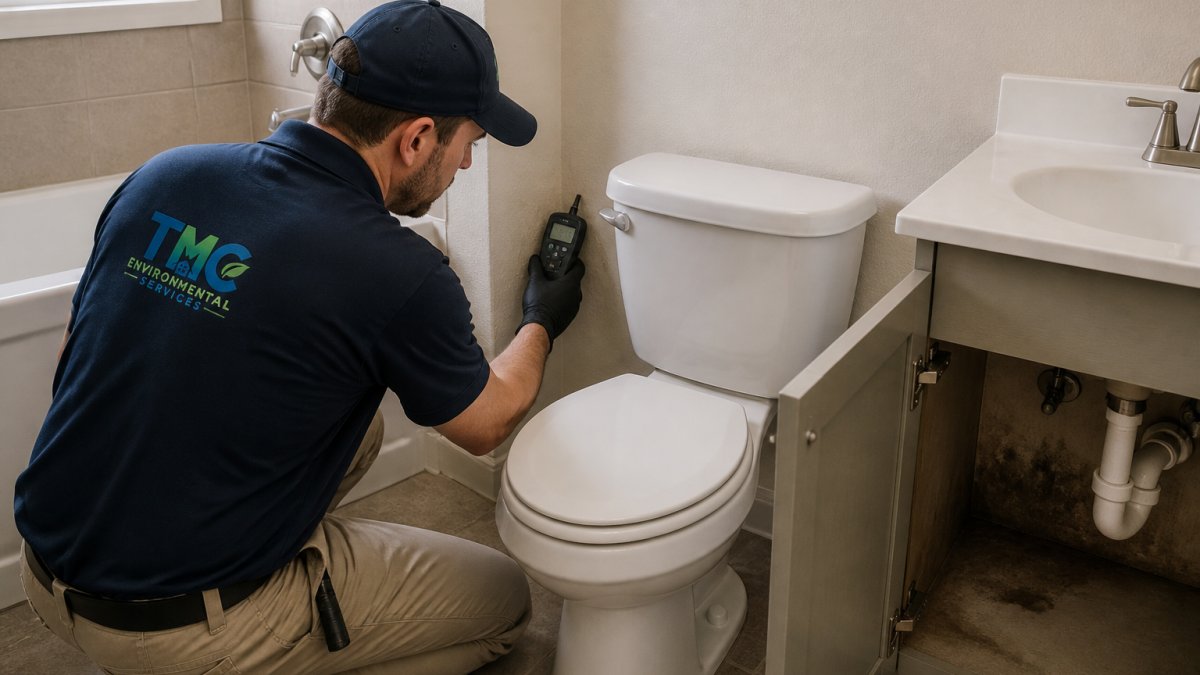
Inspect these bathroom areas carefully:
- Behind and under the toilet
- Inside cabinets under sinks
- Around shower and tub enclosures
In kitchens, check around the dishwasher, refrigerator ice maker, and under-sink plumbing. Leaks from these appliances often go unnoticed until mold has already colonized the surrounding wood and insulation.
Basements, Crawl Spaces, and Attics
These areas are mold magnets. Basements collect groundwater seepage and condensation, crawl spaces trap moisture from soil and poor ventilation, and attics experience temperature swings that cause condensation.
Look for:
- Water stains on basement walls or floors
- Efflorescence (white, chalky deposits on concrete)
- Mold on wooden beams or joists in crawl spaces
A strong musty odor in a basement or crawl space likely means mold is present; the smell often spreads upward through walls and HVAC systems, affecting upper floors.
Behind Wallpaper, Under Flooring, and Carpet
Hidden mold thrives in spaces you can’t see directly. Wallpaper traps moisture against walls, and carpet and padding absorb water from spills, leaks, or flooding and hold it for weeks.
During a walkthrough:
- Press on wallpaper to feel for soft spots or bubbling
- Lift carpet corners to check for moisture or discoloration on the backing
- Smell carpet and padding, a musty odor indicates mold or mildew
If you find evidence of water damage under flooring or behind wallpaper, professional inspection is warranted. Mold growing in these hidden spaces can spread extensively before becoming visible.
HVAC Systems and Ductwork
HVAC systems move moisture throughout a home. If the system isn’t properly maintained or condensation builds up in ducts, mold can colonize it and spread airborne spores into every room.
Signs of HVAC mold problems:
- Musty smell coming from vents or air returns
- Visible mold or discoloration around vent openings
- Damp or wet insulation around ductwork
Check the condensation drain line near the air handler. If it’s clogged or leaking, water backs up inside the system, promoting mold growth, one of the most common sources of hidden mold in homes.
Home Mold Inspection Checklist: Room-by-Room Walkthrough
A systematic room-by-room approach ensures you don’t miss hidden mold. Use this checklist during any home walkthrough.
Entry and Living Areas
Start your inspection at the front entrance and move through living spaces.
Check these points:
- Smell the air as you enter, note any musty or earthy odors
- Look at windows and frames for condensation or water stains
- Inspect baseboards for discoloration or soft spots
Bedrooms and Closets
Bedrooms often have moisture problems from poor ventilation and condensation from occupants.
Inspect:
- Closet walls and shelving for mold or moisture
- Ceiling corners, especially in older homes
- Windows and window sills for water damage
Closets are especially prone to mold because air circulation is limited; a musty smell means mold is likely growing on walls or stored items.
Bathrooms and Laundry Rooms
These high-moisture areas require careful inspection.
Check:
- Grout lines in showers and tubs for black or green mold
- Caulk around tubs and showers for gaps or deterioration
- Exhaust fan vents to confirm they’re venting outside
If the bathroom exhaust fan is blocked or venting into the attic, moisture accumulates and mold grows unchecked.
Kitchen and Appliances
Water leaks and condensation in kitchens create hidden mold problems.
Inspect:
- Under sink cabinets and around plumbing connections
- Around the dishwasher door seal and drain
- Refrigerator ice maker and water supply line
How to Test for Mold in a House: Non-Invasive Techniques
Visual inspection reveals some mold, but hidden mold requires testing. Non-invasive techniques let you assess moisture and mold risk without cutting into walls.
Visual Inspection and Documentation
Start with what you can see. Photograph any suspicious areas, discoloration, water stains, or moisture signs, and document the location, date, and observations to help professionals understand the scope.
Look closely at:
- Grout lines and caulk for mold or deterioration
- Drywall or plaster for soft spots or staining
- Wood framing for discoloration or rot
If you spot visible mold, don’t touch it or disturb it. Disturbing mold releases spores into the air, potentially spreading contamination.
Moisture Meter Readings and Humidity Assessment
A moisture meter measures water content in materials. Readings above 16% in drywall or wood suggest conditions favorable for mold growth. Humidity levels above 60% indoors promote mold development.
To use a moisture meter:
- Press the probe firmly against the material
- Wait for the reading to stabilize
- Record the percentage
- Test multiple areas, especially near water sources
High humidity readings in basements, bathrooms, or crawl spaces indicate moisture problems. If humidity stays above 50% consistently, mold is likely growing somewhere in the home.
Surface Sampling and Air Quality Testing
Surface testing involves wiping or swabbing a suspect area and analyzing it for mold. Air quality testing measures mold spore counts in indoor air.
Surface sampling works by:
- Using a sterile swab or tape on a suspect surface
- Sealing the sample in a container
- Sending it to a lab for analysis
Air quality testing captures spores from the air you breathe. Elevated spore counts indicate active mold growth somewhere in the home, even if you can’t see it.
Distinguishing Mold From Lookalikes and False Alarms
Not every spot is mold. Dust, dirt, mineral deposits, and staining can mimic mold appearance. Learning to tell the difference saves time and unnecessary alarm.
Mold characteristics:
- Fuzzy or slimy texture
- Grows in patterns or colonies
- Often appears black, green, white, or orange
Common lookalikes:
- Dust and dirt: dry, doesn’t smell musty, doesn’t disappear with bleach
- Mineral deposits: chalky, white, doesn’t smell, won’t disappear with bleach
- Mildew: similar to mold but usually lighter and more powdery
When in doubt, apply the bleach test. Spray a small area with diluted bleach and wait 10 minutes. If the spot fades or disappears, it’s mold.
Pre-Purchase Mold Inspection: Questions to Ask and Documentation to Gather
If you’re buying a home, asking the right questions protects you. Request documentation that reveals the property’s history with water damage and moisture problems.
Ask the seller or agent:
- Has this property ever had water damage, flooding, or leaks?
- Have any areas been professionally remediated for mold?
- What’s the history of the HVAC system and any replacements?
Request documentation:
- Home inspection reports from previous sales
- Insurance claims related to water damage
- Records of any mold testing or remediation
Written answers create a record. If mold problems emerge after purchase and the seller denied knowledge, that documentation becomes important. Don’t rely on verbal assurances, get everything in writing.
What to Do When You Suspect Mold: Next Steps and Professional Support
If your walkthrough reveals signs of hidden mold, the next step depends on what you’ve found and how extensive the problem appears to be.
For minor visible mold (small spots, limited area):
- Document with photos
- Note the location and extent
- Request a professional mold inspection before proceeding
For water damage without visible mold:
- Assume mold may be growing in hidden spaces
- Schedule a professional moisture and mold assessment
- Don’t wait, mold develops quickly in damp conditions
For extensive visible mold or strong musty odors:
- Stop the walkthrough
- Do not disturb the mold
- Hire a professional inspector immediately
Professional mold inspection identifies hidden mold that visual inspection alone can’t find.
Discovering hidden mold after you’ve bought a home or signed a lease is expensive and stressful.
Frequently Asked Questions
Can you identify mold without testing it?
Visual inspection can reveal obvious mold growth, discoloration, and musty odors that suggest mold presence. However, mold often hides behind walls, under flooring, and inside HVAC ductwork where you cannot see it. A moisture meter can indicate excess moisture that may hide mold, but surface testing and air quality testing provide definitive confirmation. Professional mold testing distinguishes actual mold from dust, mildew, or water stains.
What are the first signs of hidden mold in a house?
The earliest indicators include musty, earthy odors without visible growth, water stains on ceilings or walls, condensation on windows, and damp spots on flooring or carpet. Health symptoms such as sinus issues, headaches, or breathing difficulty can also signal hidden mold exposure. After water damage or plumbing leaks, these clues warrant professional inspection even if mold is not yet visible.
Should you get a mold inspection before buying a house?
A pre-purchase mold inspection is highly recommended, especially if the home has a history of water damage, visible moisture, or musty odors. Hidden mold in wall cavities, crawl spaces, or HVAC systems can become expensive remediation problems after purchase. Professional inspection identifies moisture intrusion points and early-stage mold growth, protecting your investment and indoor air quality before you commit to the purchase.
Where should you look for mold during a home walkthrough?
Check bathrooms and kitchens for moisture around sinks, showers, and appliances. Inspect basements, crawl spaces, and attics for water stains and condensation. Look behind wallpaper, under carpeting, and along foundation walls. Examine HVAC systems, air conditioner units, and ductwork for mold growth. Pay special attention to areas with plumbing leaks, poor ventilation, or previous water damage. Use a moisture meter to detect excess moisture in walls and flooring where mold may be developing.
