

Last Updated: October 30, 2026
Quick Summary
Yes, poor air quality can cause chronic headaches. Indoor pollutants like mold spores and carbon monoxide are well-documented headache triggers, and the air inside a typical house can carry more pollutants than the air outside. Watch for headaches that improve when you leave home and return when you come back.
- Mold releases spores and mycotoxins that can trigger sinus pressure, inflammation, and headaches.
- Install a CO alarm on every floor and have fuel-burning appliances checked yearly.
- A headache that improves away from home and returns on arrival is a strong signal.
- Growth covering more than about 10 square feet is beyond what a homeowner should handle.
- Remove the moisture source first, then verify the fix with a moisture meter after drying.
Table of Contents
- Your Headache Might Start at Home, Not in Your Head
- Indoor Air Pollutants That Cause Headaches
- Mold Exposure Headache Symptoms You Should Not Ignore
- Signs of Poor Indoor Air Quality Beyond the Headache
- How to Test Indoor Air Quality and Confirm the Source
- When to Call a Professional Instead of Cleaning It Yourself
- Book an Air Quality Test Before Your Next Headache
- Frequently Asked Questions
Your Headache Might Start at Home, Not in Your Head
Can poor air quality cause chronic headaches? Yes. Indoor air quality testing connects the dots between your symptoms and your home’s air. Poor air quality is a well-documented trigger for chronic headaches, and the evidence on indoor pollution is strong enough that the Environmental Protection Agency’s indoor air quality research treats it as a major public health concern. This guide from The Mold Consultant, LLC breaks down the warning signs most people miss.
Here is the part that surprises homeowners: the air inside a typical house can carry more pollutants than the air outside.
Below, we show you exactly how to spot the signs and confirm the source before you spend money on guesses.
Indoor Air Pollutants That Cause Headaches
Two pollutant groups drive most indoor headaches: biological growth and combustion byproducts. Both are common, and both are fixable once you find them.
Mold Spores and Mycotoxins
Mold releases spores and, in some species, mycotoxins into the air. When you breathe them in, your body can respond with sinus pressure, inflammation, and headaches. Damp basements, leaky roofs, and slow plumbing drips feed this growth. Watch for a musty smell or dark spotting near windows and plumbing walls.
Carbon Monoxide and Combustion Byproducts
Carbon monoxide is the dangerous one. A faulty furnace, a clogged flue, or a gas stove with poor venting can push this odorless gas into living space. Headaches are one of the earliest symptoms of exposure. Install a CO alarm on every floor and have fuel-burning appliances checked yearly.
Mold Exposure Headache Symptoms You Should Not Ignore
Mold exposure headache symptoms can follow a location-and-timing pattern that differs from ordinary tension headaches. Health symptoms linked to toxic mold go beyond headaches, so you can compare your own symptoms.
When mold grows in a damp area, it can release spores and, in some species, mycotoxins into the air, which may irritate the respiratory system.
Other signals that may warrant a closer look:
- Stuffy nose or postnasal drip that never fully clears
- Itchy, watery eyes indoors
- Fatigue that lifts on vacation
- Coughing or wheezing that worsens in damp weather
- Headaches that cluster in the same room or floor of the house
- Symptoms that improve within hours of leaving and return within hours of coming home
A headache that follows the building, better away, worse at home, is a stronger signal than any single symptom on its own. Track where and when the ache appears for a week before you spend money on testing.
Who Is Most Vulnerable to Mold-Related Headaches
Sensitivity to mold varies between people, and anyone in the home with asthma, allergies, or a weakened immune system should be considered when assessing a mold concern.
A practical step for sensitive occupants: keep them out of the affected room while you investigate, and do not run the HVAC system if you suspect growth in the ducts or air handler. Running the system can spread spores through the house and turn a localized problem into a whole-home exposure.
Signs of Poor Indoor Air Quality Beyond the Headache
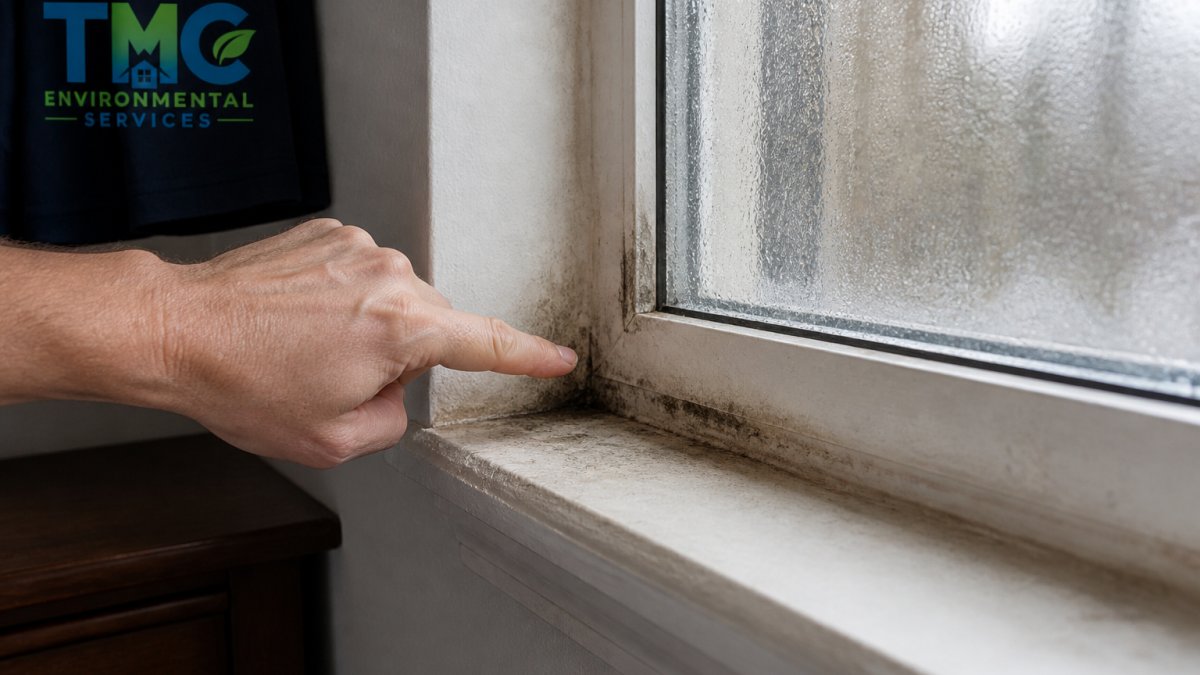
Signs of poor indoor air quality show up long before a doctor visit. Your house tells you, if you know where to look.
- Condensation on windows that never dries
- Musty odors in closets, basements, or crawl spaces
- Peeling paint or bubbling drywall
- Increased dust settling faster than usual
- Allergy symptoms that vanish when you travel
One overlooked sign: family members who feel better at work or school than at home. That pattern is a red flag worth investigating.
How to Test Indoor Air Quality and Confirm the Source
How to test indoor air quality starts with a simple choice: a store-bought kit or a professional assessment. Both can work. They answer different questions.
A DIY kit gives you a snapshot. It may flag elevated mold spores or a general pollutant count. What it cannot do is trace the result to a specific source, like a hidden leak or a failed vapor barrier. Benefits of professional indoor air quality analysis explains what a pro assessment adds. That is the part that matters most, because you cannot fix what you cannot find.
DIY Kits vs. Professional Air Quality Testing
| Factor | DIY Kit | Professional Testing |
|---|---|---|
| Cost | Low upfront | Higher, but targeted |
| Speed | Fast | Scheduled visit |
| Source tracing | Limited | Full inspection |
| Hidden moisture detection | No | Yes |
| Written report | No | Yes |
When to Call a Professional Instead of Cleaning It Yourself
Call a professional when mold covers a large area, when you cannot find the moisture source, or when anyone in the home has asthma or a weakened immune system. Small surface spots on tile or glass are a weekend project. A patch spreading behind drywall is not.
Use concrete thresholds instead of a gut feeling. A common rule of thumb in the remediation industry is that growth covering more than about 10 square feet, roughly a 3-by-3-foot patch, is beyond what a homeowner should handle. That size usually means the moisture source is more than a surface spill. Other triggers for professional help:
- Growth on porous materials such as drywall, ceiling tile, carpet, or insulation, where cleaning cannot reach the roots
- Mold that returns after a cleanup you already did
- Any suspicion that the HVAC system, ducts, or wall cavities are involved
- A musty odor that persists after visible growth is gone
- A water source you cannot identify or fully dry
- Anyone in the home with asthma, allergies, immune suppression, or other sensitivities
Safe Containment and Disposal If You Do It Yourself
If the patch is small and on a hard, nonporous surface, you can clean it safely, but containment matters as much as the cleaning. Spores go airborne the moment you disturb growth, so the goal is to keep them from spreading to the rest of the house. Using safe cleaning products ensures that you eliminate the mold without introducing harsh chemical irritants that might further compromise your indoor air quality.
- Seal the work area with plastic sheeting and tape at doorways and vents.
- Turn off the heating and air-conditioning system so spores are not pulled into the ducts.
- Wear gloves, eye protection, and a respirator rated for mold work, not a dust mask.
- Ventilate the area with a window fan blowing outward, not into other rooms.
- Clean hard surfaces with detergent and water, then rinse and change cloths often. Do not dry-brush, which throws spores into the air.
- Bag porous materials and debris in sealed plastic bags before carrying them through the house.
- Wipe down tools and change clothing before leaving the work area, and wash work clothes separately.
Never mix cleaning products. Combining bleach with ammonia or with vinegar can release toxic gases. Use one cleaner at a time, follow the label, and rinse between products.
Verify the Fix, Not Just the Appearance
The Centers for Disease Control and Prevention guidance on mold is clear: the first step is always removing the moisture source. Skip that, and the growth returns. That is the story we hear most often from homeowners who paid for a cleanup that failed.
What most guides miss is the verification step. After cleanup, you need proof the air is actually clear and the moisture problem is corrected. Check the area with a moisture meter after it dries, confirm the underlying leak or humidity source is fixed, and watch for any musty odor or new spotting over the next few weeks. If growth returns, that is your signal to escalate to professional remediation rather than repeat the same cleanup. Learn the safe process in our guide on how to safely remove toxic mold from your home.
Book an Air Quality Test Before Your Next Headache
You now know the warning signs. The remaining question is whether your home is the source.
At The Mold Consultant, LLC, we provide non-destructive testing to help locate moisture intrusion and mold growth in homes across the Oklahoma City metro area. Veterans, teachers, and first responders may qualify for discounted testing.
Stop guessing about the air you breathe. Get started with The Mold Consultant, LLC and find the real cause of your headaches.
Frequently Asked Questions
Can poor indoor air quality cause chronic headaches?
Yes. Poor air quality can cause chronic headaches when indoor pollutants like mold spores, carbon monoxide, or volatile organic compounds build up in a home. These irritants trigger inflammation and stress responses that lead to recurring head pain. If your headaches improve when you leave the house and return when you come back, that pattern points to an indoor source worth testing.
Can mold exposure cause headaches?
Mold spores and mycotoxins can irritate the respiratory system, and sensitive people may react more strongly. A professional mold inspection can confirm whether growth is present before you assume mold is the cause.
Can carbon monoxide cause a headache?
Carbon monoxide is one of the most dangerous indoor air pollutants that cause headaches. It is odorless and colorless, and a headache is often the first symptom of exposure. If headaches come with dizziness, nausea, or confusion, leave the building and call 911. Install CO alarms on every level of your home and have fuel-burning appliances inspected annually.
How can I tell if my headaches are related to my home?
Track when and where your headaches occur for two weeks. If they cluster at home, ease when you leave, or worsen in specific rooms, the building is a likely factor. Note any damp smells, visible mold, or recent water damage. An indoor air quality test can confirm what is circulating in your air and give you documentation to act on.
Your next headache may be a message from your house. Our certified inspectors use advanced tools to trace hidden moisture and confirm air quality with a clear written report. We offer non-destructive mold inspection, bacterial testing, and post-remediation verification. Get started with The Mold Consultant, LLC and breathe easier in a home you trust.
