
Table of Contents
- What Independent Mold Testing Actually Is (And Why It Matters)
- Mold Inspection vs Mold Remediation: Why the Separation Protects You
- The Conflict of Interest Framework: How to Spot a Biased Inspector
- DIY Kits vs Professional Independent Mold Testing
- How to Interpret Mold Lab Results Without Panicking
- Post-Remediation Verification Testing: The Step Most Homeowners Skip
- Real Scenarios Where Independent Testing Pays Off
- Frequently Asked Questions
Last Updated: September 25, 2026
What Independent Mold Testing Actually Is (And Why It Matters)
Independent mold testing is a professional assessment of a property’s air and surfaces performed by a party with no financial stake in any remediation work that follows. At The Mold Consultant, LLC, we’ve spent over a decade performing these assessments for homeowners, landlords, and property managers.
A typical assessment involves moisture mapping, air sampling, and surface sampling, followed by laboratory analysis. The goal isn’t to scare you into a repair bill, it’s to answer one question: is there a mold growth source in this building, and where is it coming from?
That question gets much harder to answer honestly when the person testing your home also profits from fixing it.
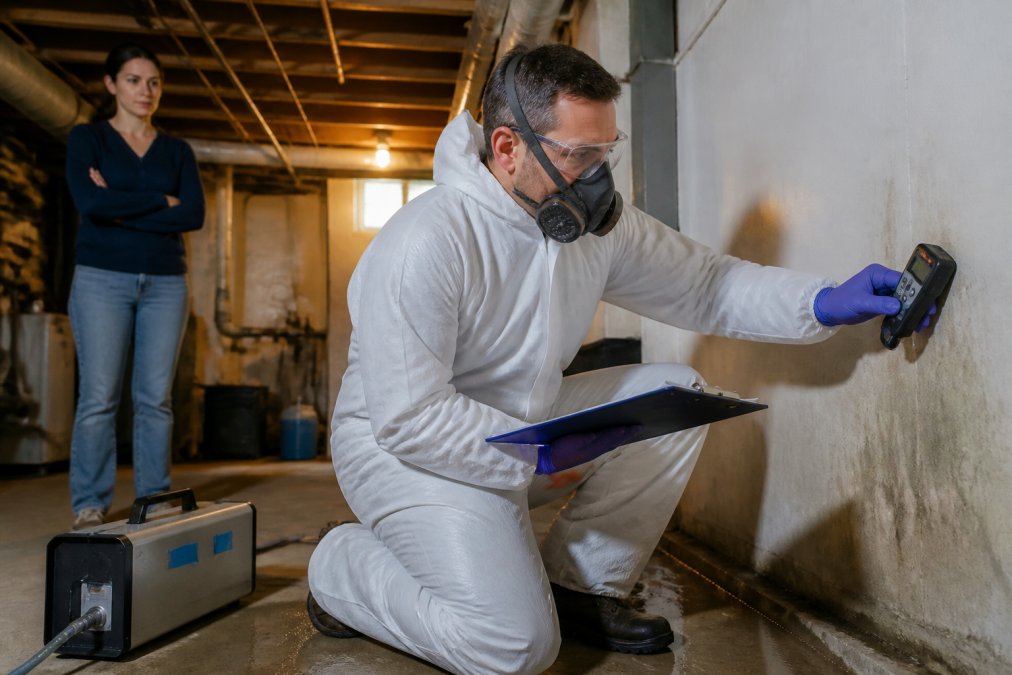
Independent mold testing separates the diagnosis from the repair. That separation is the entire point.
Mold Inspection vs Mold Remediation: Why the Separation Protects You
Mold inspection vs mold remediation trips up a lot of homeowners. Inspection is the diagnostic step: identifying moisture intrusion, collecting samples, and documenting what’s growing. Remediation is the repair step: removing the mold and correcting the underlying moisture problem.
When one company does both, the incentive structure gets murky: a remediation contractor who also inspects has a financial reason to find a problem and to declare it fixed.
Independent inspectors don’t perform remediation.
The Conflict of Interest Framework: How to Spot a Biased Inspector
The reason “independent” matters isn’t philosophical, it’s structural. When one company both diagnoses the mold problem and sells the repair, every finding is also a potential invoice. That’s not an accusation of dishonesty; it’s how incentives work. A remediation contractor who tests your home has a financial reason to find growth, grade it severe, and declare the job complete once paid.
The Financial Incentive, Stated Plainly
A remediation company that bundles “free testing” isn’t absorbing that cost out of generosity, the test is a lead-generation tool. Revenue comes from the remediation contract, typically priced by square footage, containment zones, and days on site. Every one of those variables rises when the inspection finds more mold. An independent inspector has no line item that grows when the finding gets worse.
Red-Flag Checklist: Signs the Inspector Has a Stake in the Repair
Run through this before you sign anything:
- The inspection is free or heavily discounted, and a remediation quote follows within days. Free diagnostics are almost always a sales funnel.
- The company offers both testing and remediation under one roof. Even with a separate division or a different LLC name, the ownership is often the same.
- No laboratory report is provided, only a verbal summary or a one-page letter. A real assessment produces a lab report with sample locations, chain of custody, and species-level data.
- No moisture readings are shown to you. Moisture meters and thermal imaging produce numbers. If the inspector won’t show them, the finding isn’t documented.
- The scope of work is quoted before the lab results come back. Lab turnaround typically takes a few business days. A quote issued the same afternoon is based on a visual guess, not data.
- You’re told remediation must begin immediately, before you get a second opinion. Urgency is a sales tactic. Active mold growth is a problem to solve carefully, not a same-day emergency in most residential cases.
- The inspector can’t explain what a normal spore count looks like for your area. Outdoor baseline varies by region and season. An inspector who can’t discuss that isn’t interpreting your results.
- The report recommends fogging, ozone, or “mold fog” as the primary fix. These treatments address airborne spores, not the moisture source, and are widely regarded by practitioners as a temporary measure at best.
What a Genuinely Independent Report Looks Like
A defensible report should include the inspector’s certifications, each sample’s date and method, the laboratory’s name and accreditation, raw spore counts by genus for indoor and outdoor control samples, moisture readings, photographs, and a plain-language interpretation. It should also tell you when the answer is “your home is fine”, an inspector with no remediation revenue has no reason to avoid that conclusion.
“Free mold inspection” is one of the most reliable red flags in this industry. If the inspection is free, the remediation quote is the product.
Ask one question before you hire: does this company also sell remediation? If yes, you’re not buying a diagnosis, you’re buying a sales call.
DIY Kits vs Professional Independent Mold Testing
Store-bought test kits are cheap and easy, but they answer a much narrower question. A DIY petri dish can tell you mold spores exist in your home, true of virtually every home, but not the species, concentration, or moisture source.
| Factor | DIY Kit | Professional Independent Testing |
|---|---|---|
| Identifies species | No | Yes |
| Quantifies spore count | No | Yes |
| Locates moisture source | No | Yes |
| Chain of custody | No | Yes |
| Usable for disputes or claims | No | Yes |
| Cost | Low | Varies by scope |
A DIY kit that shows “mold present” tells you almost nothing useful. Every home has some mold spores in the air. Without a baseline and species identification, you can’t tell a normal reading from a problem.
How to Interpret Mold Lab Results Without Panicking
Learning how to interpret mold lab results starts with understanding that not all mold is a health crisis. Labs report spore counts by species, and the meaningful comparison is indoor versus outdoor air, not against zero.
Here’s what actually matters in a report:
- Spore count by species. Some species, like Stachybotrys, warrant more attention than common outdoor types.
- Indoor vs outdoor ratio. Indoor levels should generally resemble outdoor levels, not exceed them dramatically.
- Hyphal fragments. These indicate active growth rather than dormant spores drifting in from outside.
- ERMI score. This index compares your sample against a national database of mold levels in homes.
Post-Remediation Verification Testing: The Step Most Homeowners Skip
Post-remediation verification, often called a clearance test, is the only way to know whether a remediation job actually worked. It’s also the step most homeowners skip, usually because the contractor says it isn’t necessary or offers to “self-certify.” A contractor grading their own work isn’t verification, it’s a receipt.
What a Real Clearance Protocol Includes
1. Visual inspection of the work area. Before sampling, the inspector confirms visible growth is gone, containment was removed properly, and no dust or debris remains. Sampling over visible mold wastes money.
Timing and Conditions Matter
Testing too soon after remediation produces false readings, disturbed dust from demolition, HEPA vacuuming, or fogging can inflate spore counts. A common guideline is to wait at least 24 hours after the work area is cleaned and fogging has settled, with the HVAC running normally. Some protocols call for longer; ask your inspector what interval they use and why.
Why the Contractor’s Own Clearance Isn’t Enough
When the same company performs remediation and the clearance test, three problems arise. The sampling plan may be chosen to pass, fewer samples, favorable locations, or no outdoor control. The interpretation comes from the party with a financial interest in declaring the job complete. And if clearance fails, the contractor grades their own rework.
What to Do If Clearance Fails
A failed clearance isn’t a catastrophe, it’s information. It usually means the moisture source wasn’t fully corrected, the cleaning was incomplete, or a hidden reservoir was missed. The contractor is typically responsible for returning and correcting the work at no additional cost, provided the contract supports it, one of the strongest arguments for writing an independent clearance test into the remediation contract before work begins.
Put the clearance requirement in writing before remediation starts. Specify that clearance will be performed by a third party, that it will include air sampling with an outdoor control, and that the contractor will re-clean at no charge if the test fails.
A remediation job isn’t finished when the invoice is paid. It’s finished when an independent clearance test says the air is back to normal.
Real Scenarios Where Independent Testing Pays Off
The financial benefits of pre-purchase inspections show up most clearly in real estate transactions. A buyer who commissions independent testing before closing either confirms the property is clean or gains use to negotiate repairs. Either outcome beats discovering a mold problem after the keys change hands.
Frequently Asked Questions
Is a mold inspection worth the cost?
Independent mold testing can save thousands by catching hidden moisture before it becomes a structural problem. For current pricing, please visit our website. A proper inspection includes moisture mapping, air sampling, and surface sampling to identify the mold growth source. For homeowners in the Oklahoma City metro area, this means knowing whether a small leak has spread behind walls or into the HVAC system. Post-remediation verification testing also protects you if a contractor’s work fails and mold returns.
What is the difference between a mold inspector and a mold remediator?
A mold inspector or independent consultant evaluates your property, identifies moisture intrusion, and provides unbiased assessment without selling cleanup services. A remediator performs the actual removal work. When one company does both, the conflict of interest is obvious: they profit from finding mold and from removing it. Independent testing keeps these roles separate, so the lab results and remediation protocol you receive are based on data, not sales goals.
How do I know if I actually need independent mold testing?
You need testing if you’ve had water damage, notice musty odors, see discoloration on walls or ceilings, or experience unexplained allergy symptoms indoors. A hygrometer can show elevated relative humidity, but it won’t confirm mold spores or mycotoxins. Pre-purchase inspections are also wise if you’re buying a home. Independent testing gives you baseline data and a clear remediation strategy if needed, rather than guesswork or pressure from a contractor who also sells cleanup.
Can independent mold testing help with insurance claims?
Yes. A third-party verification report with chain of custody documentation and laboratory analysis carries weight with insurance adjusters because it’s neutral. If you file a claim for mold-related property damage, an independent inspector’s findings can support your case by showing the extent of contamination and the moisture source. Post-remediation verification testing also proves the work was done correctly, which can prevent disputes over coverage or liability later.