Last Updated: November 22, 2026
Quick Summary
Hiring a certified mold inspector for veterans means choosing an independent, test-only provider whose inspector does not profit from remediation. Verify third-party credentials like CRMI, ask whether remediation is offered, and confirm veteran discounts and written lab reports before booking.
- The person who tests your home should never be the person who profits from fixing it.
- Ask for the certification name, issuing body, and certificate number, then verify it.
- Many providers include two to three samples in the base fee and charge $50 to $100 per additional sample.
- Documentation for veteran discounts is usually a military ID, VA benefits letter, or first responder proof.
- Verification sampling after cleanup confirms the remediation actually solved the problem.
Table of Contents
- Why Veterans Need a Certified Mold Inspector, Not a Salesperson
- Certified Mold Inspector Credentials That Actually Mean Something
- Questions to Ask a Mold Inspector Before You Book
- What Mold Inspection Cost Covers and Why Quotes Vary So Much
- The Mold Testing Process and Timeline, Start to Finish
- Veteran Discounts, VA Documentation, and First Responder Programs
- How to Read Your Inspection Report and Decide on Next Steps
- Schedule Your Inspection with The Mold Consultant, LLC
- Frequently Asked Questions
Why Veterans Need a Certified Mold Inspector, Not a Salesperson
Hiring a certified mold inspector for veterans starts with one rule: the person who tests your home should never be the person who profits from fixing it. That independence is the whole game.
That distinction matters more than most homeowners realize. Over a decade in this field, we have seen how often a first inspection that is really a sales pitch leads people to pay twice for the same problem.
The Conflict of Interest Hiding in Plain Sight
When a remediation company inspects your home for free, the incentive runs one direction. The inspector who finds more mold sells more remediation. Many companies that offer “free inspections” make their money on the cleanup, so the assessment is a lead generator, not an honest evaluation.
A free inspection is not automatically a neutral second opinion. Look for an independent inspection from a provider that does not perform the removal work it recommends.
What a Test-Only Service Protect You From
A test-only service performs mold assessment and sampling and stops there. The inspector has no remediation revenue to protect, so the report reflects what the samples show.
If you are a veteran or first responder weighing your exposure risks, it helps to understand the stakes. You can read more about the long term health effects of mold for first responders before you book anything. Veterans who want to see how the service is structured for them can review mold testing for veterans and first responders.
Certified Mold Inspector Credentials That Actually Mean Something
Credentials separate a qualified inspector from a technician with a flashlight. A certified mold inspector holds third-party certification that requires training, an exam, and continuing education, not a business card that says “mold specialist.”
Ask for the certification name, the issuing body, and the certificate number. Then verify it. Any legitimate certifying organization will confirm a credential on request.
Certifications Worth Checking and the Ones That Are Just Letters
Some credentials carry real weight. Others are letters printed on a van. Here is how to tell them apart.
| Credential | What It Signals | Worth Verifying |
|---|---|---|
| Certified Residential Mold Inspector (CRMI) | Residential inspection training and testing | Yes, confirm with issuer |
| Certified Microbial Remediation Supervisor (CMRS) | Remediation oversight knowledge | Yes, ask for scope |
| Certified Restorer (CR) | Restoration industry standard | Yes, confirm standing |
| Generic “certified mold specialist” | Often self-issued | Ask who certified them |
| In-house company certificate | Training specific to that firm | Not a third-party credential |
The Mold Consultant, LLC holds the CRMI, CMRS, and CR credentials and carries A+ accreditation from the BBB.
Watch out: a certification that cannot be confirmed by an independent body is a marketing label, not a qualification.
Questions to Ask a Mold Inspector Before You Book
The best vetting happens before money changes hands.
Ask these questions, and listen for direct answers:
- Do you perform remediation, or testing only? The right answer is a clear “testing only” or a clear explanation of how the firm separates assessment from removal. If the person hedges or says “we do both but it’s fine,” ask who performs the removal and whether the inspector is compensated on remediation sales.
- Which certifications do you hold, and who issued them? Write down the credential name, the issuing body, and the certificate number. Then verify it independently. A legitimate certifying organization will confirm a credential on request.
- Will you provide a written report with lab results? Ask what the report contains: photos, sample locations, lab chain of custody, species identification, spore counts, and remediation recommendations. A verbal summary is not a report.
- How do you determine where to sample, and why? A qualified inspector explains the sampling plan in terms of moisture readings, visible growth, and occupant concerns. Vague answers about “testing the air” are a cue to keep calling.
- What is included in your fee, and what costs extra? Get the sample count, the per-sample charge, the lab fee, and the report fee separated. Ask whether post-remediation verification is included or billed separately.
- Can you explain findings in plain language? You should not need a translator to understand your own inspection report. Ask for a sample report or a redacted example.
- Do you offer veteran or first responder discounts? Ask what documentation is required and whether the discount applies to the base fee, samples, or both.
- What is your turnaround time, and who analyzes the samples? Ask for the lab name and its accreditation. Standard lab turnaround is often a few business days; rush analysis costs more.
- Will you coordinate with my landlord, insurer, or attorney if needed? For veterans in a dispute, a provider willing to supply neutral documentation and mediate findings is worth more than a few dollars off.
Watch out: an inspector who cannot name the lab, refuses to put the sample count in writing, or pressures you to book remediation on the same call is selling, not assessing.
A confident, certified inspector answers these without hesitation. Vague answers about sampling methods or report delivery are your cue to keep calling.
What Mold Inspection Cost Covers and Why Quotes Vary So Much
Mold inspection pricing is not standardized, and that is exactly why veterans get taken advantage of.
Mold inspection pricing depends on property size, sample count, and lab fees, so quotes vary.
Here is what actually moves the price:
- Property size and complexity. Square footage, number of stories, crawlspaces, attics, and finished basements all add inspection time and sampling points.
- Number and type of samples. Air sampling, surface sampling, and bulk sampling carry different lab costs. Air sampling often costs more per sample than a surface swab because of the pump time and lab culture work.
- Laboratory choice. Accredited labs vary in price and turnaround. Rush analysis costs more than standard turnaround.
- Travel and access. Rural properties, steep roofs, and sealed crawlspaces can add a trip charge or require specialized access.
- Report depth. A one-page summary and a full narrative report with photos, lab chains of custody, and remediation recommendations are not the same deliverable.
- Post-remediation verification. Clearance sampling after cleanup is typically quoted separately; contact the business for current pricing.
Watch out: a quote that is dramatically lower than the rest often reflects a narrower scope, so ask for the sample count and lab name in writing before comparing totals.
When you compare bids, put them side by side on four lines: number of samples, lab name and accreditation, report contents, and whether remediation is offered by the same firm. A $350 quote with two samples and no lab report is not cheaper than a $550 quote with five samples and accredited analysis, it is a different product. Veterans should also ask whether the veteran discount applies to the base fee, the per-sample charge, or both, because the answer changes the final number.
Current pricing for The Mold Consultant, LLC is available on our website, and we can provide a quote for your specific scope.
The Mold Testing Process and Timeline, Start to Finish
A professional mold inspection follows a defined sequence: visual assessment, moisture mapping, sampling, lab analysis, and a written report.
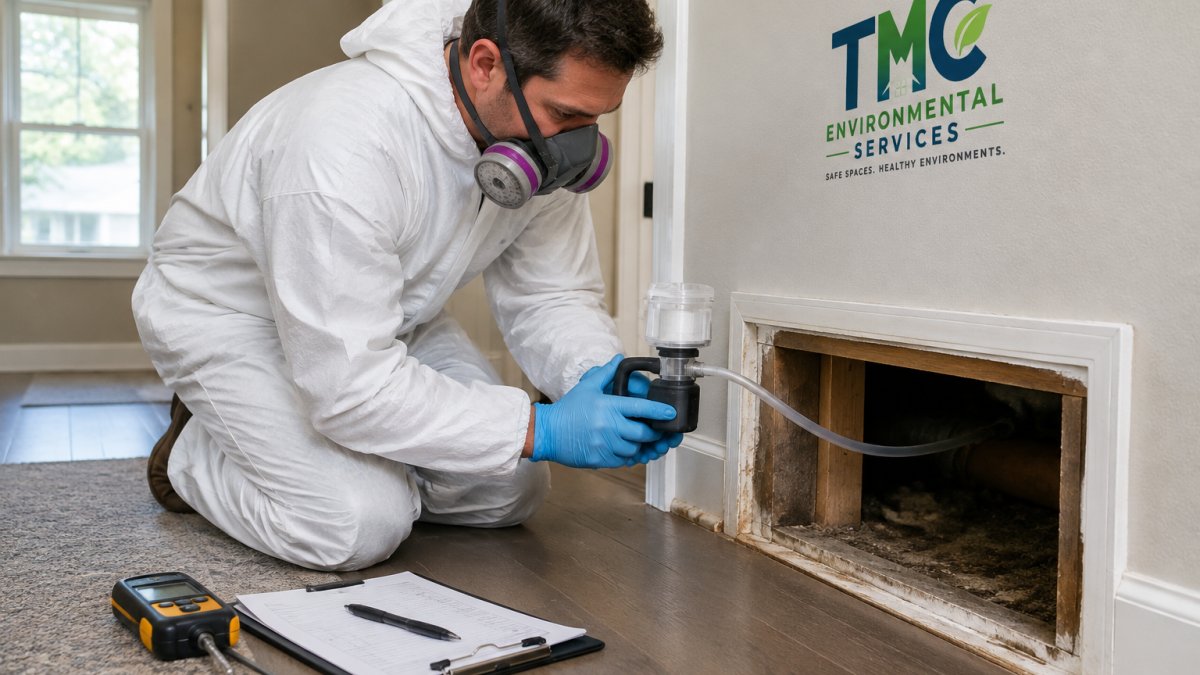
A typical mold inspection process generally follows this flow:
- Visual walkthrough: the inspector checks likely moisture zones, including crawlspaces and areas near past water damage.
- Moisture mapping: meters and thermal tools locate hidden moisture intrusion.
- Sampling: air and surface samples are collected at strategic points.
- Lab analysis: samples go to an accredited laboratory.
- Report delivery: findings and next steps arrive in writing.
From Air Sampling to Laboratory Analysis
Air sampling captures airborne spores to establish what is circulating in a room. Surface sampling swabs visible growth to identify what is growing on a material. Laboratory analysis turns both into data you can act on.
If your concern is your HVAC system, the sampling plan should include it. You can learn how do you test for mold in air ducts as part of the broader assessment. Homeowners who want to understand what testing reveals about health can read about indoor air quality testing and its health benefits.
Veteran Discounts, VA Documentation, and First Responder Programs
Many mold inspection providers offer veteran and first responder discounts, but the terms vary. Some extend reduced rates to active-duty personnel, retired military, teachers, and first responders.
Documentation is usually simple: a military ID, a VA benefits letter, or proof of first responder employment. Keep copies handy so the discount is applied at booking, not argued about later.
For veterans navigating a claim or a landlord dispute, a detailed inspection report with lab results is the document that carries weight.
How to Read Your Inspection Report and Decide on Next Steps
Your report should name what was found, where it was found, and what the lab results show. Read it in that order.
Then decide based on evidence, not fear. If results are elevated, get remediation quotes from independent contractors and keep your inspection report as the baseline. If results are normal, you have documented proof and peace of mind.
A common mistake is skipping the post-remediation check. Verification sampling after cleanup confirms the work actually solved the problem. The Mold Consultant, LLC offers post-remediation verification.
Schedule Your Inspection with The Mold Consultant, LLC
Getting an honest answer about your home should not require guessing which inspector to trust.
The Mold Consultant, LLC brings over a decade of experience, non-destructive testing methods, and neutral mediation services. The company holds the CRMI, CMRS, and CR credentials and offers veteran, teacher, and first responder discounts.
Call now to schedule an inspection and get clear, documented answers about your indoor air quality.
The hardest part is not finding a mold inspector. It is finding one with no reason to inflate the findings.
Frequently Asked Questions
What credentials should a certified mold inspector have?
Look for certifications tied to recognized industry bodies, such as Certified Residential Mold Inspector (CRMI) or Certified Microbial Remediation Supervisor (CMRS). Ask whether the inspector follows a written sampling protocol and sends samples to an accredited third-party laboratory. Credentials should be current and verifiable, not just listed on a website. A certified mold inspector should also be able to explain how they avoid conflicts of interest, which usually means they do not sell remediation services alongside inspection.
How much does a professional mold inspection cost?
Mold inspection cost varies based on property size, the number of samples taken, and whether air sampling or surface sampling is included. Pricing at The Mold Consultant, LLC is listed on their website, so you can see the numbers before you call. Factors that raise the total include crawlspace inspections, multiple testing locations, and post-remediation verification. Get a written scope of work before booking so you know exactly what the quote covers and what it does not.
Are mold inspection discounts available for veterans and first responders?
Yes. The Mold Consultant, LLC offers discounts for veterans, active-duty personnel, retired military, teachers, and first responders. Ask about eligibility and what documentation you need when you schedule an inspection. Confirm the discount in writing before the appointment.
Should I hire a mold inspector who also performs remediation?
It is safer to hire an independent inspector who does not sell remediation. When the same company tests and fixes the problem, the inspection findings can be shaped to justify more work. A test-only service gives you an unbiased assessment you can hand to any remediation contractor. Ask directly whether the inspector or their employer profits from remediation recommendations. If the answer is yes, find another provider before you schedule an inspection.
