
Table of Contents
- Military and First Responder Discount Programs
- Health Risks of Mold Exposure for Veterans and First Responders
- VA Benefits for Toxic Mold Exposure: What You Need to Know
- Mold Inspection Cost for Homeowners: What Affects the Price
- How to Find a Certified Mold Inspector Near Me
- Mold Testing for Veterans and First Responders: The Testing Process
- Frequently Asked Questions
Last Updated: October 4, 2026
Military and First Responder Discount Programs
Many mold inspection companies now offer reduced rates for the people who serve their communities. These programs exist because veterans, active duty service members, teachers, and first responders often face higher environmental health risks than the general public, yet have less time and fewer resources to chase down problems at home.
At The Mold Consultant, LLC, we offer veteran, teacher, and first responder discounts because we believe cost should never stand between a family and a safe home. This guide to mold testing for veterans and first responders breaks down who qualifies, how to verify your status, what the testing process looks like, and how to avoid common mistakes that leave hidden mold undetected.
Who Qualifies for Discounted Mold Testing
Eligibility rules vary by provider, but most discount programs recognize a consistent set of groups:
- Veterans with a DD-214 or VA-issued ID
- Active duty service members with a current military ID
- First responders, including firefighters, police officers, and EMTs
- Teachers and school staff with district employment verification
- Surviving spouses of fallen service members, in some programs
Some companies extend discounts to healthcare workers and dispatchers. Others limit the discount to the primary residence only. Always ask about the exact terms before booking.
How to Verify Discount Eligibility
Verification is usually simple and takes only a few minutes. A common approach is to submit one of the following:
- A copy of your DD-214 or VA ID card
- A current military ID or orders
- A department-issued first responder badge or letter
- A school district pay stub or employment letter
Most providers ask for documentation at the time of booking, not after the inspection. That keeps the process clear for both sides. If a company promises a discount but won’t tell you how to verify it upfront, treat that as a red flag.
Health Risks of Mold Exposure for Veterans and First Responders
Mold exposure carries real health risks, and some groups face them more often than others. Veterans who served in damp or water-damaged housing, and first responders who regularly enter flooded or fire-damaged buildings, have higher odds of repeated exposure to airborne contaminants.
Common symptoms linked to indoor mold include:
- Chronic coughing, sneezing, or sinus congestion
- Headaches and fatigue that don’t improve with rest
- Skin irritation or unexplained rashes
- Shortness of breath, especially in people with asthma
- Worsening allergy symptoms indoors
A health risk assessment from a certified inspector helps you connect symptoms to a source. It won’t diagnose you, but it can show whether mold spores, moisture, or other environmental hazards are present in your home.
Don’t assume a musty smell is “just the basement.” That smell usually signals active fungal growth, and ignoring it lets spores spread through your HVAC system into every room.
VA Benefits for Toxic Mold Exposure: What You Need to Know
VA benefits for toxic mold exposure are not automatic, and there is no presumptive condition tied specifically to mold. A veteran generally has to show three things: a current diagnosis, an in-service event or exposure, and a medical nexus linking the two. Mold claims usually fall under the broader toxic exposure framework rather than a mold-specific rule, which is why documentation quality decides most cases.
If you believe mold exposure during service caused or worsened a health condition, you’ll typically need:
- A current diagnosis from a licensed provider, with the condition named in your medical records
- Evidence of the in-service exposure, such as housing records, work orders, incident reports, unit logs, or buddy statements
- A medical nexus opinion that connects the diagnosis to the exposure, ideally from a provider who reviewed your service records
The Evidence Hierarchy That Actually Moves Claims
Not all evidence carries the same weight. A common pattern in successful claims is stacking stronger evidence on top of weaker evidence rather than relying on any single document.
- Strongest: A third-party mold inspection report with lab-verified air and surface sampling, moisture readings, and photos, paired with a physician’s nexus letter that cites that report by date and findings.
- Strong: Contemporaneous service records, maintenance requests, housing inspection reports, or medical visits during or shortly after the exposure period.
- Supporting: Buddy statements from service members who lived or worked in the same space, and personal statements describing symptoms and timeline.
- Weakest on its own: A self-written statement with no corroborating records. It can support a claim but rarely carries one alone.
How to Document Mold for a VA Claim
Documentation is where most claims succeed or stall. A neutral, third-party mold inspection report carries far more weight than a self-written statement because it establishes the exposure environment independently of your own account.
A claim-ready inspection report should include:
- Air sampling results with spore counts and the species identified
- Surface sampling results from visible growth
- Moisture detection findings showing the water source
- Dated photos of visible growth and water damage
- The inspector’s credentials and the lab’s accreditation
Keep the original report and send copies, never originals, with your claim. If you’re working with an accredited representative, attorney, or Veterans Service Organization (VSO), share the full inspection file so they can match findings to your medical history and timeline.
U.S. Department of Veterans Affairs disability compensation overview
Request your complete service treatment records and personnel file before you file. Exposure dates, housing assignments, and in-service medical visits are the anchors a nexus opinion needs, and pulling them early avoids a stalled claim later.
Housing Rights for Military Families
Military families living in privatized on-base housing have rights when mold or moisture problems go unaddressed. Under the Military Housing Privatization Initiative tenant protections, landlords are expected to maintain safe, habitable conditions and respond to repair requests in a timely way.
If you’re in military housing and suspect mold:
- Submit a written maintenance request and keep a copy
- Photograph visible growth and any water damage
- Request a professional inspection if the issue isn’t resolved
- Escalate through the housing office or your chain of command if needed
These steps protect your family and create a paper trail that can also support a VA claim if a service-connected condition is later diagnosed.
Mold Inspection Cost for Homeowners: What Affects the Price
Mold inspection cost for homeowners depends on several factors, not a single flat rate. Two homes on the same street can get very different quotes based on size, scope, and what the inspector needs to test.
Key factors that move the price:
- Square footage of the home or building
- Number of air samples and surface samples required
- Type of testing, such as mold, asbestos, or lead
- Accessibility of crawl spaces, attics, and HVAC systems
- Post-remediation verification if work has already been done
Because pricing varies so much by property, we recommend requesting a written estimate that lists exactly what’s included. At The Mold Consultant, LLC, current pricing is posted on our website so you can see the numbers before you call.
Ask whether the quote includes lab fees. Some providers advertise a low inspection rate, then bill separately for lab analysis, which can double the final total.
How to Find a Certified Mold Inspector Near Me
Finding a certified mold inspector near me starts with one question: what credentials do they actually hold? Certification matters because it shows the inspector has been trained in recognized remediation protocols and testing standards.
Look for credentials like:
- CRMI (Certified Residential Mold Inspector)
- CMRS (Certified Microbial Remediation Supervisor)
- CR (Certified Restorer)
The Mold Consultant, LLC holds all three, along with an A+ accreditation from the BBB. That combination matters when you need findings that hold up in an insurance dispute, a tenant disagreement, or a VA claim. Professional documentation serves as the essential foundation for navigating the complexities of insurance coverage for mold when seeking to resolve financial liability for environmental hazards.
DIY vs. Professional Testing Criteria
DIY mold test kits are cheap and easy to buy, but they rarely give you answers you can act on. Here’s how the two approaches compare:
| Factor | DIY Test Kit | Professional Inspection |
|---|---|---|
| Cost | Low upfront | Varies by scope |
| Sample quality | Often compromised | Lab-verified |
| Moisture source found | Rarely | Yes, with tools |
| Report usable in disputes | No | Yes |
| Air sampling included | No | Yes |
Use a DIY kit only if you want a rough signal. Use a professional inspection when you need proof, a root cause, or documentation.
Veterans, first responders, and military families who need a report that stands up to VA review, insurance scrutiny, or a landlord dispute.
Mold Testing for Veterans and First Responders: The Testing Process
Mold testing for veterans and first responders follows the same professional process as any other inspection, with the discount applied at booking. The goal is simple: find the source, measure the problem, and give you a report you can act on.
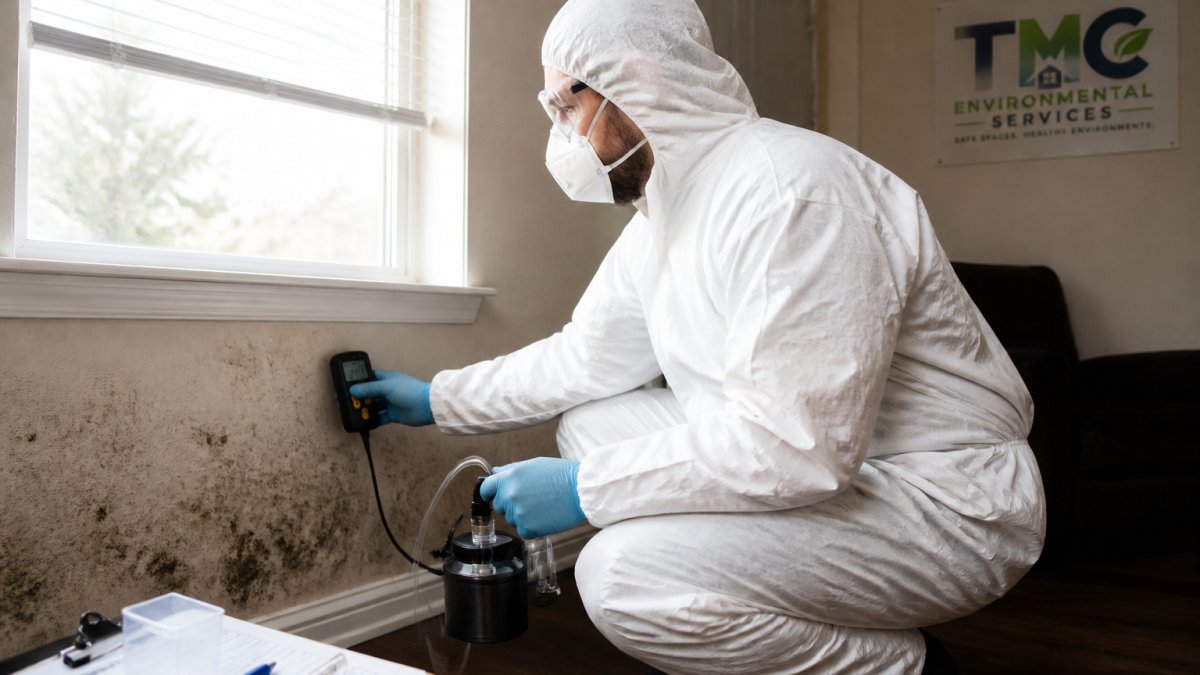
Here’s what a standard inspection looks like:
- Visual walkthrough of the home, including attics, crawl spaces, and basements
- Moisture detection using meters and thermal imaging to find hidden intrusion
- Air sampling to measure spore counts in key rooms
- Surface sampling where visible growth is present
- Lab analysis of all samples
- Written report with findings, photos, and next steps
The whole process usually takes one to three hours, depending on home size. Lab results typically come back within a few business days. From there, you get a clear remediation estimate and a plan.
If you’ve had mold come back after a previous remediation, this is where the root cause finally gets found. Treating the symptom without finding the moisture source is the most common reason mold returns.
Frequently Asked Questions
Will the VA pay for mold remediation in a private home?
The VA does not typically cover mold remediation in private homes. VA benefits for toxic mold exposure focus on service-connected disability claims for veterans who developed health conditions during service. If you’re filing a claim, you’ll need documentation from a certified mold inspector showing contamination levels, plus medical records linking your condition to exposure. The Mold Consultant, LLC provides neutral inspection reports that can support VA claim documentation.
How much does a mold inspection cost for homeowners?
Mold inspection cost for homeowners varies based on property size, number of samples collected, and whether air quality testing or moisture detection is included. Pricing depends on the scope of testing needed and the specific services requested. The Mold Consultant, LLC lists current pricing on its website, and veterans, teachers, and first responders may qualify for discounts that reduce the total.
How do I find a certified mold inspector near me?
Look for inspectors with credentials like Certified Residential Mold Inspector (CRMI) or Certified Microbial Remediation Supervisor (CMRS). Check whether the inspector provides air sampling, moisture detection, and written reports suitable for insurance or legal use. In the Oklahoma City metro area, The Mold Consultant, LLC holds these certifications and offers non-destructive testing with actionable remediation strategies.
Can you get medically tested for mold exposure?
Yes, some physicians offer toxic exposure screenings that measure antibodies or biomarkers linked to mold. These tests are not standardized, so results should be interpreted alongside a home inspection. A certified mold inspector can document spore counts and airborne contaminants in your home, giving your doctor concrete environmental data to correlate with any health risk assessment.
Mold doesn’t wait, and neither should you. If you’re a veteran, first responder, or teacher in the Oklahoma City metro area, The Mold Consultant, LLC offers discounted professional mold testing with non-destructive inspection methods, air quality analysis, and clear written reports you can use for VA claims, insurance, or peace of mind. Get started with The Mold Consultant, LLC and find out exactly what’s in your air.