
Table of Contents
- How Long for Mold to Grow After Water Damage
- What Does Water Damage Mold Look Like?
- Hidden Mold Behind Walls After Water Damage
- How to Test for Mold After a Flood
- Safe Inspection Precautions and When Not to Disturb Suspected Mold
- Testing vs. Remediation: A Clear Decision Tree
- Frequently Asked Questions
Last Updated: October 5, 2026
How Long for Mold to Grow After Water Damage
Mold after water damage can start growing in as little as 24 to 48 hours, and visible colonies often appear within 72 hours. Left unchecked, a small problem can spread across a room in one to two weeks. This guide from The Mold Consultant, LLC walks you through the warning signs of mold after water damage, so you know exactly what to look for and when to call a professional.
Water damage doesn’t always announce itself. A slow leak behind a cabinet or a flood that seemed to dry overnight can still leave enough moisture to feed mold growth. The key is catching it early.
Below, we’ll show you the warning signs to check for, plus a room-by-room checklist you can use today.
Don’t assume a room is dry just because the surface feels dry. Drywall, carpet padding, and wood framing hold moisture long after the visible water is gone. That hidden dampness is where mold growth starts.
What Does Water Damage Mold Look Like?
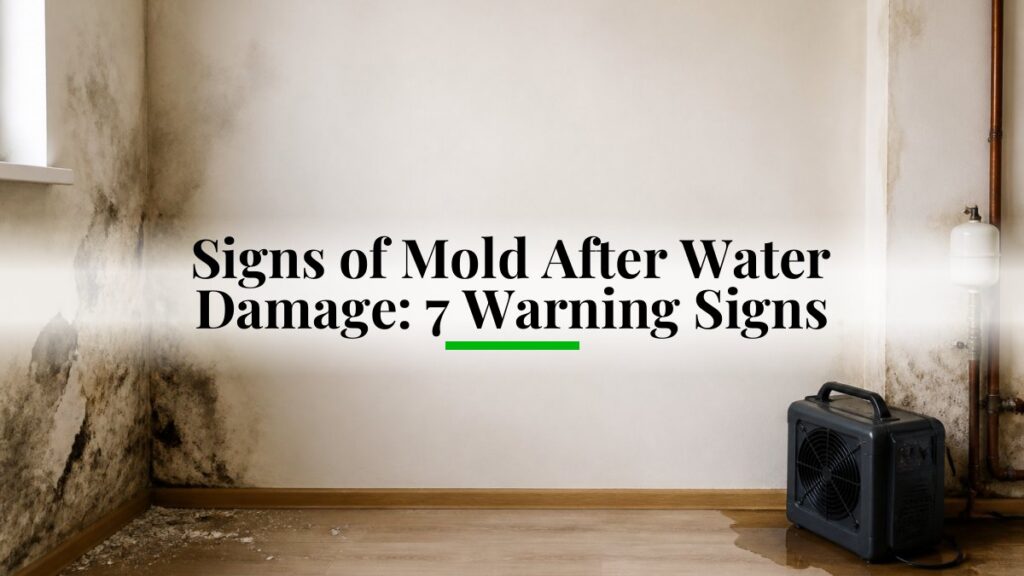
Water damage mold usually appears as discolored patches that spread outward from a moisture source. Colors range from white and gray to greenish, brownish, or black. The texture varies too: fuzzy patches, slimy growth, or streaky patterns along walls and ceilings. Black mold and gray mold are the most common types homeowners notice first.
Early growth often looks like a faint stain. As it matures, it becomes thicker and more textured. Look for:
- Dark spots clustered in corners or along baseboards
- Fuzzy patches on drywall, wood, or fabric
- Streaky patterns where water once ran down a wall
- Slimy growth near pipes or under sinks
- Discoloration that keeps coming back after cleaning
Mold needs three things to grow: moisture, organic material, and time. Remove any one of those and it stops spreading. That’s why drying fast matters so much.
Mold vs. Water Stains and Dirt
Telling mold apart from an ordinary water stain or dirt comes down to texture, smell, and how it spreads. A water stain is flat and discolored but dry to the touch. Dirt wipes away clean. Mold is raised, often fuzzy, and returns after you clean it.
Here’s a quick comparison:
| Feature | Mold | Water Stain | Dirt |
|---|---|---|---|
| Texture | Fuzzy, raised, slimy | Flat, smooth | Powdery, dry |
| Smell | Musty, earthy | None | None |
| Returns after cleaning | Yes | No | No |
| Spreads over time | Yes | Stays same size | No |
If a spot grows, smells musty, or comes back after cleaning, treat it as mold until proven otherwise.
Hidden Mold Behind Walls After Water Damage
Hidden mold behind walls is common after a water leak because the inside of a wall stays damp long after the surface dries. Signs include warped flooring, soft drywall, peeling paint, and a musty odor with no visible source. You often can’t see it, but you can usually smell it or feel it.
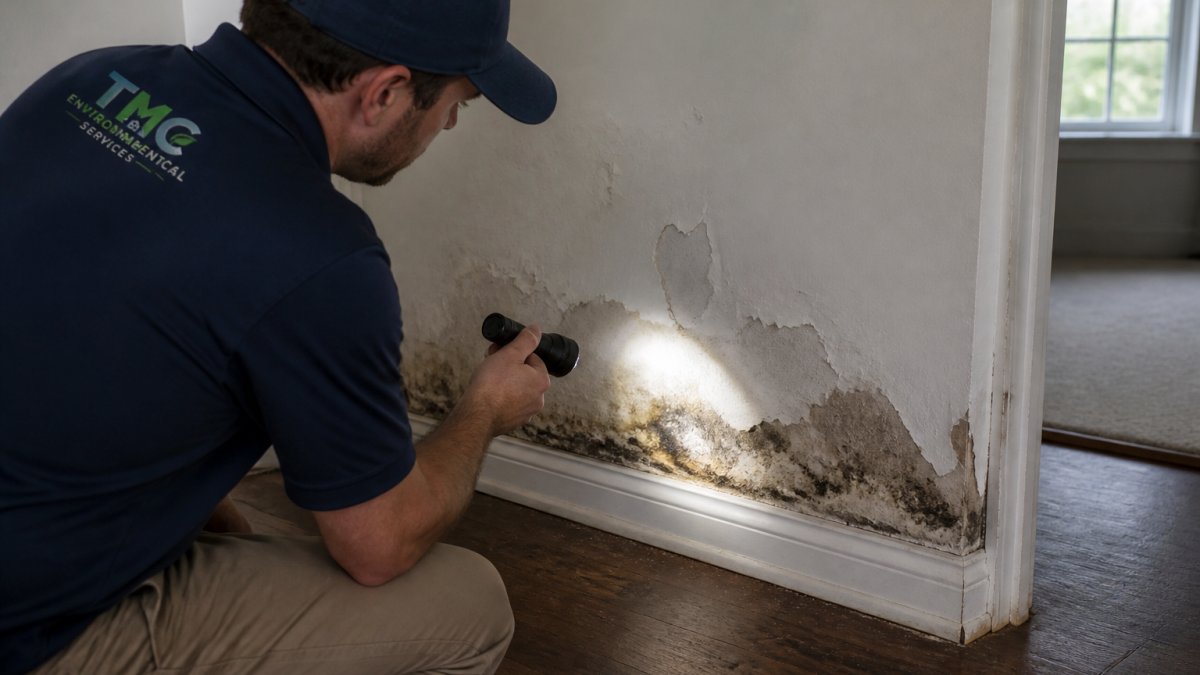
Watch for these clues:
- Warped or soft flooring that gives when you step on it
- Peeling or bubbling paint on walls and ceilings
- A musty odor in one room but not others
- Staining around baseboards or window frames
- Water intrusion you noticed weeks ago but never fully dried
Enclosed areas like basements, crawl spaces, and closets trap humidity. That makes them prime spots for hidden growth.
Which Materials Can Be Saved and Which Usually Can’t
Not every wet material is a loss, but the dividing line is porosity. Porous materials absorb water into their structure and hold it where mold can colonize. Hard, non-porous surfaces can usually be dried and cleaned if you act fast. Fibrous textiles like rugs and padding require specialized attention to prevent mold in carpets because their deep, absorbent fibers trap moisture long after the surface appears dry.
| Material | Porous? | Typical guidance |
|---|---|---|
| Carpet and carpet padding | Yes | Padding almost always needs removal; carpet often does too once soaked |
| Drywall and gypsum board | Yes | Cut out and replace sections that stayed wet beyond about 48 hours |
| Insulation (fiberglass, cellulose) | Yes | Remove and replace; it loses performance and traps moisture |
| Hardwood and engineered flooring | Partly | May be dried with specialty equipment; warped or cupped boards usually need replacement |
| Wood framing and studs | Partly | Can often be dried in place with air movers and dehumidifiers |
| Concrete, tile, metal, glass | No | Usually cleanable after drying |
| Cabinets and particleboard | Partly | Solid wood may survive; particleboard and MDF swell and typically need replacement |
A common pattern: the visible surface dries in a day, but the paper facing on drywall, the carpet pad underneath, and the bottom plate of a wall stay wet for a week or more. That is where growth starts.
Measuring Moisture Instead of Guessing
A surface that feels dry can still be wet inside. A handheld moisture meter gives you a number instead of an impression. Pin-type meters read the moisture content of wood and drywall at the point of contact; pinless meters scan a broader area without leaving holes. Many inspectors carry both, plus a thermal camera to spot cooler, damp patches behind finished surfaces.
For reference, wood framing is generally considered dry enough to close up when readings fall into the low teens as a percentage of moisture content, and drywall is typically considered dry in the range of about 12 to 15 percent. Readings well above those ranges after several days of drying are a signal that the cavity is still holding water.
Document as you go. Take dated photos of each affected area, note the moisture meter reading next to the photo, and write down the date the water event happened. That record is what insurance adjusters and landlords ask for, and it is far more persuasive than a verbal description weeks later.
Room-by-Room Inspection Checklist
Use this checklist to check your home in about 20 minutes:
- Basement: Look for damp walls, white powdery residue, and musty smells
- Bathrooms: Check under sinks, around the toilet base, and behind the shower
- Kitchen: Inspect under the sink, behind the fridge, and near the dishwasher
- Laundry room: Check behind the washer and around the water lines
- Attic: Look for roof leaks, dark roof sheathing, and damp insulation
- Bedrooms: Check closets, under windows, and along exterior walls
- Living areas: Inspect ceilings below bathrooms and around any past leak
If a wall cavity has been wet for more than about two days, assume the drywall and insulation behind it need to come out. Painting over a damp wall traps moisture and gives mold a place to grow out of sight.
How to Test for Mold After a Flood
Testing for mold after a flood starts with a professional assessment, not a store-bought kit. A qualified inspector measures moisture, checks hidden cavities, and collects air and surface samples. That gives you proof of what’s actually growing, not just a guess.
Here’s how a proper test works:
- Visual inspection of all water-damaged areas
- Moisture measurement with meters and thermal imaging
- Air sampling to catch mold spores you can’t see
- Surface sampling on visible growth
- Lab analysis to identify the mold type
- Written report with findings and next steps
The EPA’s guide to mold and moisture recommends fixing the water problem first. Testing without fixing the source just confirms what will come back.
If you’re a landlord or dealing with an insurance claim, a written report matters. It documents the problem in a way a verbal opinion can’t.
Safe Inspection Precautions and When Not to Disturb Suspected Mold
Never disturb suspected mold without protection, and never touch it if it covers a large area. Disturbing mold releases spores into the air, which can spread growth and affect your health. For anything bigger than a small patch, leave it alone and call a professional.
Follow these precautions:
- Wear an N95 respirator, gloves, and eye protection
- Seal off the area with plastic sheeting if possible
- Don’t run fans or HVAC systems near the growth
- Don’t sand, scrub, or dry-brush moldy surfaces
- Ventilate the space after you leave
If you have health conditions, asthma, or a weakened immune system, don’t inspect suspected mold yourself. Spores can trigger serious reactions. Let a trained inspector handle it.
The CDC’s guidance on mold cleanup is clear: some jobs are too big for DIY. When in doubt, get help.
Testing vs. Remediation: A Clear Decision Tree
Choosing between testing and remediation comes down to three questions: Is the area small? Is the moisture source fixed? Do you need documentation? If the answer to all three is yes, you may be able to clean it yourself. If not, bring in a pro.
Use this decision path:
- Small patch (under 10 square feet), source fixed, no health concerns → Clean it yourself with proper gear
- Any size, source not fixed → Fix the water problem first, then reassess
- Large area, musty odor, or hidden growth → Get a professional inspection
- Insurance claim, landlord dispute, or real estate sale → Get testing with a written report
- After remediation → Get post-remediation verification to confirm the job is done
At The Mold Consultant, LLC, we handle mold inspection, air quality testing, and post-remediation checks. Our non-destructive methods find moisture intrusion without tearing your home apart. We’re locally owned and operated, and we offer discounts for veterans, teachers, and first responders.
FEMA’s flood recovery resources can help if your water damage came from a flood event and you need claim support.
Frequently Asked Questions
How likely is mold after water damage?
Mold is very likely if water damage is not dried within 24 to 48 hours. Mold spores are always present in indoor air, and they need only moisture to start growing. In humid conditions, visible mold can appear within 72 hours. If you had a leak, flood, or burst pipe, assume mold risk is high until the area is confirmed dry with a moisture meter.
What are the first signs of mold after water damage?
The earliest signs are a musty or earthy smell, followed by discoloration such as dark spots, gray or greenish patches, or streaky patterns on walls, ceilings, or flooring. You may also notice soft or warped flooring, peeling paint, or bubbling drywall. Because mold often starts hidden behind walls, trust your nose and any visible water stains even before you see fuzzy growth.
Can mold grow behind walls after water damage?
Yes. Mold frequently grows on the back side of drywall, inside wall cavities, and under flooring where moisture lingers. Common clues include a musty odor in one room, unexplained allergy symptoms, and warped baseboards. A professional mold inspection uses moisture meters and thermal imaging to find hidden mold without tearing out walls. If you suspect hidden growth, avoid disturbing the area and call an inspector.
How can you test for mold after a flood?
After a flood, you can test for mold with store-bought kits, but these are prone to false results. A more reliable approach is to hire a certified mold inspector who performs air quality testing and moisture mapping. They will document findings in writing, which is useful for insurance claims or landlord disputes. If you see widespread growth or smell a musty odor, skip DIY and call a professional.
Water damage is stressful enough without wondering what’s growing behind your walls. The signs of mold after water damage show up fast, and the longer you wait, the bigger the problem gets. The Mold Consultant, LLC offers professional mold inspection, air quality testing, and post-remediation verification to find the root cause, not just the symptom. Call now to schedule your inspection and get clear, documented answers.