

Last Updated: November 18, 2026
Quick Summary
To find mold behind cabinets, check for musty odors, dark staining, and warped wood, then inspect under sinks and along cabinet backs with a flashlight and moisture meter. A careful visual inspection takes about 30 minutes and costs nothing. Never pry off a cabinet back panel to peek inside the wall cavity.
- Musty smells, dark staining, and warped wood are the three most reliable signs of mold behind cabinets.
- Put on an N95 respirator, nitrile gloves, and safety glasses before opening the first cabinet door.
- Angle a bright flashlight low across surfaces so raking light reveals fuzzy growth and staining.
- Press moisture meter pins into suspect wood and compare readings to a known-dry cabinet.
- Call a professional if growth covers a cabinet back, returns after cleaning, or affects porous materials.
Table of Contents
- Warning Signs of Mold Behind Cabinets
- What Causes Mold in Cabinets
- How to Find Mold Behind Cabinets DIY: A Step-by-Step Inspection
- How to Get Rid of Mold in the Cabinet Under Sink
- Is Mold in Cabinets Dangerous?
- DIY vs. Professional Mold Detection: When to Call an Expert
- Schedule a Professional Mold Inspection
- Frequently Asked Questions
Warning Signs of Mold Behind Cabinets
Musty smells, dark staining, and warped wood are the three most reliable signs of mold behind cabinets. If you notice any of them, moisture is likely trapped where you cannot see it.
Learning how to find mold behind cabinets starts with reading these clues before you pull out a single drawer. This guide walks you through a safe inspection you can do yourself, plus the point where a pro should take over.
Here is the uncomfortable truth most guides skip: by the time you smell mold, the growth has usually been feeding on hidden moisture for weeks. The EPA guide to mold and moisture control makes the same point plainly: without fixing the water source, cleanup alone will not stop it from coming back.
Musty Odors and Visible Discoloration
A musty, earthy smell is often the first clue. Mold gives off gases as it breaks down wood and paper, and that smell seeps out of cabinet seams.
Visible spots are the second clue. Look for:
- Black, green, or gray speckling on cabinet backs
- Yellowish or brown water staining on shelves
- Fuzzy patches near corners and joints
Keep in mind that mold can hide behind the cabinet back panel, so a clean interior does not rule it out.
Warping, Dampness, and Condensation Clues
Wood reacts to moisture before mold becomes visible. Doors that suddenly stick, shelves that bow, and bubbling paint all point to dampness.
Run your hand along the cabinet floor near the wall. If it feels cool and damp, moisture is present. Condensation on pipes under the sink is another common moisture indicator.
What Causes Mold in Cabinets
Mold in cabinets almost always traces back to trapped moisture, not to dirty surfaces. Four sources account for most cases:
- Slow leaks from supply lines, drain traps, or the dishwasher
- Condensation on cold pipes in humid months
- Poor ventilation that traps damp air inside closed cabinets
The CDC guidance on mold and dampness notes that mold grows wherever moisture lingers, which is why the fix is always moisture control first. A common mistake is scrubbing the visible mold and skipping the leak.
Oklahoma State University Extension’s home moisture guide explains how hidden leaks feed mold inside wall cavities long before you see it. If you suspect hidden water damage, read how hidden water damage causes long-term harm before you start cleaning.
How to Find Mold Behind Cabinets DIY: A Step-by-Step Inspection
A careful visual inspection takes about 30 minutes and costs nothing. You are looking for moisture and discoloration, not proving what kind of mold it is. The goal is to find the wet spot and document what you see without spreading spores through the kitchen.
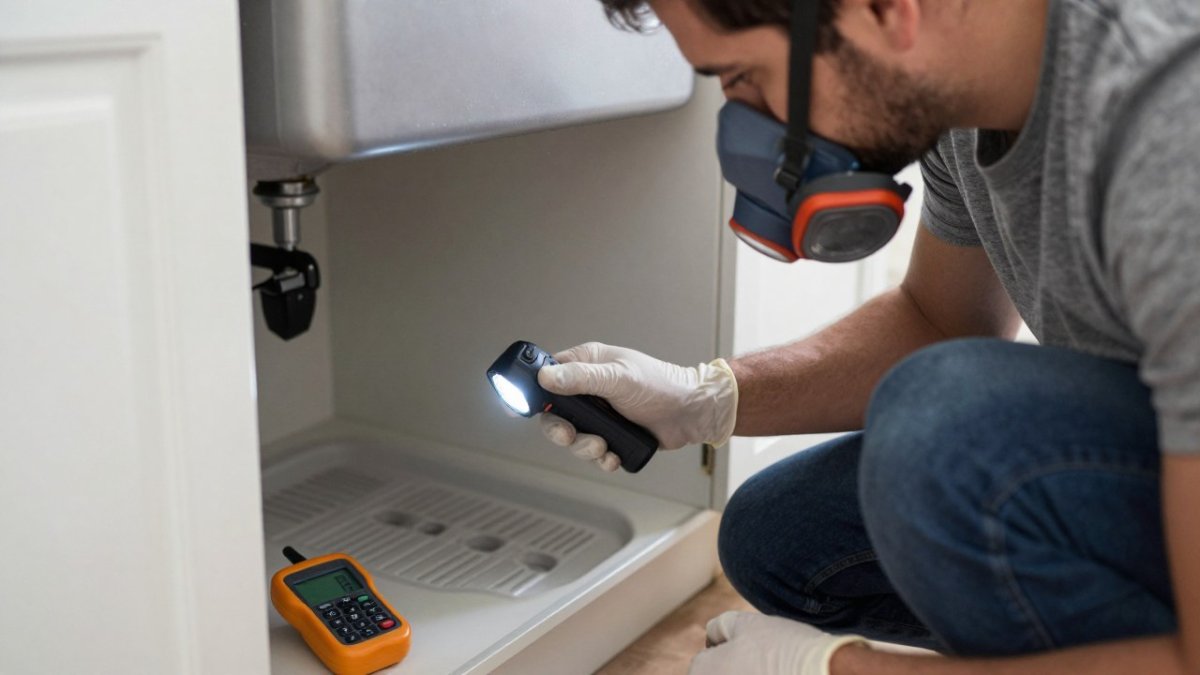
Set Up Before You Open Anything
Sequence matters more than gear. Do these first:
- Isolate the room. Close interior doors and shut off the HVAC supply vent in the kitchen if you can. Running air handling during an inspection pulls dust and spores into the rest of the house.
- Lay down containment. A plastic drop cloth under the cabinet catches debris and makes cleanup easy.
- Put on PPE before the first cabinet door opens. N95 respirator, nitrile gloves, and safety glasses. Spores become airborne the moment you disturb a contaminated surface.
- Have a spray bottle of water ready. Lightly misting a suspect area before wiping keeps dust down.
The Inspection Sequence
Work from the least disturbed area to the most, so you do not carry contamination from a wet cabinet into a dry one.
- Clear the cabinet. Remove everything and set it aside to check later. Bag porous items that smell musty rather than returning them.
- Shine a light into corners. Use a bright flashlight along the back panel and floor seams. Angle the beam low across the surface; raking light reveals fuzzy growth and staining that direct light hides.
- Check under the sink first. Look at pipe joints, the drain trap, and the cabinet floor. Trace every supply line and drain fitting with your light.
- Feel for dampness. Run your hand along the back panel and base. Cool, soft, or crumbling wood is a stronger signal than color.
- Test with a moisture meter. Press the pins into the wood at several points. Compare a suspect spot to a known-dry cabinet in the same room; the difference matters more than the absolute reading.
- Photograph anything suspicious. Date the photos and note the location. This record is useful for a landlord, an insurer, or a future inspection.
What Each Tool Can and Cannot Tell You
This is where most guides overpromise. None of these tools confirms mold; they confirm moisture or visible growth.
- Flashlight and your eyes find discoloration, warping, and visible growth. They cannot see behind a sealed back panel.
- Pin-type moisture meter reads the moisture content of the wood it touches. It tells you a cabinet panel is damp, not whether mold is growing inside it. Readings vary by material, so use it comparatively.
- Pinless moisture meter scans a wider area without pinholes, useful for mapping a damp zone before you probe.
A common pattern is for a homeowner to buy a moisture meter, get a high reading, and assume mold. The reading means water is present. That is the finding worth acting on.
Inspecting Under Sinks, Cabinet Backs, and Wall Surfaces
Start where water lives. Under-sink areas, cabinet backs, and the wall behind them are the highest-risk spots.
Look for staining where the cabinet meets the wall. Feel for soft or crumbling wood. Check the external wall side of the cabinet too, since condensation builds there in humid weather.
Watch out: never pry off a cabinet back panel to peek inside the wall cavity. If you suspect mold behind drywall after a leak, learn the signs of mold behind drywall and let a pro open the wall safely.
Tools and Safety Gear You Need
A basic kit covers most inspections:
- N95 respirator and nitrile gloves
- Safety glasses
- Bright flashlight
If you want a deeper gear list, see our guide to the top mold detection tools for homeowners.
How to Get Rid of Mold in the Cabinet Under Sink
Small surface mold on a non-porous surface can often be cleaned safely. The EPA’s mold cleanup guidance recommends detergent and water for most hard surfaces, with proper protective gear.
A simple approach:
- Put on your respirator and gloves.
- Wipe surfaces with detergent and water, not bleach alone.
- Dry the area completely within 24 hours.
For a small patch, white vinegar or hydrogen peroxide works on light surface growth. Porous materials like soggy particleboard usually need removal, not cleaning.
Is Mold in Cabinets Dangerous?
Mold in cabinets is not automatically dangerous, but it should not be ignored. Because moisture that triggers these reactions can also collect out of sight, CMR Plumbing & Drain Cleaning can help connect the concern to signs of hidden water leaks in walls.
Risk depends on three things:
- The amount of growth
- How long it has been there
- Who is living in the home
Some people are more sensitive than others. If anyone in the home has breathing issues, treat it as urgent.
DIY vs. Professional Mold Detection: When to Call an Expert
Most guides treat this as a yes-or-no question. In practice it is a set of thresholds. The EPA’s mold cleanup guidance draws a practical line: if the moldy area is larger than roughly a few square feet, or if you cannot find the moisture source, professional help is warranted. That is a reasonable starting point, but the decision usually turns on four factors.
The Four Thresholds
- Size of the affected area. A small spot on a hard surface is a cleaning job. Growth that covers a cabinet back, spreads into the wall cavity, or returns across multiple cabinets is beyond a DIY scope.
- Recurring moisture. If mold comes back after cleaning, the water source is still active. Cleaning without fixing the source is wasted effort, and a pro is needed to find the intrusion point.
- Contaminated materials. Porous materials like particleboard, drywall, and insulation cannot be cleaned reliably once growth is established. They have to be removed, and removal is when containment matters most.
- Occupant health. If anyone in the home has asthma, allergies, or a compromised immune system, lower the threshold for calling a professional. The CDC guidance on mold and dampness notes that damp indoor environments are associated with respiratory symptoms, and sensitive occupants are affected first.
What a Professional Inspection Adds
A professional inspection goes beyond visual checks. The difference is in what the tools can show and how the findings are documented.
- Moisture mapping. A moisture meter and thermal camera used together map where water is traveling, not just where it surfaced.
- Air and surface sampling. Sampling can characterize what is growing, but results are easy to misread. A common mistake is treating a single air sample as a definitive verdict; sampling is most useful when paired with a visual assessment and a moisture investigation.
- Containment and removal. If cabinets or drywall have to come out, negative air pressure and sealed barriers keep spores out of the living space.
A Decision Table
| Situation | DIY Inspection | Professional Inspection |
|---|---|---|
| Small spot on a hard surface | Yes | Not needed |
| Musty smell, no visible mold | Limited | Recommended |
| Mold returns after cleaning | No | Yes |
| Growth inside a wall cavity | No | Yes |
| Porous material (particleboard, drywall) affected | No | Yes |
| Health symptoms in the home | No | Yes |
| Renter with a landlord dispute | Document only | Recommended for a written report |
If You Rent
Renters face a different decision. Document the conditions with dated photos, report the issue to the landlord in writing, and keep a copy. Do not open walls or remove cabinets yourself; that can complicate the landlord’s responsibility and your deposit. A professional written report is often the fastest way to get a repair scheduled.
What Most Guides Miss
A moisture meter tells you wood is damp, not whether mold is present behind it. Non-invasive tools have limits, and a professional inspection is valuable mainly because it connects the visible growth to the water source and documents the result. If the clues point behind the cabinet and you cannot confirm the source, that is the point to call.
Schedule a Professional Mold Inspection
Book a professional inspection when the clues point behind the cabinet and you cannot confirm the source. A proper inspection finds the moisture intrusion point, not just the visible growth.
Before your visit, learn how to prepare for a professional mold inspection so the inspection covers every suspect area.
If your cabinet smells musty or you have had a leak, guessing is not a plan.
Frequently Asked Questions
Can you detect mold behind cabinets without removing them?
In many cases, yes. Start with a visual inspection of cabinet backs, corners, and the under-sink area, and watch for musty odors, discoloration, or warping. A moisture meter can reveal damp cabinet backs and wall surfaces without demolition. These non-invasive methods have limits, though: they can flag moisture and visible growth but cannot confirm what is hidden inside a wall cavity. If signs point to a deeper problem, a professional inspection with thermal imaging and air sampling gives clearer answers before any cabinet removal.
What causes mold in cabinets?
Mold in cabinets needs moisture, organic material, and poor ventilation. Common sources include a slow plumbing leak under the sink, condensation on exterior walls behind cabinet backs, humidity trapped in dark corners, and water damage that was never fully dried. Cabinet backs sit against wall cavities where leaks often go unnoticed for months. Fixing the moisture source is the only way to stop recurring mold, which is why an inspection should always trace where the water is coming from, not just where the growth appears.
Is mold in cabinets dangerous?
Not all mold is toxic, but any indoor mold growth can affect health. Common reactions include respiratory irritation, allergic reactions, and worsened asthma symptoms, especially in people with sensitivities. Black mold gets the most attention, but the bigger issue is usually ongoing mold exposure in a damp, poorly ventilated space. If you smell a musty odor or see visible spots, treat it as a moisture problem worth investigating. Anyone with persistent symptoms should talk to a doctor and consider professional testing.
What should you do if you find mold under a sink cabinet?
First, fix the water leak or condensation source, because cleaning without drying the area invites recurring mold. Wear protective equipment, including gloves, eye protection, and a respirator, then clean small areas on hard surfaces with white vinegar or hydrogen peroxide. Throw away porous items like cardboard or damp particleboard that cannot be dried. If the growth covers a large area, has spread into the wall cavity, or keeps coming back, schedule a professional inspection to confirm the extent and plan remediation.
