
Last Updated: November 16, 2026
Quick Summary
To remove mold from wet carpet, first fix the water source, then clean the surface and dry everything completely within 24 to 48 hours. Wear gloves, eye protection and a respirator, vacuum loose spores, apply a tested cleaning solution, scrub, and dry until a moisture meter reads dry. If the padding or subfloor is affected, removal is the safer call.
- Clean water soaked carpet has a real chance of being saved if you dry it fast.
- Pull back a corner and check the padding first, since it holds water long after the surface feels dry.
- Aim fans along the floor to sweep moisture off the surface rather than blowing straight down.
- Mix equal parts white vinegar and water, spray, let it sit about an hour, then blot and dry.
- Baking soda does not kill mold, but it helps remove it and control odor.
Table of Contents
- Assess the Water Source Before You Touch the Carpet
- How to Detect Mold in Carpet and Padding
- How to Dry Wet Carpet and Prevent Mold Growth
- Can Carpet with Mold Be Saved? Signs It Is Time to Remove It
- Step-by-Step: How to Remove Mold from Wet Carpet
- Does Baking Soda Kill Mold in Carpet?
- Safety Limits, Bleach Risks, and When to Call a Professional
- Schedule a Professional Mold Inspection Before You Reinstall Carpet
- Frequently Asked Questions
Assess the Water Source Before You Touch the Carpet
The first step in how to remove mold from wet carpet is finding out what kind of water soaked it. Clean water from a supply line is a different problem than dirty water from a flood. Your safety and your cleanup plan depend on that answer.
Homeowners often start scrubbing before they know what they’re scrubbing. That can spread contamination and make the job worse.
Clean Water vs. Contaminated Water
Clean water comes from a broken supply pipe, a rain leak, or an overflowing sink. This water is treatable.
Contaminated water is another story. It comes from sewage backups, ground flooding, or long-standing leaks. This water carries bacteria and dirt.
- Clean water: supply line, rain, sink overflow. Act fast and dry within 24 to 48 hours.
- Gray water: washing machine or dishwasher discharge. Treat with caution.
- Black water: sewage or outdoor flooding. Remove the carpet; do not clean it.
For any contaminated water situation, the EPA’s guidance on indoor mold is clear: porous materials that stay wet are hard to fully clean.
How to Detect Mold in Carpet and Padding
Mold in carpet shows up as dark stains, a musty odor, or visible fuzz along the backing. The tricky part is that mold often hides under the carpet, in the padding and on the subfloor.
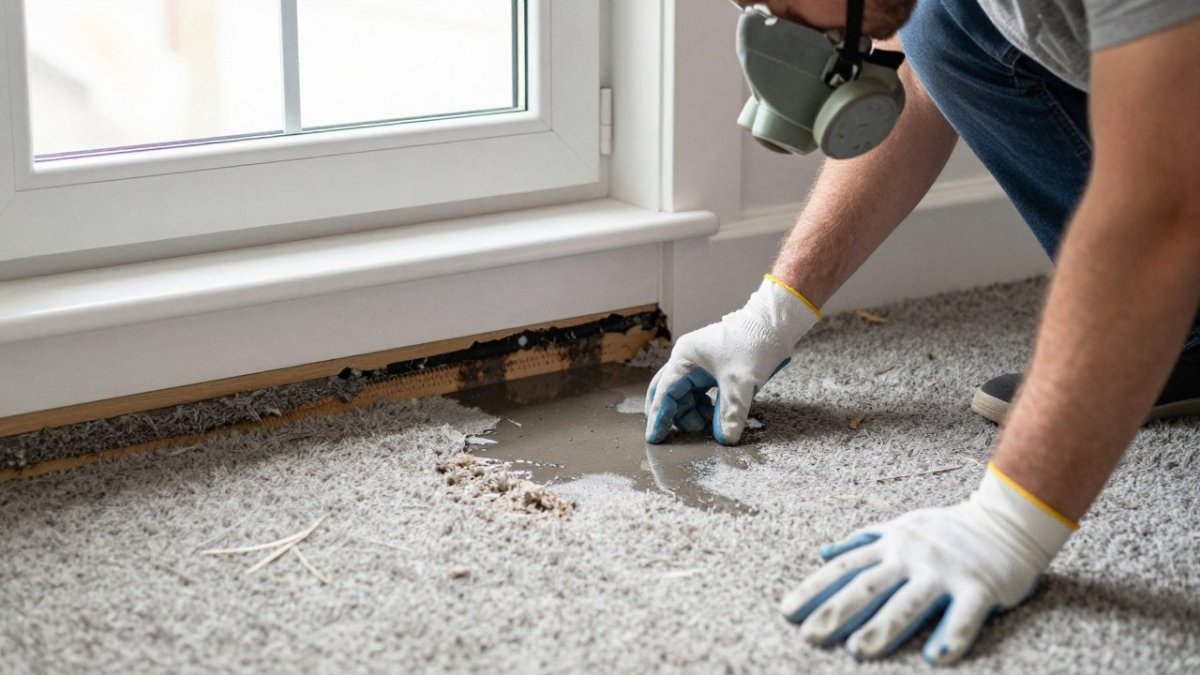
Pull back a corner and check the padding first. Padding soaks up water like a sponge and holds it long after the carpet surface feels dry. Look for:
- Dark or greenish patches on the backing
- A musty odor that gets stronger near the floor
- Discolored padding that crumbles when touched
If you want to confirm what you’re seeing, our guide on the top mold detection tools for homeowners covers the practical options.
How to Dry Wet Carpet and Prevent Mold Growth
Mold needs moisture, and it starts growing fast. The goal is to dry the carpet and padding within 24 to 48 hours of the water event. Miss that window and mold growth becomes far more likely.
Here’s how to dry wet carpet and prevent mold:
- Remove standing water with a wet-dry vacuum.
- Pull up the carpet and lift the padding to let air reach both sides.
- Set up fans and open windows for air circulation and ventilation.
- Run a dehumidifier to pull moisture from the air.
- Check the subfloor for moisture before you reinstall anything.
A moisture meter takes the guesswork out of drying time. According to the CDC’s guidance on mold cleanup, damp materials should be dried and checked within the first day or two.
Response Timeline and Moisture Targets
The first 24 to 48 hours are generally considered critical in determining whether carpet can be saved. Use this timeline as a working guide:
- 0 to 12 hours: Extract standing water, pull up carpet and padding, and start air movement. Mold spores can begin to germinate on wet porous materials within this window when conditions are warm and humid.
- 12 to 24 hours: Run dehumidifiers and fans continuously. Check the backing and padding by hand and with a moisture meter.
- 24 to 48 hours: Confirm the carpet, padding, and subfloor are drying evenly. If readings are not falling, the moisture source is still active or airflow is inadequate.
A pin-type or pinless moisture meter gives you a number instead of a feeling. Take baseline readings on dry carpet in an unaffected room, then compare readings in the wet area. A common pattern is for the carpet surface to read dry while the padding and subfloor remain elevated.
Drying Equipment and Setup
- Wet-dry vacuum: Use a unit rated for water extraction and empty the tank often. A fine filter helps capture loose spores.
- Air movers: Aim fans along the floor to sweep moisture off the surface rather than blowing straight down into the carpet.
- Dehumidifier: Size it to the room and run it continuously with windows closed in humid weather. Opening windows during high outdoor humidity can slow drying.
Watch out: Running a dehumidifier with windows wide open in humid weather can pull moist outdoor air back into the room and defeat the drying effort.
When to Bring In a Professional
Call a professional when the wet area is larger than a small patch, when the water came from sewage or flooding, when readings stay elevated after 48 hours, or when the subfloor or wall cavities are involved. When the damage is limited to a small spill, drying wet carpet fast can help keep moisture from reaching the padding and subfloor.
Can Carpet with Mold Be Saved? Signs It Is Time to Remove It
Some carpet with mold can be saved, but only when the growth is small and the water was clean. When mold has spread into the padding or subfloor, removal is the safer call.
Watch out: cleaning the surface of moldy carpet while leaving wet padding underneath just feeds the mold. It comes back.
Signs it is time to remove the carpet:
- Mold covers a large area or has spread under the padding
- The padding is soaked or crumbling
- The water came from sewage or flooding
For deeper problems behind the wall or floor, read our guide on whether hidden water damage can cause long-term harm.
Step-by-Step: How to Remove Mold from Wet Carpet
To remove mold from wet carpet, start by fixing the moisture source, then clean the surface, then dry everything completely. Cleaning without fixing the leak is wasted effort.
Follow these steps:
- Fix the water source. Stop the leak or dry the area before cleaning.
- Put on gear. Wear protective gloves, eye protection, and a respirator.
- Ventilate the room. Open windows and set up fans.
- Vacuum loose spores. Use a wet-dry vacuum with a fine filter.
- Apply your cleaning solution. Test a small spot first.
- Scrub with a stiff brush. Work in small sections.
- Dry fully. Use fans and a dehumidifier until a moisture meter reads dry.
Vinegar and Hydrogen Peroxide Methods
White vinegar is a common household option. Mix equal parts white vinegar and water in a spray bottle.
Hydrogen peroxide works too.
Neither method reaches mold under the backing. If the growth is below the surface, these sprays only treat the symptom.
Here is the cleaning sequence the article lays out, from stopping the water to confirming everything is dry.
| Step | What to do |
|---|---|
| 1 | Fix the water source before cleaning |
| 2 | Wear gloves, eye protection, and a respirator |
| 3 | Open windows and set up fans |
| 4 | Vacuum loose spores with a wet-dry vacuum |
| 5 | Apply cleaning solution; test a small spot first |
| 6 | Scrub with a stiff brush in small sections |
| 7 | Dry fully until a moisture meter reads dry |
Does Baking Soda Kill Mold in Carpet?
Baking soda does not kill mold, but it does help remove it and control odor. It works as a mild abrasive and absorbs moisture from the surface.
To use it, sprinkle baking soda over the affected area, let it sit for several hours or overnight, then vacuum it up.
Treat baking soda as a helper, not a cure. It will not stop mold that has rooted in the padding or subfloor.
Safety Limits, Bleach Risks, and When to Call a Professional
Bleach is not the answer most people think it is. It can discolor carpet, and it does not reach mold roots in porous materials. Bleach fumes are also harsh in a closed room.
Why Bleach Is a Poor Fit for Carpet
Carpet is a porous material, and bleach mainly affects what it touches on the surface. Mixing bleach with vinegar, ammonia, or other cleaners can release dangerous gases, so never combine cleaning chemicals (the CDC).
If you use any disinfectant, follow the label directions and ventilate the room. For porous materials that have stayed wet, replacement is often more reliable than disinfection.
Protective Equipment and Ventilation
- Gloves: Use nitrile or rubber gloves, not thin disposable food gloves.
- Respirator: An N95 respirator reduces inhalation of spores during disturbance; change it if it becomes damp or soiled.
- Eye protection: Goggles or sealed safety glasses keep spores and cleaning solutions out of the eyes.
Watch out: Anyone with asthma, allergies, or a weakened immune system should stay out of the work area entirely, and people with compromised immunity should not perform the cleanup themselves.
When DIY Cleanup Is Inappropriate
Do not attempt DIY cleanup when:
- The water came from sewage, outdoor flooding, or a long-standing leak.
- Mold covers more than a small patch or has spread into padding, tack strips, or the subfloor.
- The mold keeps returning after cleaning and drying.
Professional Remediation Decision Criteria
Call a professional when the affected area is large, when moisture readings stay elevated after 48 hours, when contamination is suspected, or when hidden moisture is likely. Remediation contractors may use containment and moisture verification that go beyond what household equipment can do. If you’re worried about toxicity, our guide on how to safely remove toxic mold from your home walks through the safer handling steps before you decide to call a pro.
Schedule a Professional Mold Inspection Before You Reinstall Carpet
Reinstalling carpet over hidden mold is the most expensive mistake in this whole process.
A professional mold inspection finds the moisture intrusion points and hidden growth that a visual check misses.
Before you book, our guide on how to prepare for a professional mold inspection tells you exactly what to have ready.
Mold in wet carpet is a race against moisture, and the clock starts the moment water hits the floor.
Frequently Asked Questions
What kills mold on wet carpet?
White vinegar, hydrogen peroxide, and baking soda are the most common household options, but they only address surface mold. A vinegar solution sprayed on and left for an hour can kill many mold spores on the carpet backing, while hydrogen peroxide works as a spot treatment on light stains. Neither reaches mold inside the padding or subfloor. If the carpet has been wet more than 48 hours or the water was contaminated, removal and professional inspection are safer than cleaning.
How quickly can mold grow on wet carpet?
Mold spores need moisture, and carpet that stays damp can support visible growth within 24 to 48 hours. Humidity above 60% and poor air circulation speed this up. That is why water extraction and drying within the first day matters more than any cleaning product. If the carpet has been wet for several days, assume mold has spread into the padding and subfloor, and plan for a professional moisture assessment before you decide whether cleaning or replacement is the right move.
Does baking soda kill mold in carpet?
Baking soda does not kill mold on its own. It absorbs moisture and helps lift stains, which can make the carpet look better, but it leaves the mold colony intact. Combining baking soda with vinegar creates a fizzing reaction that loosens debris, yet the mixture is not a registered antimicrobial. Use baking soda as a drying and deodorizing step after you have removed the mold with vinegar or hydrogen peroxide, then vacuum thoroughly once the carpet is completely dry.
When should moldy carpet and padding be removed?
Remove carpet and padding when the water came from a sewage backup, flood, or long-standing leak, when mold covers more than a small patch, or when the carpet has been wet longer than 48 hours. Padding is nearly impossible to clean once mold grows inside it, and reusing it risks spreading spores back into the carpet. A professional mold inspection can confirm whether the subfloor is affected and whether the carpet can be saved or must be replaced.
