
Table of Contents
- Is Asbestos Dangerous in Residential Homes?
- The Difference Between Present and Dangerous
- Where Is Asbestos Found in Homes?
- When Does Asbestos Become a Health Hazard?
- What to Do If Asbestos Is Disturbed
- Asbestos Testing for Homes: How the Process Works
- Asbestos Removal vs. Encapsulation: Which Is Right?
- Who Is Responsible: Renters, Landlords, and Home Sales
- Schedule Professional Asbestos Testing Before Your Next Renovation
- Frequently Asked Questions
Last Updated: November 2, 2026
Is Asbestos Dangerous in Residential Homes?
Asbestos is dangerous in residential homes when materials that contain it are damaged, disturbed, or worn enough to release fibers into the air (the EPA). Intact asbestos in good condition poses little immediate risk. The danger starts when fibers become airborne and get inhaled.
This guide cuts through the confusion. Below, we’ll show you exactly how to tell the difference between present and dangerous, where asbestos hides in homes, and what to do the moment something gets disturbed.
First, here’s what most guides get wrong: they treat any asbestos finding as an emergency. That’s not how risk works. Presence and exposure are two different things, and that gap is where smart decisions live.
The Environmental Protection Agency’s asbestos guidance makes this clear: the hazard depends on whether fibers can be released, not on whether asbestos exists at all.
The Difference Between Present and Dangerous
Asbestos-containing materials are building products that include asbestos as an ingredient. The material being present is not the same as it being dangerous.
The key word is friability. A friable material crumbles easily and releases fibers with light pressure. A non-friable material holds together unless someone cuts, sands, or breaks it.
Consider two examples:
- Undamaged vinyl floor tile from the 1960s: present, but low risk while sealed
- Crumbling pipe insulation in a basement: present and dangerous, because fibers shed at a touch
Asbestos is dangerous in a residential home when three conditions line up: the material contains asbestos, it is damaged or will be disturbed, and people breathe the fibers. Remove any one condition and the risk drops.
That’s why “is asbestos dangerous in residential homes” has no single yes or no answer. It depends on condition, location, and what you plan to do.
Where Is Asbestos Found in Homes?
Asbestos hides in more places than most homeowners expect. Homes built before the 1980s are the highest concern, though some materials stayed in use into later years.
Common spots include:
- Pipe and boiler insulation
- Popcorn ceiling texture
- Vinyl floor tiles and the adhesive under them
- Roofing shingles and siding
- Drywall joint compound
- Attic and wall insulation
- Older furnace and duct wrap Disturbing these materials during home renovations poses significant health risks, particularly when you attempt to remove popcorn ceilings without proper containment and protective equipment.
For a room-by-room breakdown, see our guide to common places asbestos is found in homes.
How to Spot Likely Asbestos Materials Without Guessing
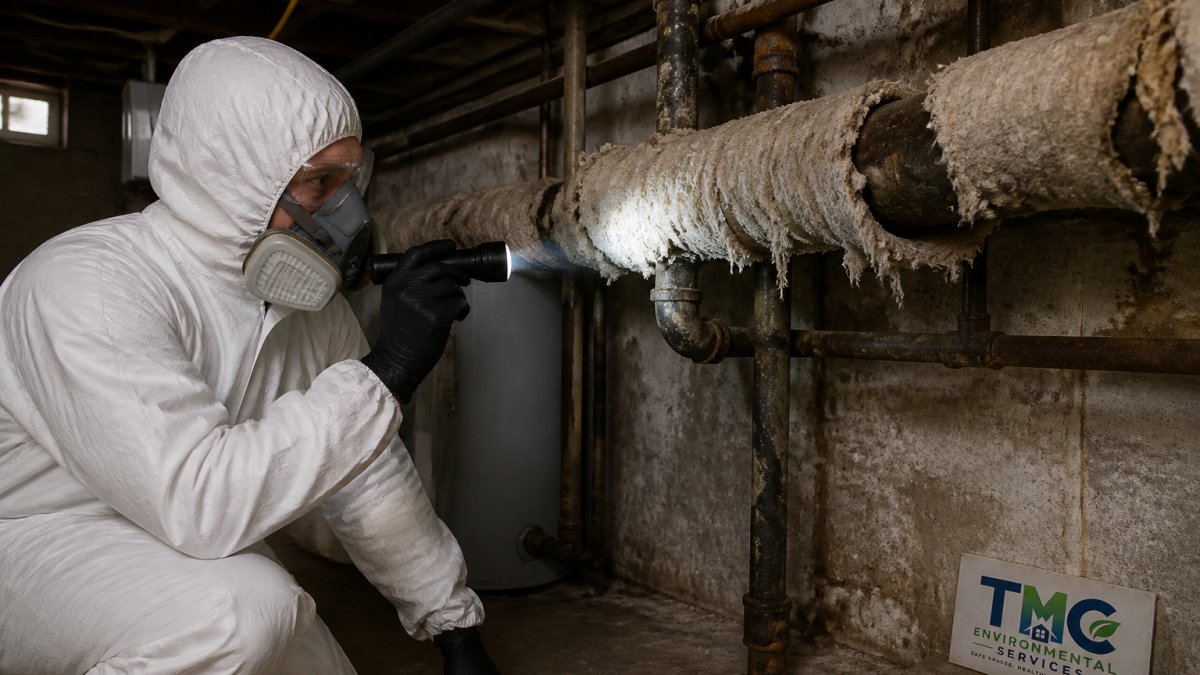
You cannot confirm asbestos by looking. No color, texture, or stamp proves it either way. What you can do is flag likely candidates.
Watch for these signals:
- A build date before the 1980s
- Materials that are frayed, cracked, or crumbling
- White or gray fibrous insulation
- Old floor tiles that are brittle and break in sharp pieces
Treat these as suspects, not verdicts. Only lab analysis confirms asbestos, and guessing wrong in either direction costs money.
When Does Asbestos Become a Health Hazard?
Asbestos becomes a health hazard when damaged or disturbed materials release airborne fibers that people inhale. Undamaged, sealed material is not a hazard on its own. The presence of asbestos is not the same as exposure, and exposure is not the same as disease risk.
Here is the mechanism in plain terms. Asbestos is a family of naturally occurring fibrous minerals. When a material containing them is cut, sanded, crumbled, or torn, microscopic fibers separate and stay suspended in the air for hours. Inhaled fibers can lodge deep in the lungs and stay there for decades because the body cannot break them down or clear them efficiently. Over time, that persistent irritation and cellular damage is linked to serious conditions:
- Mesothelioma, a cancer of the lining around the lungs and abdomen
- Asbestosis, scarring that stiffens the lungs and makes breathing progressively harder
- Lung cancer, with risk substantially higher in people who also smoke
Symptoms often take years or decades to appear, which is why prevention matters more than reaction. Risk is not binary. It depends on how much fiber was released, how long and how often someone breathed it, the fiber type, and individual factors such as smoking history. A single brief disturbance is not the same as years of occupational exposure, but no safe threshold has been established for asbestos, so the practical goal is to avoid unnecessary exposure altogether.
The difference between damaged and undamaged asbestos decides everything. A sealed, intact material can sit safely for years. A torn, sanded, or crumbling one can shed fibers today. Friable materials, which crumble under light pressure, are the highest concern; non-friable materials hold together unless someone cuts or breaks them. If you are unsure which you have, that is the moment to call in a qualified professional rather than test the material yourself.
Presence is not exposure. Exposure is not disease. The risk rises when fibers are released and people breathe them, so the safe move is to prevent release and limit access until a qualified professional assesses the material.
For context on how federal guidance frames the hazard, see the Environmental Protection Agency’s asbestos guidance.
What to Do If Asbestos Is Disturbed
Stop what you are doing. Disturbing suspect material is the one moment where a small mistake can turn a low-risk home into a real exposure event.
Follow these steps:
- Stop all work and keep people, pets, and children out of the area
- Turn off fans, HVAC, and anything that moves air
- Do not sweep, vacuum, or wipe up debris with a normal vacuum
- Close the door and seal gaps with plastic sheeting and tape
- Wash up if you touched material, and change clothes
- Call a qualified asbestos professional for assessment
A common mistake is grabbing a shop vac. Standard vacuums blow fine fibers back into the air. Leave cleanup to trained hands with proper containment and disposal.
Asbestos Testing for Homes: How the Process Works
Asbestos testing for homes is the process of collecting material samples and analyzing them in a lab to confirm whether asbestos is present. It is the only reliable way to know for sure. Appearance, age, and texture can flag a suspect material, but they cannot confirm or rule out asbestos.
Here is what a professional process usually looks like, step by step:
- Inspection and suspect inventory. A qualified professional walks the home, notes materials by location and condition, and identifies which ones warrant sampling. Not every material needs a sample; the goal is a representative picture.
- Controlled sampling. Small samples are taken with the area controlled to limit fiber release. Wet methods and plastic sheeting are common, and the material is handled so that fibers are not spread during collection.
- Laboratory analysis. Samples go to an accredited lab, which uses polarized light microscopy or, for certain materials, transmission electron microscopy to identify asbestos and estimate its percentage.
- Written report. You receive findings by material and location, along with recommendations on condition and next steps.
- Clearance and follow-up. If remediation follows, containment and clearance checks confirm the work area is clean before normal use resumes.
A few practical points help you evaluate any contractor. Ask whether the lab is accredited and whether sampling follows established protocols. Ask how the firm handles containment during sampling and how it disposes of sample debris. Ask for the written report scope before work begins, and confirm the firm carries appropriate insurance and licensing for the work in your state.
Do not collect your own samples or use a home test kit to pry material loose. Disturbing suspect material is the main way fibers become airborne, and a do-it-yourself sample can contaminate the area and invalidate the result.
Asbestos Removal vs. Encapsulation: Which Is Right?
Removal and encapsulation are two ways to handle asbestos, and the right choice depends on condition, location, and cost. Neither is automatically better.
Asbestos abatement means removing the material entirely under controlled conditions. Encapsulation means sealing it so fibers cannot escape.
| Approach | Best For | Watch Out For |
|---|---|---|
| Removal | Damaged, friable material; renovation areas | Higher cost, more disruption |
| Encapsulation | Intact material in hard-to-reach spots | Must stay sealed over time |
| Leave in place | Undamaged material not being disturbed | Requires monitoring |
A simple rule helps: if you plan to renovate or the material is already crumbling, removal usually wins. If it is intact and out of the way, sealing or leaving it alone can be safer and cheaper.
Who Is Responsible: Renters, Landlords, and Home Sales
Responsibility for asbestos depends on who controls the property and what the law requires. This is where people get surprised.
- Renters: Report damage to your landlord in writing and do not disturb suspect material yourself.
- Landlords: Generally responsible for safe living conditions and for handling hazards in the unit.
- Sellers: Many states require disclosure of known asbestos hazards in home sales. Check your state’s rules.
- Buyers: A pre-purchase inspection is the smart move before closing on an older home.
When in doubt about your obligations, get the facts in writing. Documentation protects everyone.
Schedule Professional Asbestos Testing Before Your Next Renovation
Renovation is the number one trigger for asbestos exposure in older homes. Cutting, sanding, or tearing out materials is exactly how fibers go airborne.
Before any remodel, get a professional assessment. For guidance specific to your project, see our article on asbestos testing for home renovation projects. It protects your family, your workers, and your investment. Our team offers asbestos testing so you know what you are dealing with before work starts.
At The Mold Consultant, LLC, we bring over a decade of experience and non-destructive testing. We are locally owned and operated, and our team holds certifications in mold and restoration work. Contact us for current pricing and a quote on our website before you swing a hammer. You can also read our asbestos testing quote guide for Oklahoma City.
Frequently Asked Questions
Is asbestos dangerous if it is undisturbed?
Undisturbed asbestos-containing material that is intact and sealed generally poses little risk, because the fibers stay bound in the material and do not become airborne. The danger rises when the material is damaged, crumbled, or disturbed by cutting, sanding, drilling, or demolition. If the material is in good condition and out of the way, the common guidance is to leave it alone and monitor it rather than remove it. Have a qualified professional assess anything that looks worn or friable.
What happens if you disturb asbestos?
Disturbing asbestos can release microscopic fibers into the air, where occupants may inhale them. Those fibers can lodge in the lungs and, over years, raise the risk of asbestosis, lung cancer, and mesothelioma. If you accidentally disturb a suspected material, stop work, keep people out of the area, avoid sweeping or vacuuming with a standard vacuum, and close off the space. Then arrange asbestos testing and follow the guidance of a qualified professional before resuming any work.
Should I test for asbestos before renovating an older home?
Yes, testing before renovation is a smart step for older homes, especially when the project touches insulation, flooring, ceiling materials, roofing, or pipes. Renovation and demolition are the most common ways homeowners release fibers, since cutting and sanding break materials apart. Asbestos testing for homes involves collecting samples and having them analyzed by a qualified professional. Knowing what is present before work starts lets you plan containment, disposal, and protective measures instead of discovering the problem mid-project.
How can I tell whether a material contains asbestos?
You cannot confirm asbestos by looking at it. Many asbestos-containing materials look identical to safe products, and visual inspection only flags likely candidates based on age, location, and appearance. The only reliable answer comes from sample analysis by a qualified professional. Treat any worn, crumbly, or damaged material in an older home as a possible health hazard and avoid touching it. Professional asbestos inspection and testing gives you a documented result you can act on.
Asbestos risk comes down to condition and disturbance, not fear. If you suspect asbestos in your home, get a professional assessment before you touch anything. The Mold Consultant, LLC offers asbestos testing, mold inspection, and air quality analysis with clear written reports and neutral guidance. Get started with The Mold Consultant, LLC and protect your home and your health with answers you can trust.
