
Last Updated: October 28, 2026
Quick Summary
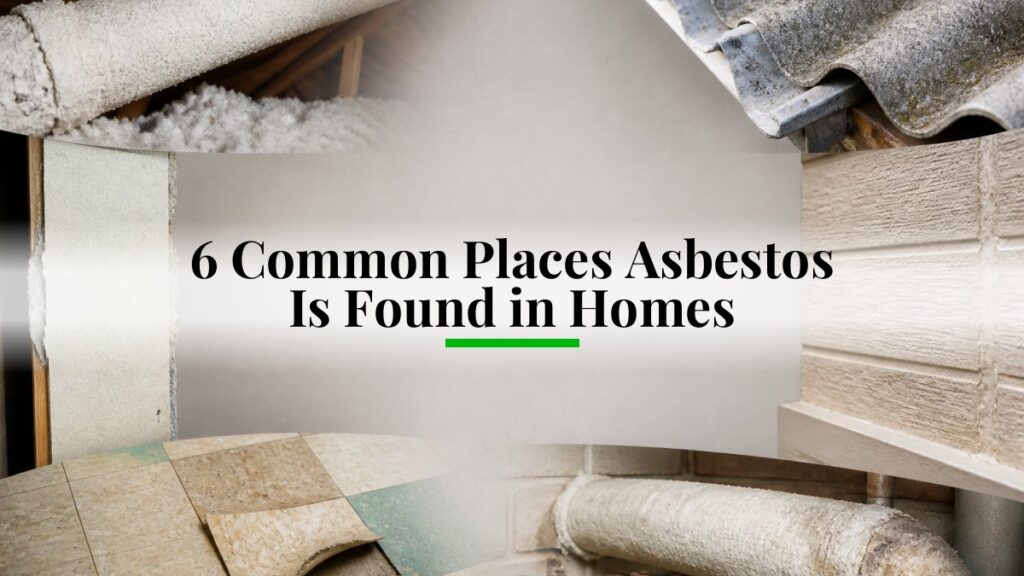
The 6 common places asbestos is found in homes are attic insulation, pipe and furnace insulation, floor tiles and adhesives, roofing materials, siding and cement sheets, and ceiling tiles or textured ceilings. Any of these can release fibers when disturbed. The material is usually harmless if it stays intact, but cutting, sanding, or tearing it out creates the danger.
- The EPA advises treating any vermiculite insulation as if it contains asbestos until a lab says otherwise.
- You cannot identify asbestos by sight, smell, or touch; only a lab test confirms it.
- A shop vacuum spreads fibers instead of capturing them, so never vacuum damaged material.
- If material is already damaged, don’t run any fan or vacuum in the room.
- Get the material tested before starting a renovation or repair project.
Table of Contents
- 6 Common Places Asbestos Is Found in Homes
- Attic and Other Insulation
- Pipe, Boiler, and Furnace Insulation
- Floor Tiles and Flooring Adhesives
- Roofing Materials and Shingles
- Siding and Cement Sheets
- Ceiling Tiles and Textured Ceilings
- Asbestos in Popcorn Ceilings: What Homeowners Should Know
- How to Identify Asbestos in a Home
- Asbestos Testing for Homes: What the Process Looks Like
- What to Do If You Find Asbestos (and What Not to Do)
- When Asbestos in Homes Becomes a Real Hazard
- Book an Asbestos Inspection Before Your Next Renovation
- Frequently Asked Questions
6 Common Places Asbestos Is Found in Homes
Asbestos is a naturally occurring mineral fiber that was used in thousands of building materials before its health risks became widely known. In older homes, asbestos-containing materials often hide in plain sight. These are six common places asbestos is found in homes.
The 6 common places asbestos is found in homes are attic insulation, pipe and furnace insulation, floor tiles and adhesives, roofing materials, siding and cement sheets, and ceiling tiles or textured ceilings. Any of these can release fibers when disturbed.
Here’s what matters most: the material is usually harmless if it stays intact. The danger comes from cutting, sanding, or tearing it out. Below, we walk through each location, then cover how to test, what to do, and when to call a professional.
Here are the six common places asbestos is found in homes, and what each one looks like.
| Location | What to look for |
|---|---|
| Attic and other insulation | Vermiculite, loose-fill, batt insulation with asbestos paper backing |
| Pipe, boiler, and furnace insulation | Air-cell pipe wrap, asbestos cement, boiler and furnace jackets |
| Floor tiles and flooring adhesives | Vinyl tiles and the black mastic that holds them down |
| Roofing materials and shingles | Cement roofing, roofing tiles, roof patch compounds, flashing sealants |
| Siding and cement sheets | Asbestos cement sheeting, siding shingles, soundproofing panels |
| Ceiling tiles and textured ceilings | Acoustic tiles, drywall joint compound, plaster, popcorn ceilings |
Attic and Other Insulation
Attic insulation comes in several distinct forms.
Loose-fill and vermiculite. Vermiculite insulation is the best-known attic concern. Much of the vermiculite sold in the U.S. during the mid-20th century came from a source that was also geologically associated with asbestos, so the EPA advises homeowners to treat any vermiculite insulation as if it contains asbestos until a lab says otherwise (the EPA). It typically looks like small, lightweight pebbles or granules, gray-brown to silver-gold in color, and it may be poured between joists or blown into wall cavities. Loose-fill cellulose and fiberglass are different products, but in an older attic the two are easy to confuse by eye, which is exactly why appearance alone is not a diagnosis.
Batt and blanket insulation. Some older batt insulation used asbestos-containing paper or backing, and pre-formed insulation blocks around attic hatches and kneewalls can also be suspect. The paper facing is often the asbestos-containing component rather than the fluffy core.
Why attics are high-risk.
Era context. If you have loose, pebble-like fill, treat it as suspect. The only way to confirm is laboratory analysis of a sample, not a visual check.
Pipe, Boiler, and Furnace Insulation
What it looks like. Several distinct products show up on older heating systems:
- Air-cell pipe wrap. A white, corrugated paper or cardboard sleeve wrapped around hot-water and steam pipes. It is often held on with tape or wire and crumbles easily at the joints.
- Asbestos cement. A hard, gray coating troweled onto pipes, boiler jackets, and furnace flues. It looks like plaster or stucco and can crack like it.
- Fiberglass-and-paper wraps. Some older wraps combined fiberglass with an asbestos-containing paper facing or backing.
- Boiler and furnace jackets. Pre-formed insulation blocks and blankets around boilers, furnaces, and water heaters, sometimes with asbestos-containing gaskets and door seals.
Where it hides. Look in basements, utility closets, crawl spaces, and mechanical rooms, especially along radiator lines, near the boiler, and at elbows, valves, and fittings where the wrap was cut and pieced.
Why it becomes hazardous.
Era context.
What to do next.
Floor Tiles and Flooring Adhesives
Vinyl flooring and the adhesive under it can contain asbestos. The tiles themselves may hold asbestos, and so can the black mastic that holds them down.
Testing can help determine whether flooring contains asbestos.
Roofing Materials and Shingles
Cement roofing, roofing tiles, and roof patch compounds from older construction can contain asbestos. So can some window putty and flashing sealants.
Siding and Cement Sheets
Asbestos cement sheeting and siding shingles were used in some homes. It can also appear around windows and as soundproofing panels.
Ceiling Tiles and Textured Ceilings
Acoustic ceiling tiles, drywall joint compound, and plaster can all hide asbestos. Textured ceilings, including popcorn ceilings, are a well-known spot. So are the seams and patched areas in older drywall.
Asbestos in Popcorn Ceilings: What Homeowners Should Know
Popcorn ceilings are a material that may contain asbestos.
How to Identify Asbestos in a Home
You cannot identify asbestos by sight, smell, or touch. Only a lab test confirms it. What you can do is spot the warning signs and the building age that raises the odds.
Start with the construction date. Then do a careful walk-through.
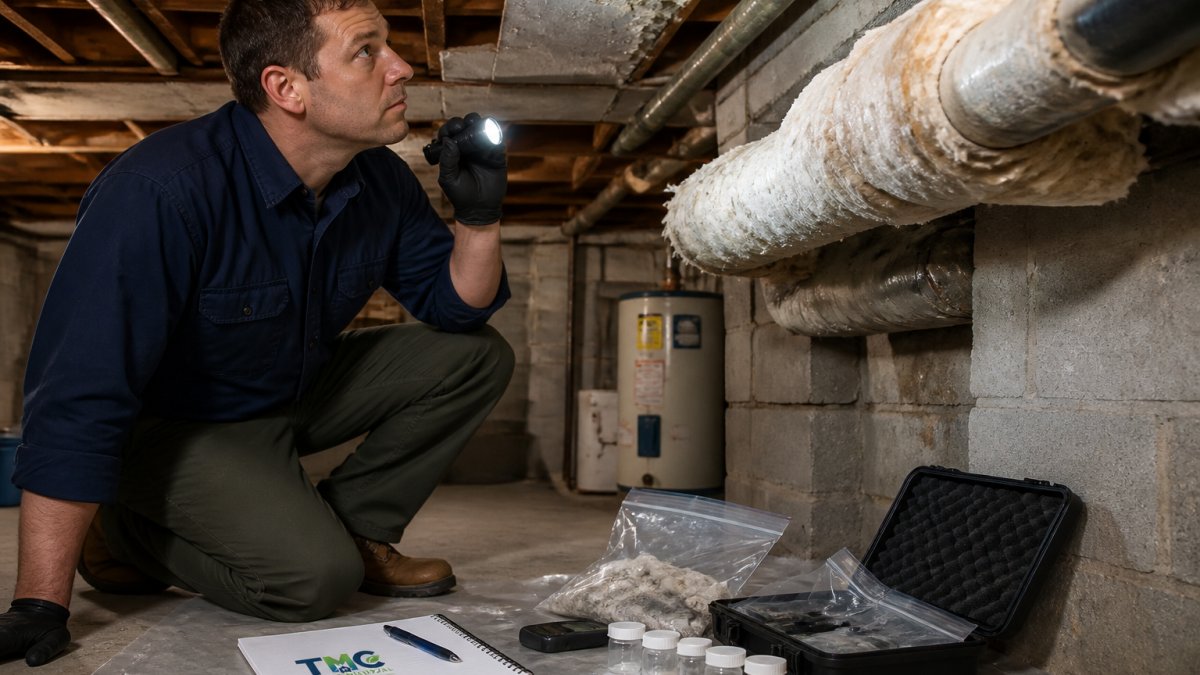
Use this room-by-room checklist:
- Attic: loose-fill or vermiculite insulation
- Basement and crawl spaces: pipe wrap, boiler coating
- Utility areas: furnace insulation, old duct wrap
- Kitchen and baths: vinyl flooring, tile mastic
- Ceilings: popcorn texture, acoustic tiles
- Exterior: cement siding, roof shingles, window putty
- Walls: patched drywall, joint compound, plaster
Appearance alone cannot confirm whether a material contains asbestos.
Asbestos Testing for Homes: What the Process Looks Like
Many homeowners ask how to know the results are real. Our step-by-step asbestos testing procedure walks through each stage so you know what to expect.
What to Do If You Find Asbestos (and What Not to Do)
Watch out: a shop vacuum spreads fibers instead of capturing them. If material is already damaged, don’t run any fan or vacuum in the room.
When Asbestos in Homes Becomes a Real Hazard
The EPA guidance on asbestos in homes explains that exposure risk depends on whether fibers become airborne. That’s why renovation and repair work is the usual trigger. If you’re planning a project, get the material tested first. Read our guide to asbestos testing for home renovation projects before you book.
Book an Asbestos Inspection Before Your Next Renovation
The Mold Consultant, LLC provides asbestos testing for residential and commercial clients in the Oklahoma City metro area. Our team brings over a decade of experience and uses non-destructive solutions.
Frequently Asked Questions
What are examples of where asbestos can be found?
Asbestos may be found in attic and wall insulation, pipe and furnace insulation, vinyl floor tiles and the adhesive under them, roof shingles and cement roofing, cement siding shingles, and ceiling tiles or textured ceilings. It may also be present in drywall joint compound, plaster, roof patch, and window putty.
Is asbestos dangerous if it is left undisturbed?
Asbestos-containing materials may be present in homes. If you suspect a material contains asbestos, avoid disturbing it.
How can you tell if a material contains asbestos?
Appearance alone cannot confirm whether a material contains asbestos.
What should you do if you suspect asbestos in your home?
If you suspect a material contains asbestos, avoid disturbing it.
Asbestos hides in the materials you walk past every day, and a renovation can turn a quiet risk into a real one. Don’t guess. The Mold Consultant, LLC offers asbestos testing, mold inspection, and air quality testing backed by certified inspectors and clear written reports. Get started with The Mold Consultant, LLC and book your inspection before the first wall comes down.
