
Table of Contents
- Is Mold Inspection Worth It? How to Decide
- When Inspection Is Worth the Money
- When You Can Skip It
- Signs of Hidden Mold in a House
- What to Expect During a Mold Inspection
- Mold Inspection Cost: What Drives the Price
- Mold Inspection When Buying a House
- Inspection vs. Testing: What Each Can and Cannot Prove
- How to Choose an Inspector and Avoid Conflicts of Interest
- Frequently Asked Questions
Last Updated: October 12, 2026
Is Mold Inspection Worth It? How to Decide
Mold inspection is a professional assessment of a building for mold growth, moisture problems, and the conditions that allow mold to spread. For most homeowners dealing with water damage, musty odors, or a real estate transaction, the answer to “is mold inspection worth it” is yes.
Why the urgency? Mold can start growing within 24 to 48 hours after water damage, according to the EPA mold guidance. By the time you smell it, the problem is usually bigger than it looks.
Below, we break down the decision into plain terms: when an inspection pays for itself, what it costs, and how to avoid hiring the wrong person.
When Inspection Is Worth the Money
The honest answer is that a mold inspection is worth it when the cost of being wrong is higher than the cost of looking. That framing matters because the query “is mold inspection worth it” is a value judgment, not a yes-or-no question. Use the decision tree below to place your situation.
The Decision Tree
Step 1: Is there visible mold, or a musty odor you can’t locate?
If yes, skip straight to scheduling an inspection.
Step 2: Has there been a water event in the last 12 months?
Burst pipe, roof leak, appliance failure, flooded basement, or a slow drip under a sink all count. Mold can begin growing within 24 to 48 hours after water damage, according to the EPA mold guidance.
Step 3: Does anyone in the home have symptoms that ease when they leave?
Allergies, sinus irritation, coughing, or headaches that improve at work or on vacation are a pattern worth investigating.
Step 4: Are you buying or selling a home?
A standard home inspection may note moisture but won’t always confirm mold. A dedicated mold inspection fills that gap during your inspection contingency period.
Where the Decision Gets Fuzzy
Two situations sit in the middle:
- A finished basement or crawl space with a history of dampness. These areas trap moisture and stay dark. Even without a visible leak, an inspection can confirm whether vapor barriers, drainage, or dehumidification are doing their job.
- A home you’ve owned for years with a new musty smell. Odor is often the first sign of hidden mold. If the smell appeared after a season of heavy rain or a plumbing repair, timing is a strong clue for your inspector.
Check the date of your last roof or plumbing repair. If it was within the past year and you now smell dampness, that timing is a strong clue for your inspector.
What “Worth It” Actually Means
An inspection is worth it when it changes what you do next. That could mean finding a moisture source before it becomes a structural repair, giving you leverage in a real estate negotiation, or ruling out mold so you can stop worrying. If the likely outcome is “nothing changes,” the inspection probably isn’t worth the fee.
A common mistake is waiting for visible mold before calling anyone. By then, the source of moisture has often been feeding the problem for weeks, and the repair bill grows with it.
When You Can Skip It
You can skip a mold inspection when there’s no moisture, no odor, and no water event. If your home is dry and you’ve never had a leak, there’s little for an inspector to find.
Skip it if:
- You’ve had no leaks, floods, or high humidity issues
- There’s no musty smell anywhere in the house
- No one in the home has unexplained symptoms
- A recent home inspection found no moisture problems
But don’t skip it just because you can’t see mold. Hidden mold grows inside walls, under floors, and above ceiling tiles where you’d never spot it.
If you’re unsure, a quick call to a professional can help you decide. A quick call to a professional can help you decide whether an inspection makes sense for your situation.
Signs of Hidden Mold in a House
The signs of hidden mold in a house are often subtle. You may notice a musty odor, unexplained allergy symptoms, or discoloration on walls and ceilings. Visible mold is only part of the picture.
Visible Clues vs. Hidden Growth
Visible clues include dark spots, peeling paint, warped drywall, and stained ceilings. These are easy to spot and easy to act on.
Hidden growth is trickier. It hides behind drywall, under carpet, inside HVAC systems, and in crawl spaces. Common hiding spots:
- Behind baseboards and wallpaper
- Under sinks and around pipes
- In attic insulation
- Inside wall cavities near leaks
- In basement corners and crawl spaces
A moisture meter and thermal imaging can reveal dampness you can’t see. That’s why a trained eye matters more than a flashlight.
What to Expect During a Mold Inspection
A mold inspection is a visual and technical assessment that typically takes one to three hours, depending on the size of the property. The inspector looks for moisture, water intrusion, and conditions that support mold growth.
Here’s what usually happens:
- Interview. The inspector asks about leaks, floods, and past water damage.
- Visual walkthrough. Every room, plus the attic, basement, and crawl space.
- Moisture readings. A moisture meter checks walls, floors, and ceilings.
- Thermal imaging. Infrared cameras spot temperature differences that reveal hidden dampness.
- HVAC check. The system is inspected for mold and moisture.
- Report. You get findings and a remediation plan if needed.
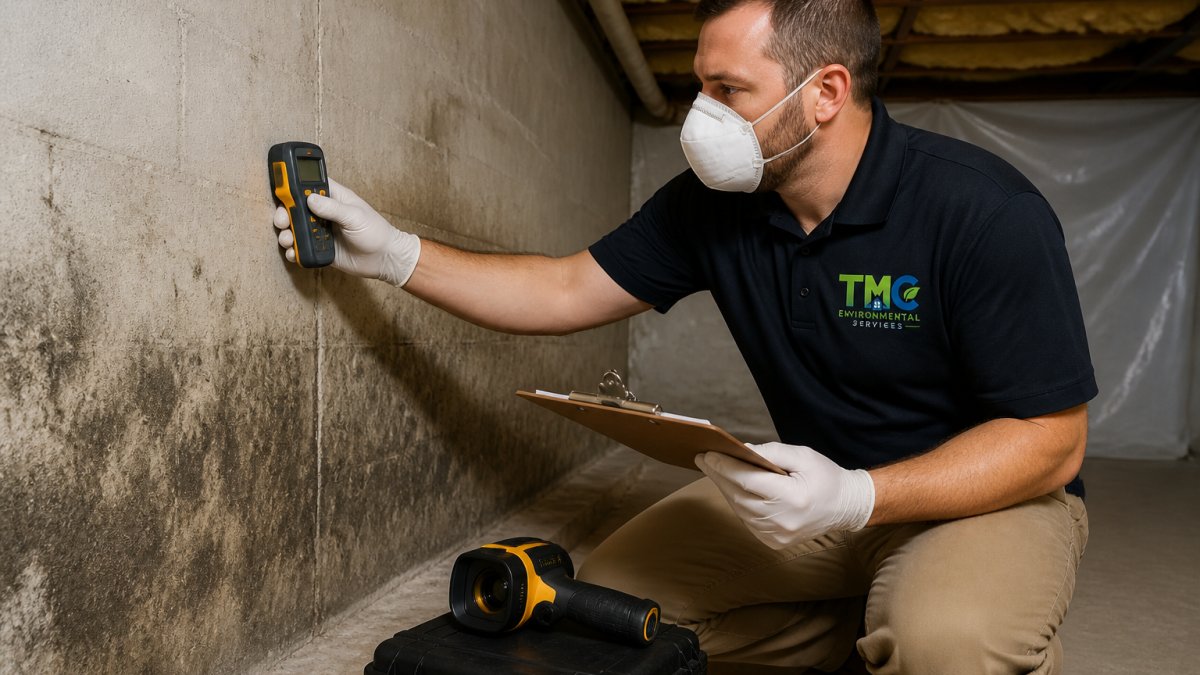
The Mold Consultant, LLC uses non-destructive methods, so we find the problem without tearing your home apart.
Mold Inspection Cost: What Drives the Price
Mold inspection cost depends on the size of the property, the number of areas checked, and whether sampling is included. There’s no single flat rate.
Typical Cost Ranges
- Visual inspection only (no sampling): roughly $200 to $500 for a typical single-family home.
- Inspection with air or surface sampling: roughly $400 to $800, with each additional sample often adding $50 to $150.
- Larger or complex properties: $800 to $1,500 or more when crawl spaces, multiple HVAC systems, or widespread moisture are involved.
- Pre-purchase mold inspection: often bundled with a general home inspection, adding $150 to $400 to the total.
These are ranges, not quotes. Your actual price depends on the factors below.
What Drives the Price
- Square footage. Larger homes take longer to inspect.
- Access. Crawl spaces and attics add time and sometimes require special equipment.
- Sampling. Air or surface samples cost extra, and the lab fee is usually passed through.
- Travel. Distance from the inspector’s service area.
- Complexity. Multiple leaks or widespread moisture take more work.
- Report depth. A written report with photos, moisture readings, and a remediation plan takes more time than a verbal summary.
The Cost-Benefit Math
Here’s the comparison that matters. An inspection is cheap relative to the alternatives:
- Drywall and insulation replacement in a single affected wall cavity often runs into the low thousands once labor, disposal, and repainting are included.
- Subfloor or joist repair from prolonged moisture can climb higher, especially if structural members are compromised.
- Mold remediation for a moderate area typically starts in the low thousands and scales with the size of the affected zone.
- A real estate negotiation can swing by thousands based on whether mold is documented.
In other words, the inspection is usually a small fraction of the cost of the problem it’s meant to catch. That’s the strongest argument for paying for one when you have a reason to suspect moisture.
When the Math Doesn’t Work
If you have no water history, no odor, no symptoms, and no transaction pending, the expected value of an inspection is low. Spending money to confirm a dry house is a choice, not a necessity.
Be wary of quotes that are dramatically lower than others. Lowball pricing often means a rushed walkthrough with no real testing. Ask exactly what’s included before you book.
Questions to Ask Before You Pay
- What’s included in the base price?
- Is sampling included, or is it an add-on?
- Will I get a written report with photos and moisture readings?
- Is there a travel fee?
- What’s your cancellation policy?
Getting these answers in writing before you book prevents surprise charges and lets you compare quotes on equal terms.
Mold Inspection When Buying a House
A mold inspection when buying a house is one of the smartest moves you can make. A standard home inspection may note moisture but won’t always confirm mold. A dedicated mold inspection fills that gap.
Schedule it during your inspection contingency period, before you’re locked in. If mold is found, you have options:
- Ask the seller to fix the moisture source
- Negotiate the price down
- Walk away
For buyers, the inspection is cheap insurance against a costly surprise. For sellers, it’s proof of a clean home.
Inspection vs. Testing: What Each Can and Cannot Prove
Inspection and testing are not the same thing, and knowing the difference saves money and confusion.
Inspection is a visual and technical assessment. It finds moisture, water intrusion, and visible growth. It cannot confirm what’s growing inside a wall.
Testing uses air or surface samples sent to a lab. It identifies mold types and spore counts. It cannot tell you where the mold is coming from.
| Feature | Inspection | Testing |
|---|---|---|
| Finds moisture source | Yes | No |
| Identifies mold type | No | Yes |
| Uses lab analysis | No | Yes |
| Locates hidden growth | Often | Rarely |
| Best for | Finding the problem | Confirming it |
Most homeowners need an inspection first. Testing follows when you need proof for a landlord, insurer, or doctor.
Sampling alone can’t prove a health risk. A high spore count doesn’t mean you’re sick, and a low count doesn’t mean you’re safe. Use results as one piece of the puzzle, not the whole answer.
How to Choose an Inspector and Avoid Conflicts of Interest
The biggest conflict of interest is hiring an inspector who also sells remediation. If the same company finds the mold and fixes it, there’s a built-in incentive to find more.
Ask these questions:
- Are you certified? Look for credentials like CRMI or CMRS.
- Do you offer remediation too? If yes, be cautious.
- What’s included in the report?
- Will you put findings in writing?
- Do you use lab analysis for samples?
A neutral inspector gives you findings you can act on, not a sales pitch.
Frequently Asked Questions
Should you test for mold when buying a house?
A mold inspection before purchase is worth it if the home has water damage history, musty odors, or visible staining. The inspector checks for moisture intrusion and hidden mold in attics, crawl spaces, and basements. If findings are clean, you get peace of mind. If not, you can negotiate repairs or walk away. Ask your real estate agent whether a mold inspection addendum fits your contract timeline.
Does homeowners insurance cover mold?
Most standard homeowners policies exclude mold unless it stems from a covered peril like a sudden burst pipe. Gradual leaks or long-term humidity issues are typically not covered. Review your policy language and document any water damage immediately. If you are filing a claim, an inspection report from a qualified professional can support your case with written findings and photos.
When is a professional mold inspection worth it?
It is worth it when you smell musty odors but see nothing, when you have had water damage in the past year, when you or family members have unexplained respiratory symptoms, or when you are buying a home with a questionable moisture history. If you already see extensive visible mold, skip the inspection and go straight to remediation. A qualified inspector can confirm the scope and source of moisture.
Is mold testing necessary if you can already see mold?
No. If visible mold covers more than a small patch, testing is unnecessary. The EPA recommends fixing the moisture source and cleaning or removing the mold. Testing makes sense when you need to confirm hidden mold, identify species for a medical or legal purpose, or verify post-remediation clearance. In those cases, air sampling and surface sampling with laboratory analysis give you documentation.
Mold problems rarely fix themselves. If you’ve had water damage, a musty smell, or a suspicious spot on the wall, waiting usually makes it worse and more expensive. The Mold Consultant, LLC offers mold inspection, air quality testing, and post-remediation verification with over a decade of experience and non-destructive methods. Get started with The Mold Consultant, LLC and get clear answers about your home’s air quality. Call now to schedule your inspection.