
Table of Contents
- What the Cost of a Professional Mold Inspection Actually Covers in 2026
- Mold Inspection vs. Mold Testing: What Each One Costs and Why the Difference Matters
- What Factors Move the Price of a Professional Mold Inspection
- Mold Testing Cost: How Samples, Lab Fees, and Turnaround Add Up
- DIY Mold Testing vs. Professional Testing: Where the Money Goes
- Post-Remediation Mold Testing: The Second Invoice Most Homeowners Forget
- How to Read a Mold Inspection Quote and Avoid Paying Twice
- Conclusion
- Frequently Asked Questions
Last Updated: October 12, 2026
What the Cost of a Professional Mold Inspection Actually Covers in 2026
The cost of a professional mold inspection in 2026 isn’t a single number, it’s a range shaped by square footage, sample count, and how much of the investigation happens in a lab.
A professional mold inspection is a documented, on-site assessment of a property’s moisture conditions and visible fungal growth, performed by a trained inspector who produces a written report, separate from two other line items people routinely lump together.
Inspection, Testing, and Remediation Are Three Different Line Items
Mold inspection is the visual and instrumental assessment: the inspector walks the property, checks moisture readings, and documents what’s growing and where. Mold testing is the lab work: air, surface, or bulk samples sent to an accredited laboratory. Mold remediation is the cleanup itself, a separate contract with a separate company.
Most pricing confusion starts here. A cheap “mold inspection” quote may exclude lab fees; an expensive one may bundle air sampling and a clearance report. Neither is wrong, but you can’t compare them until you know which service you’re buying.
Why You Won’t See a Flat National Price
Mold inspection pricing depends on the individual property, not a national rate card. Square footage, rooms with suspected growth, crawlspace or attic access, and sample count all change the total, and regional differences in labor and lab costs make a flat national price meaningless.
Treat any advertised “average” as a reference point, not a quote. The only number that matters is the one on your itemized proposal.
Mold Inspection vs. Mold Testing: What Each One Costs and Why the Difference Matters
An inspection identifies where moisture and growth are present; a test confirms what that growth is.
That distinction drives cost. An inspection is priced on time and scope; a test is priced per sample plus a lab analysis fee, so cost scales with how many samples you authorize.
Some providers advertise a low inspection fee and charge separately for every sample; others bundle a fixed number.
Whether you need one, both, or neither depends on what you already know.
What Factors Move the Price of a Professional Mold Inspection
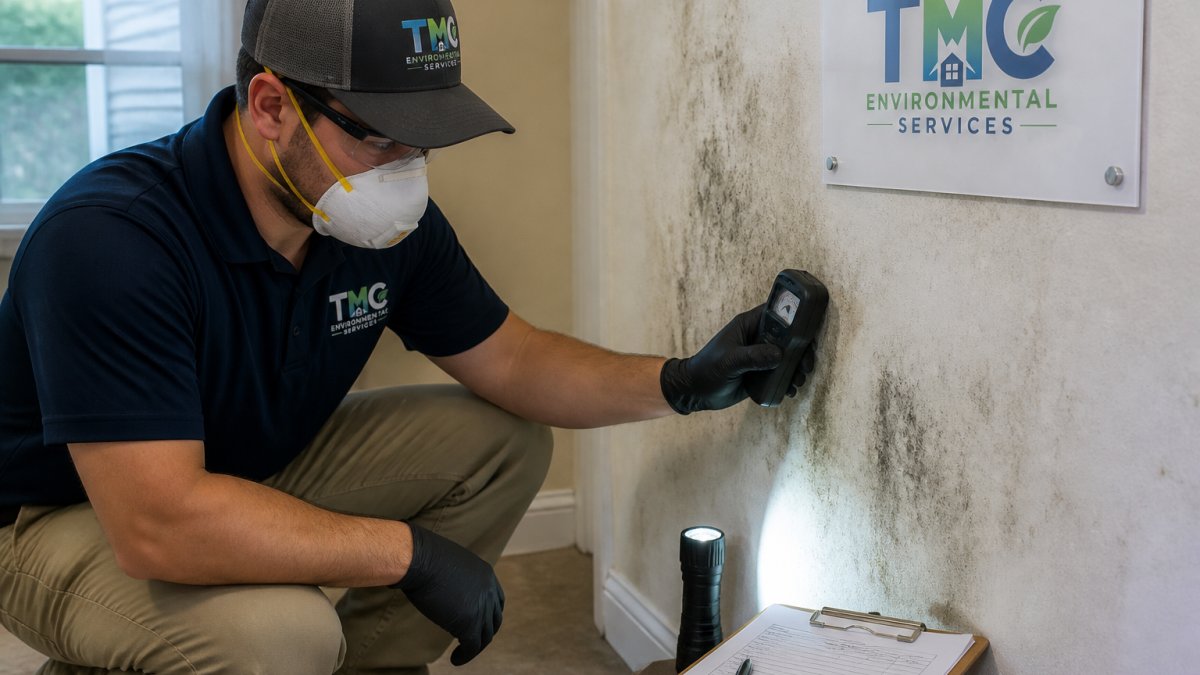
Four variables drive most of the price difference between quotes: property size, property type, accessibility, and sample count.
Home Size, Square Footage, and Property Type
A larger home takes longer to assess, and time is the primary cost driver. A single-story home takes a fraction of the time a multi-level property with a finished basement, attic, and multiple HVAC zones requires.
Property type matters just as much. A commercial building, multi-unit rental, or property with a history of water damage needs a broader assessment than a single-family home.
Accessibility, Moisture History, and Number of Samples
Accessibility is the quiet cost multiplier. A crawlspace requiring hands-and-knees crawling, an attic with limited headroom, or a wall cavity needing an inspection port all add time.
Sample count is the most controllable variable. Each air, surface, or bulk sample carries its own lab fee, more samples mean better resolution but a higher invoice. A good inspector will tell you which samples are essential before you authorize them.
Mold Testing Cost: How Samples, Lab Fees, and Turnaround Add Up
Mold testing cost breaks into three parts: the collection fee, the laboratory analysis fee, and the turnaround time you choose. Collection is usually folded into the inspection visit. The lab fee is charged per sample. Rush turnaround costs more than standard.
| Sample Type | What It Detects | Typical Use Case |
|---|---|---|
| Air sampling (spore trap) | Airborne spore concentrations indoors vs. outdoors | Baseline indoor air quality assessment |
| Surface sampling | Species present on a visible growth site | Confirming what’s growing on a specific surface |
| Bulk sampling | Material-level contamination | Drywall, insulation, or carpet that may need removal |
| Moisture mapping | Hidden moisture without visible growth | Post-water-damage verification |
The Per-Sample Math Most Quotes Hide
Every sample carries two charges: a collection charge (the inspector’s time and materials) and a laboratory analysis charge (what the accredited lab bills). Some inspectors bundle collection into the base fee and pass through only the lab charge; others itemize both.
The lab fee is usually the larger of the two and is set by the lab, not the inspector, so a low per-sample price may reflect a lower lab rate, not corner-cutting.
Why More Samples Do Not Automatically Mean a Better Assessment
It’s tempting to assume more samples produce a more thorough answer. In practice, sample count has diminishing returns, past a certain point, additional samples add cost without insight.
Air sampling compares indoor spore concentrations against an outdoor baseline.
A useful rule of thumb: one outdoor baseline plus one indoor sample per distinct HVAC zone or moisture-affected area, with surface samples reserved for visible growth needing species identification.
Turnaround Time and Rush Fees
Standard lab turnaround is typically several business days. Rush turnaround (expedited or 24-hour) costs more because the lab prioritizes your samples ahead of its normal queue; the premium varies by lab and speed.
Rush turnaround is worth paying for in two situations: a real estate transaction with a closing deadline, and a post-remediation clearance where occupants are waiting to re-enter.
What Happens When Samples Come Back Inconclusive
Inconclusive results happen, and how your inspector handles them is a fair test of the quote. Common causes: samples taken too close to a disturbance, outdoor baselines collected on a high-spore day, or a suspect area never sampled.
Ask before the visit what happens if results are inconclusive. A reasonable inspector will re-sample at a reduced or no additional collection charge, or explain in the report why the result is inconclusive and what comes next.
A quote that lists a single lump-sum testing fee without stating the number of samples included is a red flag. If the inspector finds more suspect areas than expected, that lump sum can grow during the visit, and you’ll be approving charges on the spot.
DIY Mold Testing vs. Professional Testing: Where the Money Goes
DIY mold testing vs. professional testing comes down to what the price difference buys: chain of custody, calibrated equipment, and a report that holds up when someone else questions it.
A store-bought kit gives you a petri dish or swab and a mail-in lab.
Professional testing adds four things a kit cannot replicate:
- Calibrated sampling equipment that meets lab protocols
- A trained inspector interpreting results against outdoor baseline samples
- Chain-of-custody documentation for legal and insurance use
The last point is the one most people underestimate. A lab result tells you spores are present, not why, or what to do about them.
Post-Remediation Mold Testing: The Second Invoice Most Homeowners Forget
Post-remediation mold testing is the verification step after cleanup, and it’s a separate invoice from both the original inspection and the remediation work. Skipping it is how mold comes back.
The pattern repeats: a homeowner pays for remediation, the visible growth disappears, and six months later it’s back in the same spot.
Verification typically involves air sampling inside the remediated area and outside as a baseline, compared against pre-remediation results. A clearance report documents that spore levels returned to normal.
Request the post-remediation clearance protocol in writing before remediation begins, not after. The pre-remediation baseline samples are what make the clearance comparison meaningful, and they can’t be recreated once the area has been cleaned.
How to Read a Mold Inspection Quote and Avoid Paying Twice
A mold inspection quote should itemize every charge; if it doesn’t, ask for a revised version before you sign. These line items determine whether two quotes are comparable.
- Inspection scope: square footage, rooms, and areas included
- Number of samples included in the base price
- Per-sample price for additional samples
That last item deserves attention. An inspector who also sells remediation has a built-in incentive to find a problem. Independent inspection, with no stake in the cleanup contract, removes that conflict, which is why some real estate transactions and legal matters require a neutral third-party assessment.
What the Written Report Should Actually Contain
The quote is a promise; the report is the product. Before comparing quotes on price, compare what the report will include, a cheap one-page summary is not the same purchase as a thorough, documented assessment.
A complete inspection report typically includes:
- Observed conditions, room by room, with photographs of any visible growth, staining, or water damage
- Moisture readings, with the instrument used and the readings recorded at each location, so the numbers can be compared against a later re-check
- Sample locations, mapped or described precisely enough that a third party could find the same spot
If a quote doesn’t specify that the report includes moisture readings, sample locations, and a limitations section, ask. Those three items make the report useful months later, when you’re determining whether a problem returned or remediation actually worked.
Questions to Ask Before You Sign
A short set of questions separates a thorough inspector from a fast one:
- What training or certification do you hold, and through which program?
- What equipment will you use on site, and will you provide the readings in the report?
- How many samples does your base price include, and what is the per-sample charge beyond that?
- Which accredited lab processes your samples?
- Do you or your company perform remediation or receive any referral fee from a remediation contractor?
- What is your policy if the results are inconclusive or if a suspect area is found after the initial walk-through?
The answers to questions 4 and 5 are most likely to change your decision. An inspector who uses an accredited lab and has no financial interest in the cleanup is better positioned to give an honest assessment.
The cheapest quote is rarely the cheapest outcome. An inspection that misses the moisture source leads to remediation that fails, a second inspection, and a second remediation. Comparing quotes on scope and on what the report will contain, not just on price, is what prevents that cycle.
Conclusion
The real challenge with mold inspection pricing isn’t finding a number. It’s comparing quotes that were never built to be compared, then discovering after remediation that the root cause was never addressed. The Mold Consultant, LLC provides independent mold inspection, air quality testing, and post-remediation verification using non-destructive methods, backed by CMRS and CRMI certifications and more than a decade of local experience.
Frequently Asked Questions
How much does a professional mold inspection cost in 2026?
There is no single national number. The cost of a professional mold inspection in 2026 depends on home size, accessibility, how many samples are collected, and whether lab analysis is included. A base visual inspection and moisture survey usually costs less than a package that adds air sampling and laboratory work. Because pricing changes by region and property type, request a written quote that lists each line item instead of accepting a single lump-sum figure.
Does a mold inspection include laboratory testing?
Not always. A visual inspection and moisture assessment can be completed without lab work, but confirming the type and concentration of mold spores requires air or surface samples sent to a laboratory. Those lab fees are typically billed separately from the inspection fee. Ask any provider to state in writing whether sample collection and laboratory analysis are included, and how many samples the quoted price covers.
Is DIY mold testing cheaper than professional testing?
A DIY test kit costs less upfront, but it usually gives you limited data. Consumer kits often rely on a single petri dish or strip, which can grow common household spores that tell you little about hidden growth or indoor air quality. A professional inspection pairs a moisture survey with calibrated air sampling and lab analysis, so the results are defensible for real estate, insurance, or landlord-tenant documentation.
What factors affect the cost of a mold inspection?
The main cost variables are home size and square footage, property type, accessibility of attics and crawlspaces, the duration of moisture exposure, and the number and type of samples collected. A larger home or a property with a long water-damage history takes more time on site and more samples to map the affected area, which raises the total. Regional pricing and local demand also shift what inspectors charge.
How do I estimate mold remediation costs after an inspection?
Your inspection report should define the affected square footage, the moisture source, and the scope of contamination. Remediation pricing is usually built from those three inputs plus containment and disposal requirements. A clear report lets remediation companies bid on the same scope, so quotes are comparable. Without that scope, bids vary widely and often exclude hidden areas that later drive up the final invoice.
Is a professional mold inspection worth the cost?
It is worth it when you need verified answers rather than a guess. A qualified inspector identifies hidden moisture intrusion points, documents conditions in a written report, and separates inspection from remediation so there is no incentive to inflate findings. For real estate transactions, insurance claims, or tenant disputes, that documentation often matters more than the inspection fee itself.
How long does a professional mold inspection take?
Most residential inspections take one to three hours depending on square footage, the number of rooms checked, and how many samples are collected. Larger homes, multiple HVAC systems, or crawlspaces with limited access extend the visit. Lab results usually follow within a few business days, and post-remediation testing adds a separate site visit after the work is complete.