
Table of Contents
- Is Mold Testing Covered by Insurance? What Homeowners Need to Know
- When Mold Damage Is Covered: Sudden and Accidental Water Damage
- Common Exclusions: Gradual Leaks, Neglect, and Maintenance Issues
- Mold Testing After Water Damage: What to Do Before You File
- Building Your Mold Insurance Claim Documentation
- Mold Inspection Insurance Claim: Policy Limits, Sublimits, and Deductibles
- What to Do After a Positive Mold Test: Next Steps and Appeals
- Frequently Asked Questions
Last Updated: October 13, 2026
Is Mold Testing Covered by Insurance? What Homeowners Need to Know
The short answer to whether is mold testing covered by insurance: sometimes, but it depends on why the mold appeared.
Here is the problem. Most people assume any water-related damage is covered. That is not how policies work.
Home insurance is built around sudden events. A pipe that bursts at 2 a.m. is sudden.
This guide breaks down when testing gets covered, when it does not, and how to build a claim that holds up.
When Mold Damage Is Covered: Sudden and Accidental Water Damage
Mold damage is covered when it results from a sudden and accidental water event listed in your policy.
A covered peril is a specific event your policy names as protected. Common ones include:
- Burst pipes inside walls
- Appliance failures that release water fast
- Accidental overflow from a tub or sink
Timing matters too. Insurance companies expect you to prevent further damage.
According to the Insurance Information Institute’s guide to homeowners policies, water damage claims rank among the most common filed each year.
So what does this mean in practice? Document the water event first. Then connect the mold to it.
Common Exclusions: Gradual Leaks, Neglect, and Maintenance Issues
Gradual damage is the single biggest reason mold claims get denied. Policies exclude it almost universally.
A hidden leak behind a refrigerator can drip for months. By the time you see mold, the insurer sees a maintenance failure, not an accident. The same logic applies to:
- Long-term plumbing leaks you should have noticed
- Poor ventilation that lets humidity build up
- Flood damage, which needs separate flood insurance
Neglect is the word adjusters use. It means you had a reasonable chance to catch the problem and did not.
Never tell an adjuster the leak “has been there a while.” That single phrase can turn a covered claim into a denial. Describe what you observed and when you first noticed it.
Here is the honest part most guides skip. Insurers are not wrong to ask these questions. Mold needs moisture, and moisture usually leaves clues: warped baseboards, musty smells, peeling paint. If those signs sat unaddressed, the claim weakens.
Your best defense is a maintenance record. Save receipts for plumbing repairs and HVAC service. It shows you were paying attention.
Mold Testing After Water Damage: What to Do Before You File
Before you order any test, document the water event and call your insurer. That order protects your claim.
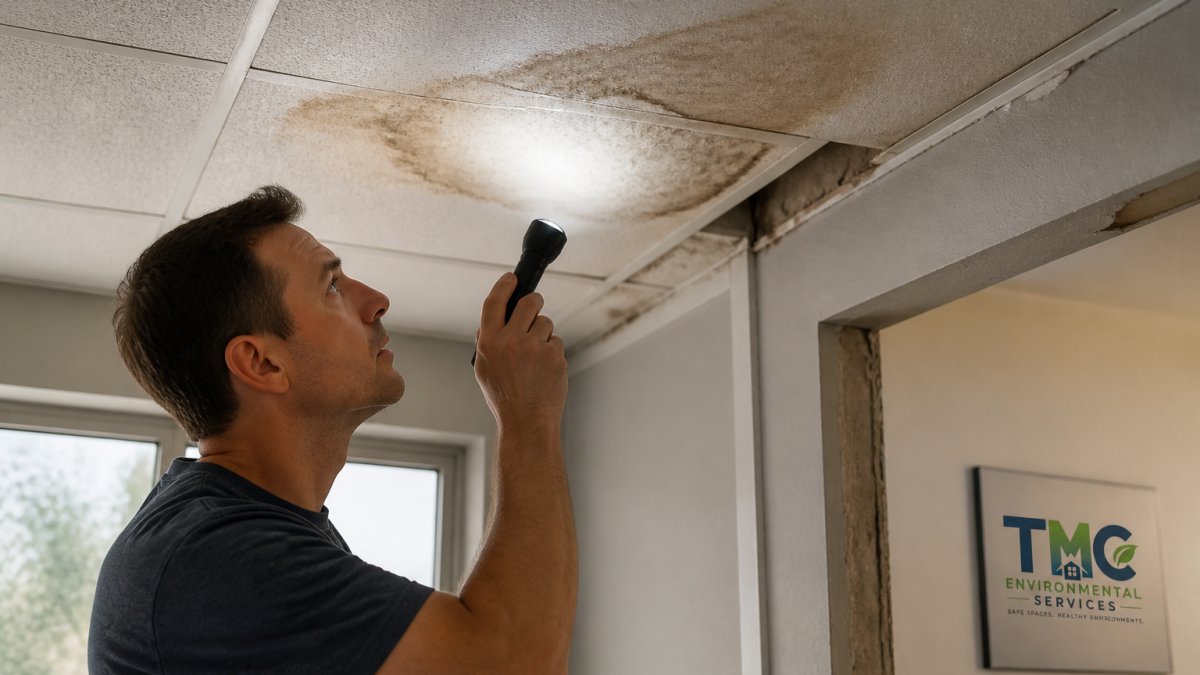
Most homeowners do this backward. They hire a tester, pay out of pocket, then file. The insurer may reimburse it, or may not, depending on whether the test was pre-approved.
Testing, inspection, and remediation are three different line items
The keyword question is about testing, but the three services are not interchangeable, and insurers price and reimburse them differently:
- Mold inspection, a visual and moisture assessment. The inspector walks the property, uses a moisture meter and often a thermal camera, identifies the likely source, and writes a report. No samples leave the property. This is usually the cheapest of the three and is the step that produces the documentation an adjuster actually reads.
- Mold testing, collection of air samples (spore trap or viable) or surface samples (tape lift or swab) that are sent to an accredited laboratory. The lab returns a spore count by genus and a comparison to an outdoor baseline. Testing answers “what and how much,” not “where is the water coming from.”
- Mold remediation, the physical containment, removal, and disposal of moldy materials, followed by post-remediation verification. This is the largest cost and the one most likely to hit a policy sublimit.
A common pattern is that an adjuster will authorize an inspection and remediation but question a standalone test, because the test does not change the scope of work. If you want the test covered, tie it to a question the remediation cannot answer without it, for example, confirming that a hidden cavity is clean before drywall goes back up.
The sequence that protects your claim
- Photograph all visible water damage and mold, with something for scale
- Note the date you discovered the moisture, not the date you think it started
- Call your insurer and open a claim before hiring anyone
That last step is where claims are won or lost. A simple email confirming approval gives you proof later.
Ask the adjuster one exact question: “Will diagnostic testing be reimbursed as part of this claim, and is it subject to the mold sublimit or the dwelling limit?” Their written answer is your safety net if the expense gets disputed.
When to call the adjuster before the tester
Call the adjuster first if any of these are true:
- The moisture source is unknown or hidden behind finished surfaces
- The visible mold covers more than roughly 10 square feet (the threshold many remediation guidelines use to recommend a professional rather than a DIY wipe-down) (the EPA)
- Anyone in the home has asthma, allergies, or a compromised immune system
Call the tester first only if you have already decided not to file, or if you need an independent report for a landlord-tenant dispute, a real estate transaction, or a pre-purchase inspection. In those cases the report is the product, not the claim.
Our inspections are non-destructive. We find moisture sources without tearing your home apart, which keeps repair costs lower and documentation cleaner.
Building Your Mold Insurance Claim Documentation
A strong mold insurance claim documentation package answers the adjuster’s questions before they ask. Build it like a case file.
Include these items:
- Dated photos of the water source and mold growth
- Your written notice to the insurer
- A professional inspection report with moisture readings
Proof of loss is the formal document your insurer requires.
An inspection report carries real weight here. It shows moisture readings, identifies the source, and gives the adjuster something concrete to review.
For landlords, this documentation does double duty. It supports the insurance claim and settles tenant disputes about habitability.
Mold Inspection Insurance Claim: Policy Limits, Sublimits, and Deductibles
A mold inspection insurance claim often runs into a mold sublimit, a cap far lower than your overall coverage. This surprises people.
Your policy has a per-occurrence limit, the maximum it pays for one event. Mold frequently sits under a separate sublimit, sometimes a fraction of that number. A policy might cover $300,000 in dwelling damage but cap mold at $10,000.
| Term | What It Means | Why It Matters |
|---|---|---|
| Per-occurrence limit | Max payout for one event | Sets your overall ceiling |
| Mold sublimit | Separate cap for mold claims | Often much lower than you expect |
| Deductible | What you pay before coverage starts | Applies to the whole claim, not just the mold portion |
| Mold endorsement | Optional add-on coverage | Raises or adds mold protection |
How the deductible and sublimit stack
These two numbers interact in a way that catches people off guard. The deductible comes off the top of the covered loss, and the sublimit caps what the insurer pays after that.
Run the numbers before you assume filing is worth it. A claim that pays out a few hundred dollars above your deductible may still raise your premium at renewal, and many insurers track claim frequency even when the payout is small.
Endorsements and optional coverage
A mold endorsement is optional coverage you can buy to raise the sublimit or add mold protection where none exists. Availability varies by state and insurer, and some carriers only offer it on newer homes or homes without a prior mold claim. If you live in a humid climate, own older plumbing, or have had a prior water loss, it is worth pricing at your next renewal, the premium is usually modest relative to the sublimit increase.
Renters, landlords, and condo owners
The coverage picture changes with the policy type, and most guides skip this:
- Renters (HO-4), your personal property and loss-of-use are covered, but the building itself is the landlord’s responsibility. If mold comes from a building defect, your claim is against the landlord, not your own insurer. Your renters policy may still cover damaged belongings and temporary housing.
- Landlords (DP-1, DP-2, DP-3), dwelling policies often exclude mold or cap it at a low sublimit, and habitability claims from tenants can trigger liability coverage separately from the property claim. Document the moisture source carefully; a neutral inspection report protects you in both the insurance claim and any tenant dispute.
- Condo owners (HO-6), your policy typically covers interior finishes and personal property, while the HOA master policy covers the structure. The boundary is defined in the condo association’s governing documents, and mold claims frequently stall while the two insurers argue over which policy responds. Get the HOA’s coverage summary before you file.
Find your mold sublimit in the policy form, not the declarations page. Subtract your deductible, then compare that number to the cost of remediation before you decide whether to file.
What to Do After a Positive Mold Test: Next Steps and Appeals
A positive mold test is not the end of the process.
First, review the results with your inspector. You need to know the mold type, the spore count, and the moisture source.
Next, confirm what your policy covers. Testing, remediation, and repairs may fall under different limits. Get the breakdown in writing.
If your testing expense was denied, you can appeal. Here is how:
- Request the denial reason in writing
- Gather your inspection report and lab results
- Show the mold traces to a covered water event
The National Association of Insurance Commissioners offers consumer resources for filing complaints when a claim dispute stalls.
The most common appeal win comes from linking the mold to a covered event with dated evidence. Paperwork beats argument every time.
If remediation is approved, schedule a post-remediation verification. This confirms the cleanup worked and protects you if the mold returns.
Frequently Asked Questions
Is mold testing covered by homeowners insurance?
It depends on the cause. If mold resulted from a sudden and accidental event like a burst pipe or appliance failure, your policy may cover testing as part of the claim. If mold developed from gradual damage, neglect, or ongoing moisture, testing is typically excluded. Review your policy’s mold endorsement and sublimit before ordering a test. Some insurers reimburse testing when it is required to document a covered water loss, but many treat standalone testing as the homeowner’s responsibility.
Does insurance cover mold testing after a sudden water leak?
Often yes, but timing matters. Report the leak immediately, document the damage with photos, and prevent further damage by drying the area. If your policy covers the underlying water loss, the adjuster may approve mold testing as part of the claim. Get written confirmation before hiring a tester. Keep all receipts and the inspection report. If the adjuster denies testing, you can appeal with documentation showing the test was necessary to assess covered damage.
What should I do after a positive mold test?
First, identify and fix the moisture source. A positive test without addressing the water intrusion will lead to regrowth. Document everything: the lab report, photos, and any remediation estimates. File your insurance claim with this evidence if the mold stems from a covered event. If remediation is needed, hire a certified contractor and keep all invoices. For disputes, a neutral inspection report from a qualified mold consultant can support your claim or appeal.
What documentation do I need for a mold insurance claim?
Gather the mold inspection report, lab results, photos of visible mold and moisture damage, receipts for testing and emergency repairs, and a written remediation estimate. Include a timeline of when you noticed the damage and what caused it. Your insurance adjuster will also want proof that you mitigated further damage, such as drying equipment invoices. Keep copies of all correspondence with your insurer. Complete documentation speeds up claim review and strengthens appeals if coverage is denied.
How much does mold testing cost, and will insurance reimburse it?
Mold testing costs vary by property size, number of samples, and whether air or surface testing is used. Pricing depends on the scope of the inspection. Your insurance may reimburse testing if it is part of a covered water damage claim, but standalone testing for suspected mold is often the homeowner’s expense. Check your policy’s mold sublimit and deductible. Request a detailed invoice and report from your tester to submit with your claim documentation.
Mold claims get complicated fast, and the difference between approval and denial usually comes down to documentation. The Mold Consultant, LLC has spent over a decade helping homeowners identify hidden moisture, test for mold, and build reports that hold up with insurers. Our certified inspectors use non-destructive methods, and we offer neutral findings you can hand straight to an adjuster. Call Now to schedule your inspection and get the proof your claim needs.