Table of Contents
- What Professional Mold Testing Services Actually Include
- Understanding Mold Inspection Cost and What Affects Pricing
- Mold Inspection vs. Mold Remediation: Why the Distinction Matters
- Mold Air Quality Testing: When and Why It’s Necessary
- How to Choose a Professional Mold Testing Provider
- What to Do After Water Damage: When Testing Is Worth the Investment
- Frequently Asked Questions
Last Updated: October 10, 2026
What Professional Mold Testing Services Actually Include
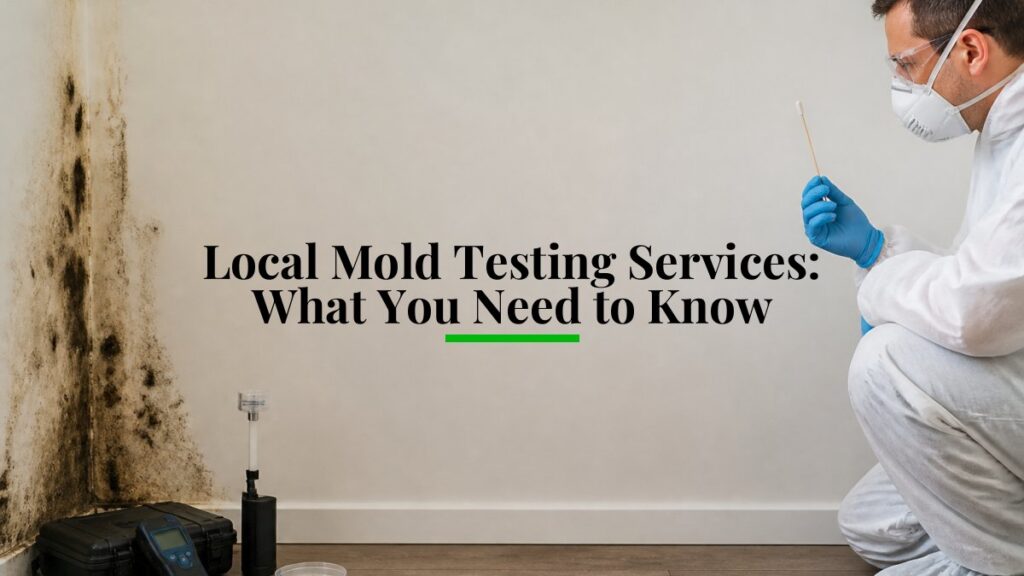
Professional mold testing services go far beyond a visual walkthrough. When you hire a qualified provider for mold testing services, you’re getting a multi-layered assessment that identifies both visible and hidden contamination. This distinction matters because moisture and mold often grow behind walls, under flooring, and in crawl spaces where the naked eye can’t detect them.
At The Mold Consultant, LLC, we combine visual inspection with laboratory-backed sampling to give you a complete picture of your property’s condition.
Visual assessment and moisture detection
A thorough visual assessment identifies discoloration, staining, and surface growth patterns that indicate active or past contamination. Our team uses moisture meters to detect elevated humidity levels in materials like drywall, wood framing, and insulation. These readings pinpoint problem areas that require deeper investigation.
Moisture detection is critical because mold cannot grow without water. Finding the moisture source before it becomes visible damage prevents costly remediation later. Non-destructive testing methods allow us to assess wall cavities and concealed spaces.
Air sampling and surface sampling methods
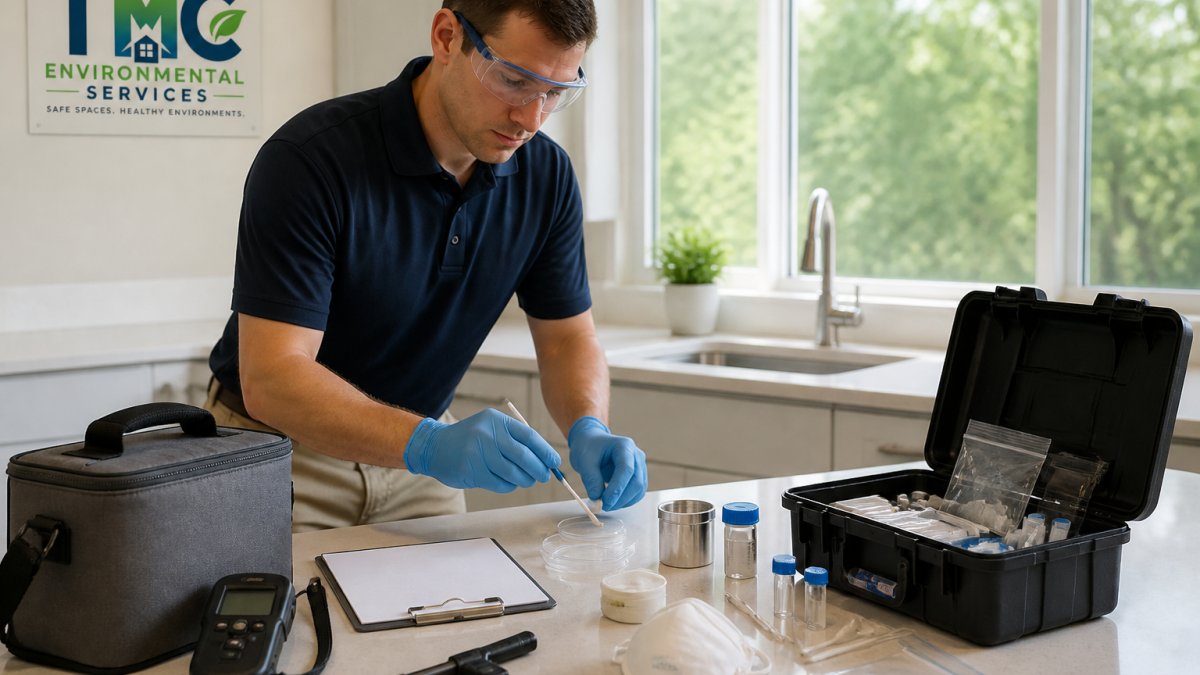
Air sampling captures mold spores floating in your indoor environment. Surface sampling collects material directly from suspected contamination sites and sends it to a laboratory for species identification and quantification.
The sampling method depends on your situation. If you’re concerned about indoor air quality after water damage, air sampling provides actionable data. If you’ve spotted visible growth or suspect hidden contamination, surface sampling confirms what’s there.
Understanding Mold Inspection Cost and What Affects Pricing
Mold inspection cost varies widely based on property size, testing scope, and the number of samples required. Understanding the pricing structure helps you budget accurately and avoid low-ball estimates that may skip critical areas.
Typical cost ranges by property type and scope:
- Basic visual inspection only: $200-$400 for small residential properties (under 2,000 sq ft). This covers a walkthrough and moisture meter readings but no laboratory sampling.
- Visual inspection with limited air sampling: $400-$700 for residential properties. Typically includes one to three air samples sent to an accredited laboratory.
- Comprehensive residential assessment: $700-$1,500 for homes with water damage history, visible growth, or multiple problem areas. Includes visual inspection, moisture mapping, air sampling, and surface sampling from suspected contamination sites.
- Commercial or large residential properties: $1,500-$3,500+ depending on square footage, number of zones tested, and complexity. Multi-story buildings, HVAC systems, and extensive water damage require more time and samples.
- Post-remediation clearance testing: $300-$800 to verify that mold removal was successful. Typically includes air sampling and visual re-inspection.
Factors that increase inspection cost:
Property square footage directly affects inspection time and the number of samples needed. A 5,000 sq ft home requires more thorough assessment than a 1,500 sq ft apartment. The number of suspected problem areas matters significantly, a property with water damage in the basement, kitchen, and attic requires more samples than one with a single localized concern.
Laboratory analysis fees add to the total.
Access challenges increase costs. Crawl spaces, attics, and enclosed wall cavities require more time to assess safely. If moisture is suspected in hard-to-reach areas, non-destructive moisture mapping using thermal imaging or moisture meters may be necessary.
Testing method selection affects pricing. Air quality testing alone costs less than a combination of air, surface, and bulk sampling. If you’re investigating a specific concern, such as air quality after water damage, a targeted approach costs less than a full property assessment.
What to expect in a written estimate:
A reputable provider should provide an itemized estimate that breaks down inspection fees, sampling costs, and laboratory analysis separately. This transparency helps you understand where your money goes and compare quotes fairly. Be cautious of estimates that bundle everything into a single price without detail, you won’t know if the provider is cutting corners on sampling or using a lower-cost laboratory.
Insurance claims and real estate transactions often require more extensive documentation, which may affect inspection fees. If your testing will support an insurance claim or property sale, expect detailed reporting, photographs, and expert analysis that meets legal or underwriting standards.
Mold Inspection vs. Mold Remediation: Why the Distinction Matters
Mold inspection and mold remediation serve completely different purposes, yet many property owners confuse them. Inspection identifies the problem, what type of mold is present, where it’s located, and how extensive the contamination is. Remediation removes it.
This distinction is critical because a remediation contractor has a financial incentive to find problems and recommend extensive removal. An independent inspector, by contrast, provides neutral assessment without a stake in the remediation outcome. The Mold Consultant, LLC operates as an independent testing provider.
Some companies offer both inspection and remediation under one roof. This creates a conflict of interest, they profit when they find more mold and recommend more aggressive removal. Independent testing first, then selecting a remediation contractor separately, protects your interests and ensures thorough, cost-effective solutions.
Mold Air Quality Testing: When and Why It’s Necessary
Mold air quality testing measures spore levels in your indoor environment. This test answers a specific question: are mold spores at levels that might affect occupant health? It’s particularly valuable after water damage, when visible mold has been removed but occupants report ongoing symptoms.
Air quality testing is also useful when you suspect hidden contamination but haven’t found visible growth. Elevated spore counts in your air often indicate active mold somewhere in the structure. The test doesn’t pinpoint the location, but it confirms contamination is present and warrants further investigation.
This testing method helps distinguish between normal environmental spores and elevated indoor contamination. Outdoor air naturally contains mold spores. Indoor levels should be lower. When indoor counts exceed outdoor baselines, you have an indoor source that needs remediation.
Air quality testing is most valuable when paired with surface sampling. The combination tells you whether mold is actively releasing spores into your breathing space, information that shapes remediation priorities and post-cleanup verification.
How to Choose a Professional Mold Testing Provider
Selecting the right provider determines whether you get accurate, actionable results. Look for certifications that demonstrate expertise and commitment to professional standards. A qualified inspector should hold credentials like Certified Residential Mold Inspector (CRMI) or Certified Microbial Remediation Supervisor (CMRS).
Independence matters enormously. An inspector who also performs remediation has divided loyalty. Choose a provider who conducts testing only, without offering removal services. This structure eliminates the conflict of interest and ensures recommendations are based on your property’s actual needs.
Credentials and certifications that matter
Industry certifications validate technical knowledge and adherence to testing protocols. The CRMI credential requires documented training, field experience, and examination. Certified Restorer (CR) designations indicate broader expertise in water damage and property restoration.
Ask about laboratory partnerships. Your samples should go to accredited laboratories that follow standardized analysis protocols.
Independence and neutral mediation services
True independence means the provider has no financial stake in the remediation outcome. The Mold Consultant, LLC provides neutral testing and expert witness services for property disputes, insurance claims, and real estate transactions. This independence is particularly valuable when disagreements arise about contamination scope or remediation necessity.
Neutral mediation services help when inspectors disagree or when remediation contractors dispute testing results. An independent expert can review findings, evaluate methodologies, and provide objective assessment.
What to Do After Water Damage: When Testing Is Worth the Investment
Water damage creates ideal conditions for mold growth within 24 to 48 hours (the CDC). Even if everything appears dry, moisture can remain trapped in walls, under flooring, and within insulation. Testing after water damage answers a critical question: did mold already colonize?
Immediate testing after drying efforts are complete provides baseline documentation. If mold appears later, you have proof of the timeline and can support insurance claims or contractor liability.
Testing is particularly important before re-occupying a property after significant water intrusion. Occupants returning to a contaminated environment may develop respiratory issues, allergic reactions, or other health problems (the CDC). Professional mold testing services provide the verification needed to confirm the space is suitable for re-occupancy.
| Testing Scenario | Why It Matters | Typical Timing |
|---|---|---|
| After water damage | Confirms mold hasn’t colonized or identifies contamination | Within 48-72 hours of drying |
| Before remediation starts | Establishes baseline contamination scope | After initial assessment |
| After remediation completion | Verifies removal was successful | 24-48 hours post-cleanup |
| For real estate transaction | Protects buyer from hidden contamination | During inspection period |
| For insurance claim | Documents damage and supports coverage | Immediately after loss |
Water damage and mold contamination create urgent decisions with long-term health and financial consequences. Professional assessment removes guesswork and protects your property and family. The Mold Consultant, LLC provides expert mold testing services with over a decade of experience identifying moisture intrusion and contamination in residential and commercial properties across the Oklahoma City metro area. Our Certified Residential Mold Inspector credentials, non-destructive testing methods, and independent assessment approach provide accurate findings. Contact The Mold Consultant, LLC today for a professional evaluation and actionable remediation strategies tailored to your property’s specific needs.
Frequently Asked Questions
What does a professional mold inspection include?
A professional mold testing service includes visual assessment of the property, moisture readings using specialized equipment, air sampling to detect airborne spores, and surface sampling from suspected contamination areas. The inspector documents findings with photographs and provides a detailed laboratory analysis report. This comprehensive approach identifies both visible mold growth and hidden moisture intrusion that could lead to future contamination.
How much does mold inspection cost?
Mold inspection cost varies based on property size, the number of areas tested, and the testing methods required. Visit The Mold Consultant, LLC’s pricing page for current rates and a detailed quote based on your specific property needs.
Should mold testing and remediation be handled by separate companies?
Yes. Independent testing provides neutral, unbiased results. A separate inspector verifies the actual contamination level and documents findings for insurance claims or legal disputes. After remediation by a contractor, an independent tester performs post-remediation verification to confirm the work was successful.
Is mold testing worth it after water damage if I can’t see anything?
Yes. Mold growth often begins in hidden areas like wall cavities, under flooring, or within HVAC systems before visible signs appear. Professional air quality testing and moisture assessment detect contamination in early stages. Water damage creates ideal conditions for mold; testing within days of the incident provides documentation for insurance claims.