
Table of Contents
- 7 Signs of Hidden Mold Growth Every Homeowner Should Know
- Signs of Mold Behind Walls: What You Can’t See Can Still Hurt You
- Musty Smell in House but No Visible Mold: What It Usually Means
- Using a Moisture Meter for Walls to Confirm Suspicious Spots
- The Mold Inspection Process: What a Professional Actually Checks
- Room-by-Room Checklist for Tracking Down Hidden Moisture
- When to Stop DIY Checking and Call a Professional
- Frequently Asked Questions
Last Updated: October 21, 2026
7 Signs of Hidden Mold Growth Every Homeowner Should Know
Hidden mold growth rarely announces itself. At The Mold Consultant, LLC, we’ve spent over a decade finding what homeowners miss, and the pattern is consistent: the signs of hidden mold growth show up long before the mold itself does.
Below, we’ll walk through seven warning signs, then show you how to check your own home room by room.
Most guides tell you to look for black spots, but visible mold is the late stage. The early clues are smells, textures, and moisture you can feel.
1. A Musty or Earthy Smell That Won’t Go Away
A musty odor is the single most reliable early clue. Mold releases gases as it breaks down organic material, and that earthy, damp-basement smell is the result.
If the smell strengthens when the heat or AC runs, suspect the ductwork or a nearby wall cavity. If it fades after ventilating but returns within a day, the moisture source is still active.
2. Stains, Spots, and Discoloration on Walls and Ceilings
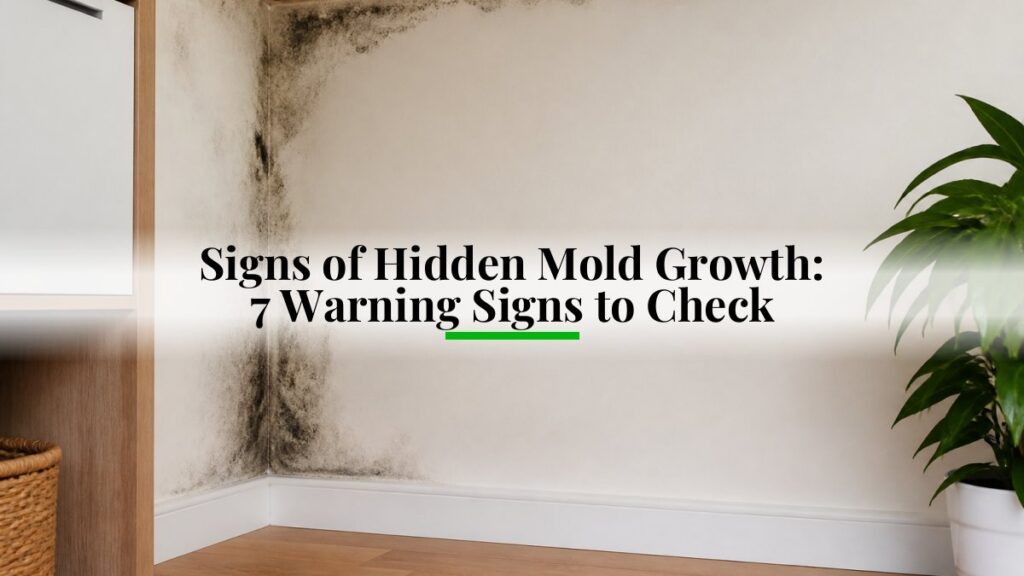
Look for yellow, brown, or grayish patches, especially near the ceiling line and around windows. These stains often appear before any fuzzy growth does.
Water stains tend to have a hard, tide-line edge; mold discoloration looks softer and spreads. Either way, a stain means moisture got in, and that’s the real problem to chase.
3. Bubbling, Peeling, or Cracked Paint
Paint fails when the surface under it stays damp. If a patch of paint bubbles or peels in one spot while the rest of the wall looks fine, moisture is trapped behind it.
A slight bulge or give under the paint points to wet drywall or plaster beneath. Don’t just scrape and repaint, which traps the moisture and lets mold keep growing.
4. Warped, Soft, or Spongy Drywall
Press gently on any wall that looks off. Drywall should feel firm. If it gives, crumbles, or feels soft, it has absorbed water.
Warped baseboards and soft wall sections are classic signs of mold behind walls. By the time drywall feels spongy, the paper facing is usually already feeding growth inside the cavity.
Never rip open a wall yourself to “check.” Disturbing a moldy cavity releases spores into the air and can spread contamination to clean rooms. Let a professional test first.
Signs of Mold Behind Walls: What You Can’t See Can Still Hurt You
The signs of mold behind walls are subtle: a faint smell, a soft spot, a stain that keeps returning. Spores travel through tiny gaps, so a problem inside one wall can affect air quality in the whole room.
Watch for these combinations:
- A musty odor in one room only
- Baseboards that pull away from the wall
- Wallpaper that bubbles or lifts at the seams
- Outlets or switches that feel warm or look discolored
When two or more line up, the wall cavity is worth inspecting. We use moisture meters and thermal imaging to find the wet zone without cutting anything open.
Musty Smell in House but No Visible Mold: What It Usually Means
A musty smell in a house with no visible mold usually means the mold is growing somewhere you can’t see: inside a wall cavity, under carpet, above ceiling tiles, or in the HVAC system.
Common hiding spots include:
- Behind wallpaper and under vinyl flooring
- Inside bathroom and kitchen cabinets
- Around vents and ductwork
- In basements and crawl spaces
Trust the smell. A musty odor with no visible source is a strong reason to book a professional inspection rather than wait.
Using a Moisture Meter for Walls to Confirm Suspicious Spots
A moisture meter for walls is the fastest way to test a suspicious spot. These handheld devices read the water content just under the surface, and they don’t damage the wall.
Here’s how we use one:
- Press the pins or sensor against the suspect area.
- Compare the reading to a dry section of the same wall.
- A reading noticeably higher than the dry baseline signals trapped moisture.
A moisture meter confirms wetness, not mold. It tells you where water is hiding, the first step toward finding the source.
Test the same spot twice, a few days apart. A reading that stays high after dry weather means the moisture source is still active, not a one-time spill.
The Mold Inspection Process: What a Professional Actually Checks
The mold inspection process goes far beyond a visual walk-through. A proper inspection connects the mold to its moisture source, because without that link, remediation fails and the problem returns.
A thorough inspection covers:
- Moisture mapping with meters and thermal imaging to find wet zones without opening walls
- A visual assessment of suspect areas, including wall cavities, attics, crawl spaces, and HVAC components
- Air sampling to compare indoor spore levels against an outdoor baseline
- Surface sampling on visible growth, when it will answer a specific question
- HVAC checks for contamination in vents, ducts, and air handlers
- A written report with findings, photos, moisture readings, and recommended next steps
That documentation matters for landlords, real estate transactions, and insurance claims; neutral, third-party findings carry weight a remediation quote alone never does.
What testing can and cannot establish is the part most people never hear. The U.S. Environmental Protection Agency’s mold guide notes that mold needs moisture to grow and that fixing the water source is the priority, which is why a good inspection spends more time on moisture than on spore counts.
Home test kits have similar limits.
When the report arrives, look for the moisture source identified, the areas inspected, the readings taken, and the recommended next step.
Ask the inspector before booking whether the visit includes moisture mapping and a written report with photos. An inspection that is only a visual walk-through and an air sample leaves you with a lab result but no answer to the question that matters: where is the water coming from?
For health questions, the Centers for Disease Control and Prevention notes that mold exposure can trigger allergic reactions and asthma symptoms in sensitive people. That is a reason to reduce exposure and consult a clinician about symptoms, not a reason to rely on a spore count to diagnose anyone.
Room-by-Room Checklist for Tracking Down Hidden Moisture
Use this checklist to inspect your home methodically. The goal is not to confirm mold yourself but to gather evidence of moisture so you can decide what to test and when to call a professional.
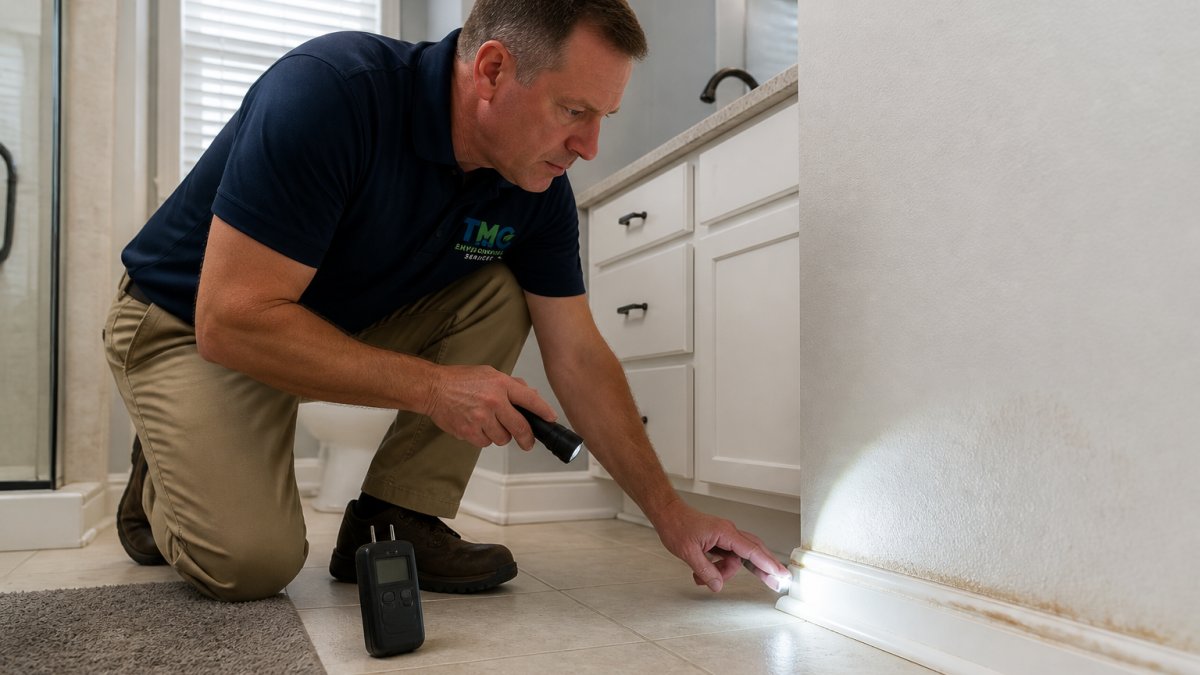
Before you start, set a baseline: pick a wall in a dry, interior room and note how it looks, smells, and feels. Compare every suspect spot against it.
- Bathroom: Check caulk lines at the tub and shower, under the vanity, and around the toilet base for soft spots, staining, or lifted flooring. Look at the ceiling below an upstairs bathroom for yellow rings or bubbling paint. Run the exhaust fan and confirm it pulls air; a fan that does not hold a tissue against the grille is not moving enough moisture out.
- Kitchen: Look under the sink, behind the refrigerator, and around the dishwasher for leaks, warping, or dark staining on the cabinet floor. Check the ice maker line and the dishwasher supply line for slow drips. Pull out the refrigerator if you can and inspect the wall and floor behind it.
- Basement: Inspect the floor-wall joint, window wells, and any stored boxes for dampness. Cardboard that has gone soft or stained is a reliable moisture indicator. Smell the air near the floor and behind stored items; musty odors concentrate in low, still air.
- Attic: Look for roof leaks, dark streaks on rafters, and damp insulation. Check the underside of the roof deck near chimneys, skylights, and plumbing vents, which are common leak points. Insulation that is compressed, clumped, or stained has likely been wet.
- Laundry room: Check behind the washer, around the water heater, and under the floor mat. Look at the washer hoses for bulging or cracking, and check the drain pan under the water heater for standing water.
- Windows and doors: Look for condensation, peeling paint, and soft frames. Condensation that forms on the inside of glass every cold morning points to high indoor humidity, which feeds mold on nearby surfaces.
Document what you find as you go: for each suspect spot, note the room, exact location, observation, and date.
Distinguish clues from causes.
Finally, do not disturb what you find. Do not peel wallpaper, cut drywall, pull up carpet, or scrub suspected growth, since disturbing a moldy cavity releases spores and can spread contamination to clean rooms.
When to Stop DIY Checking and Call a Professional
Stop DIY checking when you find active moisture, smell mold but can’t locate it, or see growth larger than a small patch. Disturbing mold without containment spreads spores and can worsen indoor air.
Call a professional when:
- The musty odor returns after cleaning
- A moisture meter reads consistently high
- You’ve had a water leak or flooding in the past year
- Anyone in the home has respiratory symptoms that worsen indoors
- You need documentation for a tenant, buyer, or insurer
The U.S. Environmental Protection Agency’s mold guide is clear that mold needs moisture to grow, so fixing the water source is the priority. For health questions, the Centers for Disease Control and Prevention notes that mold exposure can trigger allergic reactions and asthma symptoms in sensitive people.
If you’re unsure whether testing is worth it, that uncertainty is usually the answer. A professional inspection settles the question with evidence, not guesswork.
The signs of hidden mold growth always trace back to moisture. Find the water, and you find the mold.
Frequently Asked Questions
What are the first signs of hidden mold growth?
The earliest clues are usually a musty or earthy odor that lingers even after cleaning, faint discoloration on walls or ceilings, and paint that bubbles or peels without an obvious cause. Many homeowners also notice recurring condensation on windows or walls. Because hidden mold growth often starts inside a wall cavity or under flooring, the smell frequently shows up before any visible spot does. If you notice several of these at once, it is worth having the area checked rather than waiting for visible mold to appear.
Can a musty smell mean there is hidden mold even with no visible growth?
Yes. A musty smell in a house with no visible mold is one of the most reliable indicators that growth is happening somewhere out of sight, such as behind drywall, under carpet, or inside a wall cavity. Mold spores release gases that create that earthy odor. Before assuming the worst, rule out other causes like damp basement materials or a dry drain trap. If the smell returns after cleaning and ventilation, a professional inspection with moisture readings is the next logical step.
Does a moisture meter detect mold?
No. A moisture meter for walls measures water content in building materials, not mold itself. What it does is show you where conditions favor hidden mold growth, which is often more useful than chasing visible spots. Readings above roughly 15 to 20 percent in drywall or wood suggest a moisture problem worth investigating. The meter tells you where to look; confirming mold usually requires a visual inspection or air and surface sampling by a qualified inspector.
When should you hire a professional mold inspector instead of checking yourself?
Call a professional when you smell mold but cannot find it, when moisture readings stay high after fixing an obvious leak, when anyone in the home has respiratory symptoms that worsen indoors, or when a real estate transaction or insurance claim needs documented findings. A professional mold inspection process includes moisture mapping, thermal imaging, and air quality testing that goes beyond what a homeowner can do safely. It also gives you written documentation if a tenant, buyer, or adjuster disputes the results.
Hidden mold growth is a moisture problem wearing a disguise. If any of these signs feel familiar, don’t wait for visible growth to confirm it. The Mold Consultant, LLC offers non-destructive mold inspection, air quality testing, and moisture mapping backed by certified inspectors (CMRS, CR, CRMI) and an A+ BBB rating. We find the source, document it clearly, and give you a plan you can act on. Get started with The Mold Consultant, LLC and protect your home before the problem spreads.