

Last Updated: November 6, 2026
Quick Summary
Poor indoor air quality triggers immediate irritation and respiratory symptoms, and prolonged exposure raises the risk of chronic respiratory illness. Common symptoms include headaches, fatigue, dizziness, eye and throat irritation, and breathing difficulties, which often improve within hours of leaving the building.
- Four major indoor air pollutants account for most complaints: particulate matter, volatile organic compounds, mold, and carbon monoxide.
- Children, older adults, pregnant women, and people with asthma are most vulnerable to poor indoor air.
- Improve indoor air quality by controlling the source first, then ventilating, then filtering.
- Relative humidity above roughly 60% is a red flag for mold growth and dust mites.
- Call a professional when symptoms persist after basic fixes or you suspect hidden mold.
Table of Contents
- What Poor Indoor Air Quality Does to Your Body
- Poor Indoor Air Quality Symptoms to Watch For
- The Four Major Indoor Air Pollutants and Their Health Effects
- Who Is Most at Risk From Poor Indoor Air
- Using an Indoor Air Quality Monitor to Measure Your Risk
- How to Improve Indoor Air Quality at Home
- When to Call a Professional for Air Quality Testing
- Frequently Asked Questions
What Poor Indoor Air Quality Does to Your Body
The short answer: poor indoor air quality triggers immediate irritation and respiratory symptoms, and prolonged exposure raises the risk of chronic respiratory illness. Indoor air quality is the measure of how clean the air inside a building is, based on the concentration of pollutants such as particulate matter, mold spores, carbon monoxide, and volatile organic compounds. When those concentrations climb, your body absorbs them with every breath. Below, we break down exactly what poor air does to the body, which pollutants cause which effects, and how to measure and fix the problem.
Poor Indoor Air Quality Symptoms to Watch For
The most common poor indoor air quality symptoms are headaches, fatigue, dizziness, eye and throat irritation, and breathing difficulties. These often improve within hours of leaving the building, which is the clearest diagnostic clue. Watch for symptoms that follow a pattern: worse in the morning after a night in the bedroom, worse in a specific room, or better on vacation.
Short-Term Symptoms vs. Long-Term Exposure
Short-term effects show up quickly and usually clear once exposure stops: irritation of the eyes, nose, and throat, headaches, drowsiness, and nausea. Long-term exposure is the quieter problem. According to the EPA’s indoor air quality guidance, repeated exposure to indoor pollutants can contribute to respiratory disease, worsen asthma, and increase chronic health risks over time. Dose matters here: concentration multiplied by duration. A brief spike from painting is different from years of low-level mold exposure in a damp basement. If headaches are your main complaint, our guide to the warning signs poor air quality is causing your headaches walks through the pattern to look for.
The Four Major Indoor Air Pollutants and Their Health Effects
Four major indoor air pollutants account for most indoor health complaints: particulate matter, volatile organic compounds, mold, and carbon monoxide. Each attacks the body differently, which is why two people in the same house can react in completely different ways.
- Particulate matter (dust, smoke, pollen) penetrates deep into the lungs and aggravates asthma and cardiovascular conditions.
- Volatile organic compounds from paints, adhesives, and building materials cause irritation and headaches and are linked to longer-term health effects.
- Mold releases spores and irritants that trigger allergic reactions, asthma attacks, and respiratory symptoms in sensitive people.
- Carbon monoxide displaces oxygen in the blood and can be fatal at high concentrations.
Mold deserves special attention because it usually signals hidden moisture. For a deeper look at health symptoms linked to toxic mold, review the related guide.
Carbon Monoxide: The Odorless Emergency
Carbon monoxide is the one pollutant that can kill you before you notice it. It has no color, no odor, and no taste. Early signs (headache, dizziness, nausea, confusion) mimic the flu, which is why CDC carbon monoxide poisoning guidance urges anyone experiencing these symptoms alongside others in the same building to get outside immediately and call 911. If you suspect a leak, leave first, ask questions later.
Who Is Most at Risk From Poor Indoor Air
Sensitive groups feel poor indoor air quality first and hardest. Children, older adults, pregnant women, and people with asthma or existing respiratory illness are most vulnerable because their lungs or immune systems are less able to cope with irritants. The same exposure that gives a healthy adult a mild headache can send an asthmatic child into a breathing crisis. If you live with anyone in these groups, treat air quality as a health priority, not a comfort issue.
Using an Indoor Air Quality Monitor to Measure Your Risk
An indoor air quality monitor measures pollutant levels in real time and turns vague symptoms into data you can act on, but only if you know what the readings can and cannot tell you. Most consumer units track a handful of indicators: particulate matter (often split into PM2.5 and PM10), total volatile organic compounds, carbon monoxide, temperature, and relative humidity. Each indicator behaves differently, and treating a single number as a verdict is the most common mistake.
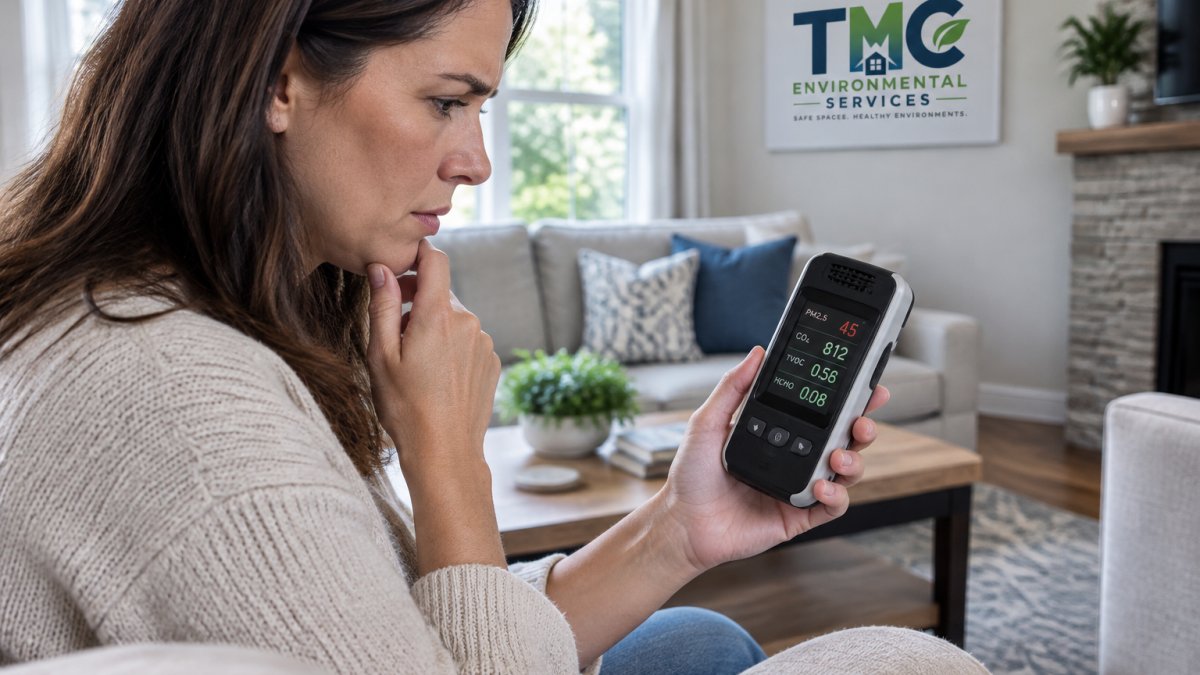
Here is how to read the indicators in practical terms. PM2.5, particles small enough to reach deep into the lungs, rises when you cook, burn candles, vacuum, or bring in wildfire smoke, and it is the indicator most closely tied to respiratory and cardiovascular irritation. Total VOC readings spike during painting, new furniture off-gassing, and cleaning-product use, but most consumer sensors report a summed index rather than identifying which compound is present, so a high number tells you something is off-gassing without telling you what. Relative humidity above roughly 60% is a red flag for mold growth and dust mites; sustained readings in that range in a basement or bathroom deserve attention regardless of what the other sensors say. Carbon monoxide is the indicator to take most seriously, any elevated reading on a consumer monitor should be treated as a reason to leave and call for help, not a data point to log.
Placement and timing matter as much as the device. Put monitors in bedrooms and the rooms where you spend the most time, keep them away from direct sunlight, stoves, and open windows, and log readings over a week rather than trusting a single snapshot. A pattern, high PM2.5 every evening when the stove runs, high humidity in one basement corner, is far more useful than any one reading, because it points to a source you can control.
Watch out: consumer monitors have real limits. They flag that something is elevated but rarely tell you why, their sensors drift over time and need calibration or replacement, and low-cost VOC sensors are not selective enough to distinguish a harmless scent from a meaningful exposure. A monitor that reads ‘good’ does not rule out mold hidden behind drywall, radon, or a CO source in another part of the building. If you want to understand the health benefits of indoor air quality testing, professional testing identifies the specific pollutants and their sources, which a consumer device cannot do. Use a monitor to spot patterns and track whether your fixes are working; use professional testing when you need to identify a cause, document a problem, or rule out hazards a consumer device cannot see.
How to Improve Indoor Air Quality at Home
Improving indoor air quality comes down to three moves, in order of effectiveness: control the source, ventilate, then filter. Most people jump straight to buying an air purifier, which is the least effective of the three if the source is still active.
- Control the source: fix leaks, dry damp areas, store chemicals outside living space, and address mold at its moisture source.
- Ventilate: open windows when outdoor air is clean, and run exhaust fans in kitchens and bathrooms.
- Filter: use a HEPA purifier and change HVAC filters on schedule.
Watch out: opening windows is not always safe. On high-pollen days, near wildfire smoke, or in a home with a known mold reservoir, ventilation can pull more pollutants in than it removes. In those cases, source control and filtration do the heavy lifting. A common mistake is painting over or spraying a moldy surface without fixing the moisture feeding it; the mold returns, and so do the symptoms.
When to Call a Professional for Air Quality Testing
Call a professional when symptoms persist after basic fixes, when you suspect hidden moisture or mold, or when you need documented results for a real estate transaction, tenant dispute, or insurance claim. A professional inspection can help identify moisture intrusion points and provide written findings, rather than relying on a consumer device alone. If you are weighing the cost, our guide to whether air quality testing is worth it lays out the decision honestly. You can also review the benefits of a professional indoor air quality analysis before you book.
| Situation | DIY Monitor | Professional Testing |
|---|---|---|
| Mild, occasional symptoms | Reasonable first step | Not yet needed |
| Symptoms persist after fixes | Useful for tracking | Recommended |
| Visible mold or water damage | Insufficient | Required |
| Real estate or legal documentation | Insufficient | Required |
Poor indoor air quality is rarely a single dramatic event. It is a slow accumulation of small exposures that wear down health and property alike. The Mold Consultant, LLC brings over a decade of experience and non-destructive testing to inspections, backed by CMRS and CRMI certifications and A+ BBB accreditation. The Mold Consultant, LLC serves homeowners, landlords, and property managers in the Oklahoma City metro area, offering air quality testing and remediation strategies. Get started with The Mold Consultant, LLC and breathe easier in your own home.
Frequently Asked Questions
Can bad indoor air quality make you sick?
Yes. Poor indoor air quality can cause headaches, dizziness, fatigue, nausea, and irritation of the eyes, nose, and throat. People with asthma or allergies may have more frequent attacks. Long-term exposure to pollutants like mold, particulate matter, and volatile organic compounds has been linked to respiratory illness and other chronic conditions. If symptoms ease when you leave the building and return when you come back, the air inside is a likely cause and worth testing.
What are the four major indoor air pollutants?
The four major indoor air pollutants are particulate matter, volatile organic compounds, carbon monoxide, and biological pollutants such as mold and bacteria. Particulate matter comes from dust, smoke, and cooking. VOCs off-gas from paints, furniture, and building materials. Carbon monoxide comes from fuel-burning appliances. Mold and bacteria grow wherever moisture collects. Each affects the body differently, which is why a professional assessment looks at all four rather than just one.
How can you tell if your home has poor indoor air quality?
Watch for recurring headaches, fatigue, dizziness, or throat irritation that improve when you leave home. Other signs include musty odors, visible mold, condensation on windows, and stale or stuffy air in rooms with little ventilation. An indoor air quality monitor can flag elevated particulate matter, VOCs, or carbon monoxide. If several people in the household report the same symptoms, or symptoms persist after cleaning and ventilating, schedule a professional air quality test to identify the source.
How do you fix poor indoor air quality?
Start with source control: fix leaks, remove visible mold, and store chemicals outside living areas. Improve ventilation by running exhaust fans and opening windows when outdoor air is clean. Use a HEPA filter in your HVAC system or a standalone air purifier for particulate matter. Install carbon monoxide alarms near sleeping areas. For persistent problems, especially after water damage, a professional inspection can find hidden moisture and confirm whether mold or other pollutants are present before you spend money on remediation.
