
Last Updated: November 19, 2026
Quick Summary
Asbestos air testing measures how many asbestos fibers are floating in the breathing zone of a room, typically reported in fibers per cubic centimeter. Bulk material sampling usually comes first to confirm which building materials contain asbestos before air testing shows whether those materials are releasing fibers into living spaces.
- Bulk sampling identifies whether suspect building materials contain asbestos at all.
- Air testing shows how many fibers are present in the air people breathe.
- Test before renovation, demolition, or repair that could disturb older materials.
- Results come as fibers per cubic centimeter; ask which analysis method was used.
- A single air sample is a snapshot and cannot prove a building is safe.
Table of Contents
- Asbestos Air Testing Versus Bulk Material Sampling
- When to Test for Asbestos in an Oklahoma City Property
- The Asbestos Testing Process From Scheduling to Site Visit
- How Asbestos Air Sampling Is Performed and Analyzed
- Interpreting Laboratory Results and Exposure Measurements
- Oklahoma Requirements, Notifications, and Project Responsibilities
- Choosing a Qualified, Independent Asbestos Testing Provider
- Requesting an Asbestos Air Test Quote From The Mold Consultant
- Frequently Asked Questions
Asbestos Air Testing Versus Bulk Material Sampling
Asbestos air testing and bulk material sampling answer two different questions. Air testing measures how many asbestos fibers are floating in the breathing zone of a room. Bulk sampling collects a small piece of a suspect building material and sends it to a lab to see whether it contains asbestos at all. Homeowners often mix the two up, so knowing which one you need saves time and money.
Bulk sampling comes first in most cases. You cannot measure airborne fibers until you know which materials in the building contain asbestos. Floor tile, joint compound, pipe insulation, and popcorn ceilings are common suspects. Air testing then shows whether those materials are releasing fibers into the space people use every day (the EPA).
Here is how the two compare at a glance:
| Factor | Bulk Material Sampling | Air Quality Testing |
|---|---|---|
| What it answers | Is this material asbestos-containing? | How many fibers are in the air? |
| What is collected | A small piece of building material | Air pulled through a filter cassette |
| Typical use | Before renovation or demolition | After disturbance, damage, or abatement |
| Result type | Percent asbestos by material | Fibers per cubic centimeter of air |
Bulk sampling is often the first step when the building age or material type is unclear. Air testing becomes the more useful tool once you know what is present and want to confirm exposure levels.
When to Test for Asbestos in an Oklahoma City Property
You should consider asbestos testing before any renovation, demolition, or repair that could disturb older building materials. You should also consider it after water damage, a ceiling collapse, or any event that breaks up suspect materials. Homes and commercial buildings constructed before the 1980s carry the highest likelihood of asbestos-containing materials, though the risk is not limited to that era.
Many property owners wait until a problem is visible. A better approach is to test before the work starts. A few common triggers include:
- Buying or selling a property with an older building envelope
- Planning a remodel that opens walls, ceilings, or floors
- Noticing crumbling insulation, damaged pipe wrap, or dusty debris
- Preparing a rental unit for new tenants and wanting documented conditions
- Following up after abatement to confirm the area is clear
Landlords and commercial property managers should also keep records. A dated test report can protect tenants, support compliance, and reduce disputes later.
The Asbestos Testing Process From Scheduling to Site Visit
Preparation makes the site visit faster and more accurate. Once you contact a testing provider, expect a short intake conversation about the property age, the work planned, and any areas of concern. The provider then schedules a visit at a time when the building is accessible and, for air testing, ideally unoccupied. Read the step-by-step asbestos testing procedure to see what the site visit will involve.
Before the inspector arrives, clear access to the areas to be tested. Move furniture away from walls and ceilings when possible, and keep pets and children out of the testing zones. Let the inspector know about any recent water damage, construction, or cleaning, since those activities can affect air results.
During the visit, the inspector walks the property, identifies suspect materials, and decides where samples or air monitors belong. Ask how long the visit will take and when you can expect written results.
How Asbestos Air Sampling Is Performed and Analyzed
Air sampling uses a calibrated pump to draw a measured volume of air through a filter cassette over a set period. The filter captures any airborne fibers, and the cassette goes to an accredited laboratory for analysis. The lab counts the fibers under a microscope and reports a concentration, usually in fibers per cubic centimeter.
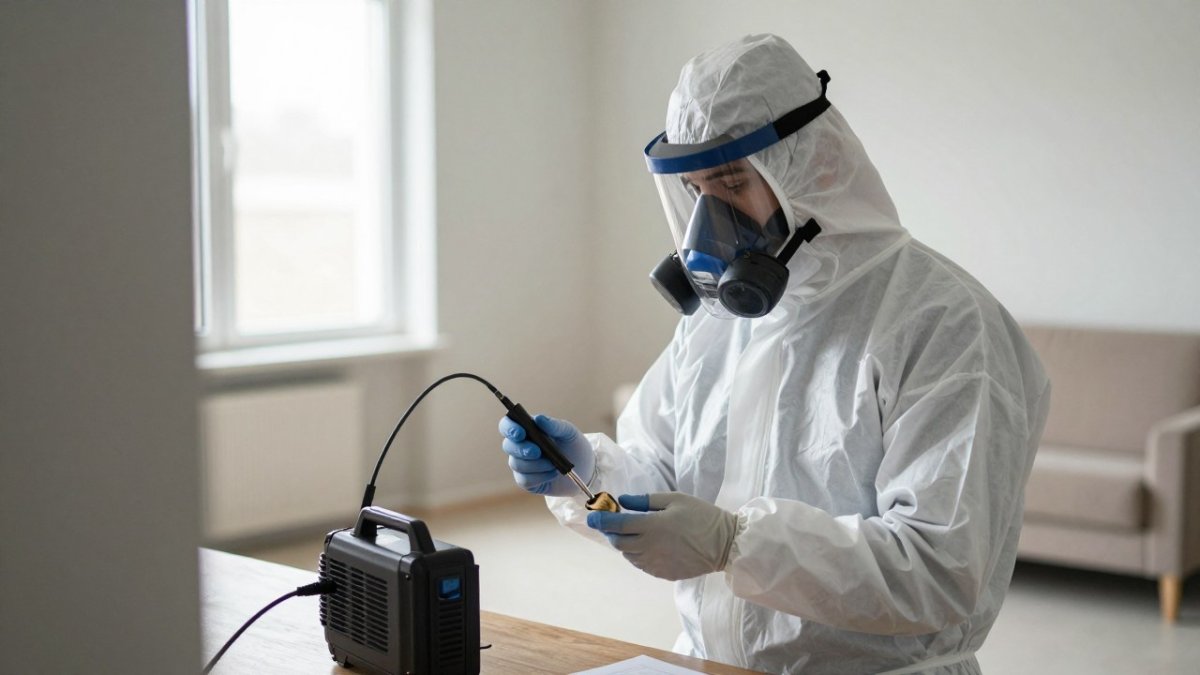
Sampling location matters. Inspectors typically place pumps in the breathing zone, roughly at head height in the room being evaluated. They may also collect outdoor or control samples to compare against indoor results. Good sampling protocols record flow rate, sample duration, and the exact location of each cassette.
Turnaround time varies by lab and by how many samples are submitted, so ask your provider for a realistic timeline before testing begins.
Interpreting Laboratory Results and Exposure Measurements
A laboratory report is a set of measurements, not a verdict. Reading it well means knowing what was measured, how, and what the number can and cannot tell you about the space.
The units. Air results are reported as fibers per cubic centimeter of air (f/cc), sometimes written as fibers per milliliter.
The methods. Most air samples for asbestos are analyzed by phase contrast microscopy (PCM), which counts all fibers above a certain size and aspect ratio, not just asbestos. PCM is fast and inexpensive but cannot tell asbestos from fiberglass or other mineral fibers. Transmission electron microscopy (TEM) identifies fiber type and is the method used for many clearance and post-abatement decisions.
The detection limit. Every method has a limit below which the lab cannot reliably count. A result reported as ‘none detected’ or ‘below the limit of detection’ means the method found nothing above that threshold, not that the air is free of asbestos.
Comparison samples. Outdoor or background samples collected at the same time give you a baseline. An indoor result that is close to the outdoor result is a different signal than one that is several times higher. Without a background sample, you are comparing a number to nothing.
What a result can and cannot establish. A single air sample is a snapshot of one location over one period. It can show that fibers were present at a measurable concentration at that place and time. For a deeper explanation of reading figures and exposure measurements, see how to interpret mold lab results.
A practical reading order. Start with the method, then the sample volume and detection limit, then the result, then the background comparison, then the conditions at sampling time. Ask your provider to walk you through those five items on the actual report rather than in general terms.
Oklahoma Requirements, Notifications, and Project Responsibilities
Asbestos rules that apply to a property here come from two layers: federal programs administered by the U.S. Environmental Protection Agency and state programs run by the Oklahoma Department of Environmental Quality (DEQ). Knowing which layer governs your project, and at what point, is the difference between a routine renovation and a stop-work order. Because federal and state requirements can hinge on a property’s condition and the work planned, knowing when to check for asbestos in older homes can help clarify which rules apply before renovation begins.
The federal layer. The EPA’s National Emission Standards for Hazardous Air Pollutants (NESHAP) governs asbestos during demolition and renovation. Two thresholds matter most for property owners:
- A regulated demolition means removing load-bearing walls or the entire building. There is no minimum asbestos quantity, the notification requirement applies regardless of how much asbestos is present.
- A regulated renovation means disturbing a threshold quantity of regulated asbestos-containing material. Confirm the current threshold figures with DEQ before you rely on them.
If your project crosses either threshold, the operator must notify the DEQ in writing before work begins. Federal rules call for advance written notification before the start date; confirm the current notice period and contents with DEQ. A revised notice is required if the start date slips.
The state layer. DEQ administers the state’s asbestos program, including accreditation of inspectors, management planners, project designers, contractors, and workers, plus notification review and compliance inspections. DEQ is the agency that answers questions about whether a specific project is regulated.
Who is responsible. Under NESHAP, the duty falls on the owner or operator of the demolition or renovation. In practical terms that means the property owner who commissions the work and the contractor who performs it can both carry obligations.
What to keep on file. Retain the inspection report, bulk sample laboratory results, the notification and any revisions, waste shipment records, and air clearance data if abatement occurred. These records are what a lender, buyer, or regulator will ask for, and reconstructing them after the fact is far harder than filing them at the time.
Watch out: rules and thresholds are revised over time. Verify current requirements directly with DEQ and the EPA regional office before scheduling work. If you are weighing testing costs, see whether mold testing is covered by insurance before committing to a provider.
Choosing a Qualified, Independent Asbestos Testing Provider
Look for a provider with the credentials that matter for asbestos work. Inspectors should hold current accreditation for asbestos inspection, and the laboratory should be accredited for asbestos analysis. Ask who will visit your property and what training they have.
Independence matters too. A provider that tests your property and then sells you the removal work has a built-in conflict of interest. A neutral inspector gives you findings you can use with any contractor.
Ask other providers the same questions so you can compare fairly. Requesting written scope, sampling methods, lab accreditation, and report format will help you spot differences quickly. Be wary of anyone who gives a result before the sample reaches the lab.
Requesting an Asbestos Air Test Quote From The Mold Consultant
Quotes depend on the number of samples, the size of the property, and the work involved, so the most accurate price comes from a direct request. Before you ask, review our air quality testing service to see what it covers. The Mold Consultant, LLC provides asbestos testing and air quality analysis for homes and commercial properties across the Oklahoma City metro area. Visit our website for current pricing details or call to request a quote.
When you contact us, share the property age, the areas of concern, and any planned renovation or demolition. That information helps us recommend the right mix of bulk sampling and air testing from the start.
Frequently Asked Questions
When should I get a property tested for asbestos?
Test before renovation, demolition, or any work that will disturb materials in an older building, since many structures built before the 1980s may contain asbestos-containing materials. Testing is also useful after water damage that disturbs suspect materials, before a real estate transaction, or when a landlord needs documentation for tenant safety. Asbestos air testing measures airborne fibers at a moment in time, so it is most informative when the building is occupied normally or when work is underway. A qualified inspector can recommend whether bulk material sampling, air monitoring, or both are appropriate for your situation.
How is asbestos air quality testing performed?
A qualified inspector collects air samples using calibrated pumps and filter cassettes placed in the areas of concern, usually at breathing height and for a set sampling period. Samples are sent to an accredited laboratory, which counts fibers under a microscope and reports concentrations. Preparation includes clearing access to the testing areas, identifying the work being done or the conditions being evaluated, and keeping doors and windows in their normal state unless the inspector directs otherwise. The inspector typically provides a written report with the lab results and an interpretation.
How long does asbestos testing take?
Site visits for air sampling usually take a few hours, depending on the size of the property and the number of sample locations. Laboratory turnaround time varies by method and lab, and results are commonly available within several business days, with expedited options sometimes available. Bulk material sampling follows a similar lab timeline. Ask your provider for their expected turnaround before scheduling, especially if results are needed for a closing, a permit, or a contractor start date.
Is asbestos air testing the same as asbestos material sampling?
No. Bulk material sampling collects small pieces of a suspect building material and analyzes them to determine whether asbestos is present and in what percentage. Air testing measures the concentration of airborne asbestos fibers in a space, which shows whether fibers are being released into the air. Both methods answer different questions, and many projects use both: bulk sampling to identify materials, and air monitoring to verify conditions during or after disturbance.
