
Table of Contents
- What You’ll Need Before You Start Your Search
- Step 1: Decide Between DIY and Professional Mold Inspection
- Step 2: What a Mold Inspector in Oklahoma City Actually Does
- Step 3: Mold Testing Cost Oklahoma City: What Affects Your Quote
- Step 4: Mold Remediation vs Inspection: Which Do You Need?
- Step 5: Hiring a Certified Mold Professional: Credentials to Check
- Step 6: Oklahoma Mold Regulations and Insurance Coverage
- Step 7: Post-Remediation Verification: Confirming the Job Is Done
- Frequently Asked Questions
Last Updated: September 28, 2026
What You’ll Need Before You Start Your Search
Before you search for a mold inspector in Oklahoma City, gather three things: a record of any past water damage, a list of rooms with musty odors or visible discoloration, and a rough budget for testing. This guide from The Mold Consultant, LLC walks you through the full process, from deciding whether you need an inspection at all to confirming remediation worked.
Mold grows fast. The EPA’s guidance on mold and moisture notes that mold can begin growing within 24 to 48 hours after water damage, which is why acting quickly matters more than shopping around for weeks.
Here’s what most guides get wrong: they treat inspection as a single product you buy. It isn’t. Inspection, testing, and remediation are three different services, often performed by different companies, and confusing them is how homeowners end up paying twice for the same problem.
- Moisture history: Any leaks, floods, or high humidity in the past two years
- Visual evidence: Staining, warping, bubbling paint, or a persistent musty smell
- Access notes: Crawl space, attic, and HVAC details so the inspector can plan properly
Step 1: Decide Between DIY and Professional Mold Inspection
A DIY check makes sense when you can see a small patch of surface mold on a non-porous surface and no one in the home has symptoms. A professional inspection is the better call when mold keeps returning, when you smell it but can’t find it, or when a real estate transaction or insurance claim is involved.
The dividing line is moisture. If you can’t find and fix the water source, cleaning the visible mold accomplishes nothing. It will return.
Painting over mold or spraying it with bleach without fixing the moisture source is the single most common mistake. The mold grows back within weeks, usually worse, and you’ve now spent money twice.
Step 2: What a Mold Inspector in Oklahoma City Actually Does
A mold inspector is a trained professional who identifies moisture intrusion, evaluates mold growth, and documents findings in a written report. The work is investigative, not cosmetic: the goal is finding why mold is growing, not just where.
A typical inspection includes a visual assessment of the property, moisture readings with a meter or hygrometer, an HVAC inspection, and crawl space inspection if applicable. Air sampling and surface testing may follow if the source isn’t obvious.
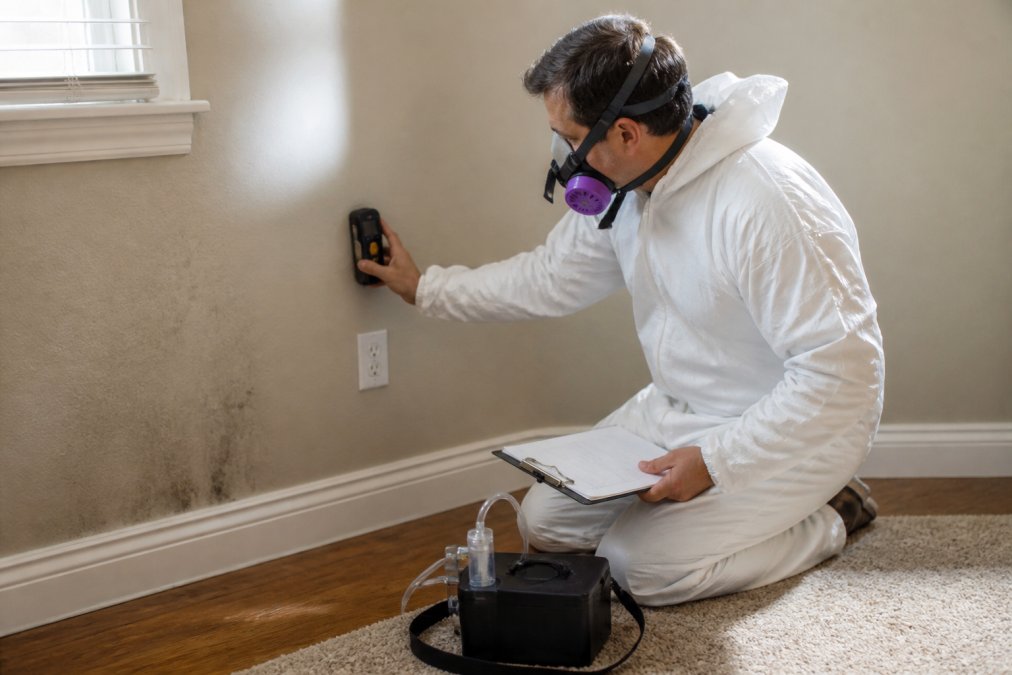
What most guides miss is that the report matters as much as the visit. A useful report identifies the moisture source, maps the affected area, and gives you a remediation protocol a contractor can follow. A vague report that just says “mold present” is nearly worthless.
Step 3: Mold Testing Cost Oklahoma City: What Affects Your Quote
Mold testing cost in Oklahoma City depends on the size of the property, the number of samples collected, and whether air sampling, surface testing, or both are needed. There is no single flat rate, and any provider quoting one without asking about your property is guessing.
Several factors move the number:
- Property size and layout: More rooms and levels mean more sampling points
- Sample count: Air samples, surface swabs, and allergen testing each add cost
- Access difficulty: Crawl spaces and tight attics take longer
- Turnaround: Standard lab results versus expedited processing
Request a free estimate in writing, and ask exactly how many samples are included.
Step 4: Mold Remediation vs Inspection: Which Do You Need?
Inspection and remediation are separate services with separate providers. An inspection identifies the problem. Remediation removes it. Confusing the two is how homeowners end up with a quote for work they don’t need yet, or no documentation when they do.
| Situation | What You Need | Why |
|---|---|---|
| Visible mold, known leak | Inspection first | Confirms scope before remediation |
| Musty smell, no visible mold | Inspection with air sampling | Locates hidden growth |
| Post-remediation dispute | Post-remediation verification | Independent clearance |
| Real estate transaction | Pre-purchase inspection | Documentation for the deal |
Step 5: Hiring a Certified Mold Professional: Credentials to Check
- Certified Residential Mold Inspector (CRMI): An assessment-side credential. It signals training in moisture investigation, sampling methodology, and report writing. A CRMI is qualified to tell you whether you have a mold problem and where the water is coming from.
- Certified Microbial Remediation Supervisor (CMRS): A remediation-side credential. It signals training in containment, removal, and worker safety. A CMRS is qualified to remove the growth, not to independently verify that it needed removing.
How to actually verify a credential:
- Ask for the certification number, the issuing body, and the expiration date, in writing, before the visit.
- Contact the issuing body directly (not the inspector’s website) and confirm the number is active and in good standing.
- Ask what continuing education the credential requires. A certification with no renewal requirement is a one-time seminar, not a professional standard.
- Confirm the inspector carries general liability insurance and, ideally, errors and omissions (E&O) coverage. E&O is what protects you if the report is wrong and you rely on it.
Ask whether the inspector uses non-destructive testing methods. Thermal imaging and moisture meters can locate hidden moisture intrusion without opening walls, which saves you repair costs and keeps the investigation focused. An inspector who reaches for a hammer before a moisture meter is telling you something about their process.
One more question worth asking: does the inspector carry professional liability coverage that survives the job? A licensed or certified inspector should provide a written report, stand behind findings, and offer neutral mediation if a dispute arises with a contractor or insurer. If they won’t put that in writing, keep looking.
Step 6: Oklahoma Mold Regulations and Insurance Coverage
This is the section most mold-inspection guides skip entirely, and it’s the one that determines whether you’re paying out of pocket or filing a claim.
On insurance, the part that actually costs you money:
- Likely covered: Mold that results from a covered peril, a burst supply line, a washing machine hose failure, a toilet supply that lets go while you’re at work. The water damage is the covered event; the mold is treated as resulting damage.
- Usually excluded: Mold from a slow leak under a sink, a chronically damp crawl space, a roof that’s been seeping for two winters, or humidity you never addressed. Insurers classify these as maintenance failures, not accidents.
- The trap: Many policies cap mold coverage with a separate sublimit, often far below your overall dwelling limit, even when the underlying water damage is covered. A covered pipe burst can still leave you paying most of the remediation bill once the mold sublimit is exhausted.
What to do before you file:
- Read the mold exclusion and the mold sublimit in your policy, not just the declarations page. They are separate provisions and both apply.
- Document the loss the day you discover it: photos, video, dates, and the moisture readings from your inspection report. Insurers deny gradual-damage claims largely on timeline, and your documentation is the counter-evidence.
- Get the inspection report before you call the adjuster. A neutral report that identifies a single sudden source is far stronger than a contractor’s estimate that just says “mold.”
- Keep remediation and inspection invoices separate. If you need to prove the work was necessary, an independent assessment invoice does that in a way a bundled cleanup bill cannot.
- If a claim is denied or underpaid, Oklahoma Insurance Department consumer resources can help you understand your policy and the complaint process before you escalate.
The rule of thumb: if you can point to a single event and a date, you have a claim. If the damage accumulated quietly, you have a maintenance expense. An independent inspection report is what moves a borderline case from the second column to the first.
Step 7: Post-Remediation Verification: Confirming the Job Is Done
Post-remediation verification is an independent inspection performed after cleanup to confirm the mold is gone and moisture levels have returned to normal. It’s the step most homeowners skip, and it’s the one that catches failed remediation before it becomes a repeat problem.
Frequently Asked Questions
How much will a mold inspection cost in Oklahoma City?
Mold testing cost Oklahoma City depends on the size of the property, number of samples, and whether you need air or surface testing. The Mold Consultant, LLC provides free estimates and transparent pricing on their website, so you can get an exact quote before committing.
What are the laws in Oklahoma regarding mold inspections and removal?
Oklahoma does not have statewide licensing for mold inspectors, and there is no statewide mold remediation licensing scheme. The Oklahoma Department of Environmental Quality (ODEQ) oversees indoor air quality complaints. It’s important to hire a certified professional who follows industry standards like those from the IICRC. Always ask for credentials and verify they carry liability insurance and workers’ comp.
Is it worth getting a mold inspection if I can’t see any mold?
Yes, hidden mold often grows behind walls, under floors, or in HVAC systems after water damage. If you’ve had a leak, flood, or persistent musty odor, an inspection can find moisture intrusion points before mold spreads. Indoor air quality testing and moisture meters can detect problems invisible to the eye. Early detection saves money on remediation and protects your health.
How do I know if I need a mold inspection or a remediation specialist?
An inspection identifies the type and extent of mold, while remediation removes it. If you see visible mold covering more than 10 square feet, or if you’ve had recent water damage, you likely need both. A certified inspector can assess the situation and recommend whether remediation is necessary. Some companies offer both services, but for unbiased results, choose an inspector who doesn’t also sell remediation.
Mold problems rarely announce themselves, and the ones that hide behind walls cause the most damage. The Mold Consultant, LLC provides mold inspection, asbestos testing, and indoor air quality analysis across the Oklahoma City metro, with non-destructive testing, neutral mediation, and discounts for veterans, teachers, and first responders. Get started with The Mold Consultant, LLC and get a clear, independent answer about your property.