
Last Updated: November 7, 2026
Quick Summary
A musty smell after heavy rain means water found a way into your home and is still there, feeding mold and mildew on damp materials. The rain didn’t create the odor; it woke up a hidden moisture problem. Find and stop the water source, then dry the materials to get rid of it.
- Mold needs moisture, food, and time, and building materials supply the food.
- Work from the outside in, then top to bottom, within a day or two of the storm.
- A moisture meter turns a hunch into a reading by comparing suspect areas to a dry baseline.
- Crawl spaces and basements are where most post-rain musty odors begin.
- The first 24 to 48 hours usually decide between a small cleanup and a major repair.
Table of Contents
- Why Rain Leaves a Musty Smell in Your House
- How to Find a Water Leak After Heavy Rain
- Hidden Moisture in Walls: Signs You Can’t See
- Crawl Spaces, Basements, and HVAC Pathways
- How to Get Rid of Musty Smell in House After Rain
- How to Dry Out a House After Water Damage
- Preventing the Smell Before the Next Storm
- When to Call a Mold Inspector
- Frequently Asked Questions
Why Rain Leaves a Musty Smell in Your House
If your house smells musty after heavy rain, the rain didn’t create the smell.
Most guides tell you to clean and spray. Cleaning removes the smell for a week but does nothing about the water feeding it.
Musty odor is a gas. It comes from mold and mildew breaking down damp materials like drywall paper, wood, insulation, and carpet backing.
How Moisture Turns Into Odor
Mold needs three things: moisture, food, and time. Building materials supply the food. Rain supplies the moisture. A slow, hidden leak supplies the time.
When a wall cavity or crawl space stays damp for days, mold and mildew grow on the surfaces inside and release gases as they break materials down.
That is why the smell often shows up in one room first. It is closest to the wet spot.
Where the Water Gets In
Water rarely enters where you can see it. Common entry points include:
- Roof leaks at flashing, vents, and worn shingles
- Window and door frames with failed caulk or seals
- Cracks in the foundation and block walls
A small leak during a storm can also stay hidden for months. The storm is the trigger, not the whole story.
How to Find a Water Leak After Heavy Rain
The fastest way to find a water leak after heavy rain is to work from the outside in, then top to bottom, checking the spots water reaches first. Do this within a day or two of the storm, while the evidence is still wet.
Start With a 10-Minute Exterior Walk
Before you go inside, walk the perimeter and note anything that changed since the storm:
- Gutters overflowing or sagging away from the fascia
- Downspouts that discharge within 3 feet of the foundation
- Standing water or spongy ground along the foundation wall
Water should run away from the foundation, not sit against it. A downspout dumping next to the wall can keep a crawl space damp for days after the rain stops.
Then Work Inside, Top to Bottom
Check these in order and write down what you find:
- Ceiling stains, especially below bathrooms and roof valleys
- Window sills and frames for damp wood or bubbling paint
- Baseboards for swelling, staining, or a dark line
- Under sinks for drips on the cabinet floor
- Attic sheathing for dark streaks or damp insulation
- Crawl space for standing water and wet joists
Use a flashlight and your nose. Trust the spot where the smell is strongest, but keep looking, odor travels through wall cavities and ductwork, so the strongest smell is not always the source.
Use a Moisture Meter to Confirm, Not Guess
A pin-type or pinless moisture meter turns a hunch into a reading. Test the same material in a known-dry area for a baseline, then compare the suspect area to it; a noticeably higher reading means moisture is present even if the surface feels dry.
Do not poke holes into walls you do not own or plan to repair, and never open a wall you suspect contains asbestos without testing first.
Match the Pattern to the Likely Source
Use where and when the odor appears to narrow the cause:
- Smell strongest in one room near an exterior wall after rain: suspect a window, door, or wall-cavity leak.
- Smell strongest in a basement or first floor and worse on humid days: suspect a crawl space or foundation issue.
- Smell at supply registers in every room: suspect the HVAC system pulling damp air from a crawl space or basement.
If you want a structured method for tracing the source, this 7-step moisture hunt walks through it in order.
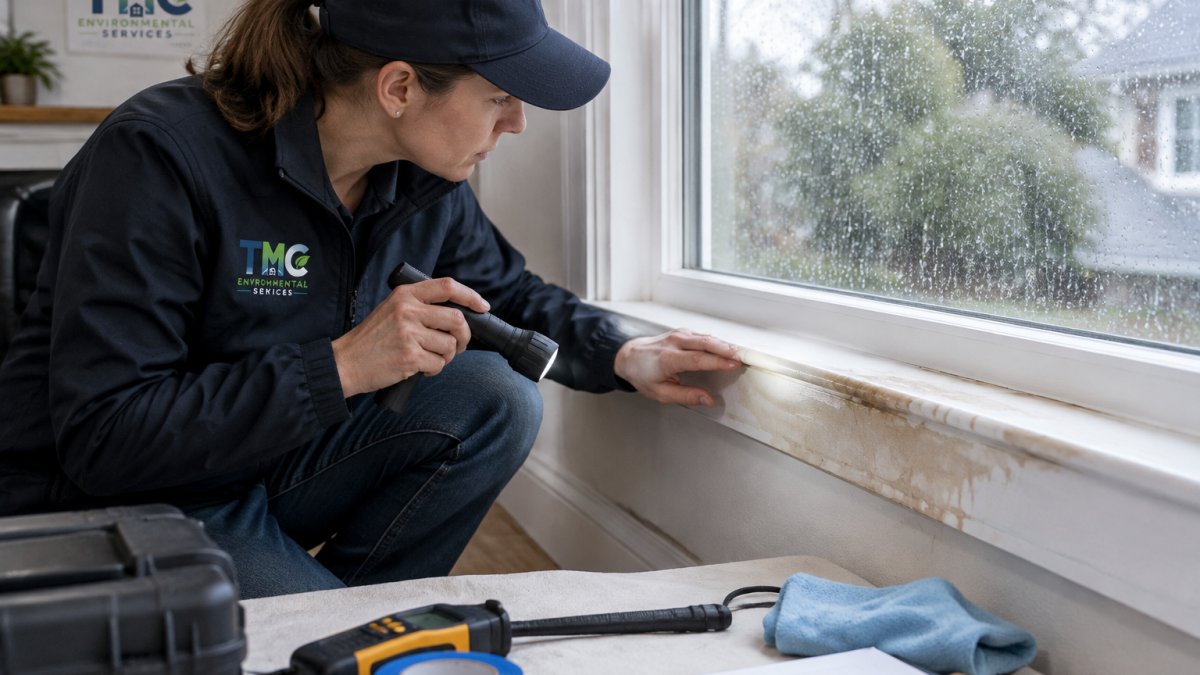
Use where and when the odor appears to narrow down the likely source before you start opening anything up.
| Where the smell is strongest | When it appears | Likely source |
|---|---|---|
| One room near an exterior wall | After rain | Window, door, or wall-cavity leak |
| Basement or first floor | Worse on humid days | Crawl space or foundation issue |
| Supply registers in every room | After rain | HVAC pulling damp air from crawl space or basement |
| Near drains, toilets, or laundry | Ongoing | Dry trap, failed wax ring, or vent issue |
| Anywhere | Only after heavy, wind-driven rain | Roof flashing, vents, or siding on windward side |
Hidden Moisture in Walls: Signs You Can’t See
Hidden moisture in walls is water trapped inside a cavity where air can’t dry it, the most common cause of a musty smell that keeps coming back after every storm.
Watch for these signs:
- Paint that bubbles or peels in one patch
- Drywall that feels soft or crumbles when pressed
- A dark outline along baseboards
A common mistake is painting over the stain. That traps the moisture and hides the evidence.
Measuring Moisture Safely
You can check moisture levels yourself with a pin-type or pinless moisture meter.
- Test the same material in a dry area first for a baseline
- Compare readings in the suspect area to that baseline
- A noticeably higher reading means moisture is present
For a deeper walkthrough, see this guide on identifying hidden moisture in walls.
Watch out: never open a wall you suspect contains asbestos without testing first. Older homes commonly have asbestos in joint compound, insulation, and floor tile, and disturbing it can create a health hazard far worse than the smell.
Crawl Spaces, Basements, and HVAC Pathways
Crawl spaces and basements are where most post-rain musty odors begin, damp, poorly ventilated, and connected to the rest of the house. The HVAC system is often the delivery route that spreads a crawl-space problem to every room.
Moist air rises from the crawl space into wall cavities and floor systems, and your HVAC pulls it in through returns and pushes it through the whole house.
Check the Crawl Space and Basement First
After a storm, inspect these areas with a flashlight and note what you see:
- Standing water on the crawl space floor or a damp, darkened soil surface
- Wet, fallen, or compressed insulation
- Rust on ductwork, hangers, or fasteners
A hygrometer placed in the crawl space for a day gives you a number to compare against the living space. If the crawl space stays above roughly 60% relative humidity after the rain stops, it is not drying and will keep feeding odor upward.
Test Whether the HVAC Is Spreading the Odor
You can check the HVAC connection without opening ductwork:
- Turn the system off, then smell several supply registers and the return grille. A musty smell at the return that is weaker at the supplies points to a return-side problem.
- Remove the filter and smell it. A damp, musty filter after a storm suggests humid air is being pulled through the system.
- Check the condensate pan for standing water and confirm the drain is flowing; a clogged drain keeps the air handler cabinet damp.
Watch out: do not run the system to “test” it if you smell mold or see standing water in the air handler, running the fan can spread spores through the house. Leave the system off and have it assessed.
Know When to Stop DIY Work
Stop and call a professional if you find standing water deeper than a shallow puddle, wet framing or subfloor, a vapor barrier that cannot be repaired from the access hatch, or ductwork that is wet or visibly contaminated.
If the crawl space is the source, this guide on detecting moisture in crawlspaces covers the checks in detail. And once it is dry, this step-by-step mold prevention plan helps you keep it that way.
How to Get Rid of Musty Smell in House After Rain
The only reliable way to get rid of a musty smell after rain is to remove the moisture source and dry the materials. Air fresheners, candles, and sprays mask the odor. They do not fix it.
Follow this order:
- Find and stop the water entry point
- Remove standing water and wet items
- Dry the space with fans and a dehumidifier
- Remove materials that can’t be dried, like soaked drywall or carpet
- Clean hard surfaces with a mild detergent
- Confirm materials are dry before closing anything up
Skip the ozone machines and foggers until the source is fixed. They treat the air, not the cause.
How to Dry Out a House After Water Damage
Drying a house after water damage is a race against mold, which can start growing on wet materials within a day or two (the EPA). Speed matters more than anything else.
What to do right away:
- Turn off power to wet areas if it is safe to do so
- Open windows and interior doors to improve air circulation
- Set up fans to move air across wet surfaces
What to leave for later:
- Replacing drywall and insulation
- Sealing and painting
- Rebuilding trim and flooring
The difference between a small cleanup and a major repair is usually the first 24 to 48 hours. If water soaked into wall cavities or the subfloor, surface drying won’t reach it.
Preventing the Smell Before the Next Storm
Prevention comes down to keeping water out and keeping air moving. Do these before the next storm season:
- Clean gutters and check downspouts twice a year
- Extend downspouts to move water away from the foundation
- Re-caulk windows, doors, and penetrations
After any heavy rain, walk the house and check the same spots. Catching a small leak early is far cheaper than drying out a wall.
When to Call a Mold Inspector
We recommend an inspection when:
- The musty smell keeps coming back
- You see discoloration on walls, ceilings, or framing
- Water sat in the home for more than a day or two
At The Mold Consultant, LLC, our mold inspection uses non-destructive testing to identify moisture intrusion points.
If you are ready to bring someone in, here is how to find a mold inspector and what to ask before you book.
The smell after a storm is a signal, not a sentence: water found a way in and is still there.
The Mold Consultant, LLC identifies hidden moisture intrusion points and checks indoor air quality.
Frequently Asked Questions
Is it normal for a house to smell musty after rain?
A faint smell right after a storm can happen when humid air enters through vents or doors, but a musty smell that lingers or returns with every rain is not normal. It usually means moisture is trapped in building materials such as drywall, insulation, or wood, where mold and mildew can grow. If the odor stays for more than a day or two after the weather clears, treat it as a sign to inspect for leaks, poor drainage, or damp crawl spaces.
Can a house smell musty without mold?
Yes. Bacteria, damp insulation, wet wood, and even a dry drain trap can produce a musty smell without visible mold growth. That said, odor is often the first warning that conditions for mold exist. A moisture inspection with a meter can confirm whether materials are wet, and air quality testing can show whether spores are elevated. Finding the water source matters more than guessing whether mold is present.
Where should I look for hidden moisture after heavy rain?
Start where water most often enters: window and door frames, roof penetrations, attic sheathing, basement walls, and crawl spaces. Check for bubbling paint, soft drywall, darkened wood, and stains on ceilings. A pin-type or non-invasive moisture meter gives readings on walls and floors without cutting into them. If readings stay high days after the storm, the leak is active and needs repair, not just drying.
When should I call a professional about a musty smell?
Call a professional when the smell returns after every rain, when you find damp materials or visible growth larger than a small patch, or when anyone in the home has worsening allergy or respiratory symptoms. A certified inspector can trace hidden moisture, document findings in writing, and separate a simple ventilation issue from an active leak. For landlords and real estate transactions, written documentation is often required for insurance or disclosure.
